
A refrigerator can look reasonably organized right up until you actually need something.
Leftovers disappear behind milk cartons. Condiments multiply across three different shelves. Produce gets buried in drawers. Half-used ingredients migrate toward the back until they’re rediscovered several weeks later.
And when refrigerator space is limited, the problem gets worse.
Good refrigerator organization isn’t about creating a picture-perfect fridge filled with matching containers.
It’s about making food easy to see, easy to reach, and easy to use before it goes bad.
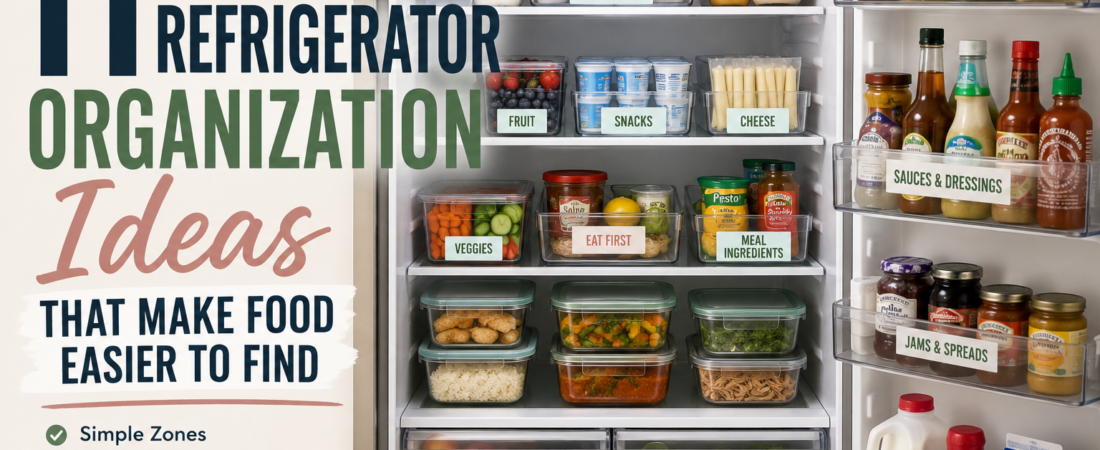
The best refrigerator organization ideas create simple zones, keep frequently used foods accessible, and prevent small items from disappearing into the back.
Here are 11 practical ways to organize your refrigerator and make the space work better.
1. Start With a Complete Fridge Cleanout
Before adding bins or rearranging shelves, take everything out.
Check:
- Expiration dates
- Old leftovers
- Wilted produce
- Nearly empty condiment bottles
- Duplicate products
- Food nobody plans to eat
Wipe down the shelves and drawers while they’re empty.
Then look at what remains.
This gives you a much better idea of what your refrigerator actually needs to hold.
It’s also a good opportunity to stop storing things in the refrigerator simply because that’s where you’ve always put them.
Once the excess is gone, you can organize around the food your household actually uses.
2. Create Simple Refrigerator Zones
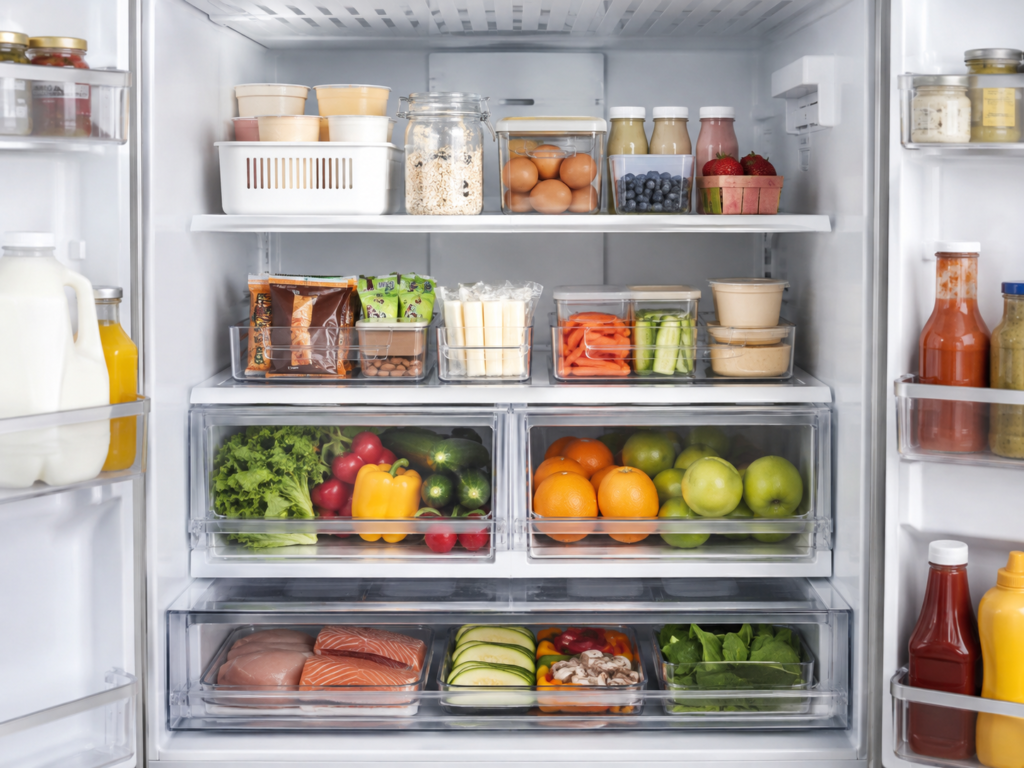
Instead of putting groceries wherever there’s an empty spot, assign broad categories to different areas.
Your zones might include:
Breakfast
- Yogurt
- Eggs
- Berries
- Coffee creamer
Lunch
- Deli meat
- Cheese
- Prepared vegetables
- Sandwich ingredients
Snacks
- Fruit
- Cheese sticks
- Individual yogurt
- Grab-and-go foods
Meal ingredients
- Sauces
- Prepped vegetables
- Open ingredients
- Items needed for upcoming meals
You don’t need twelve tiny categories.
A few broad zones are easier for everyone in the house to understand and maintain.
3. Use Clear Bins to Contain Small Items
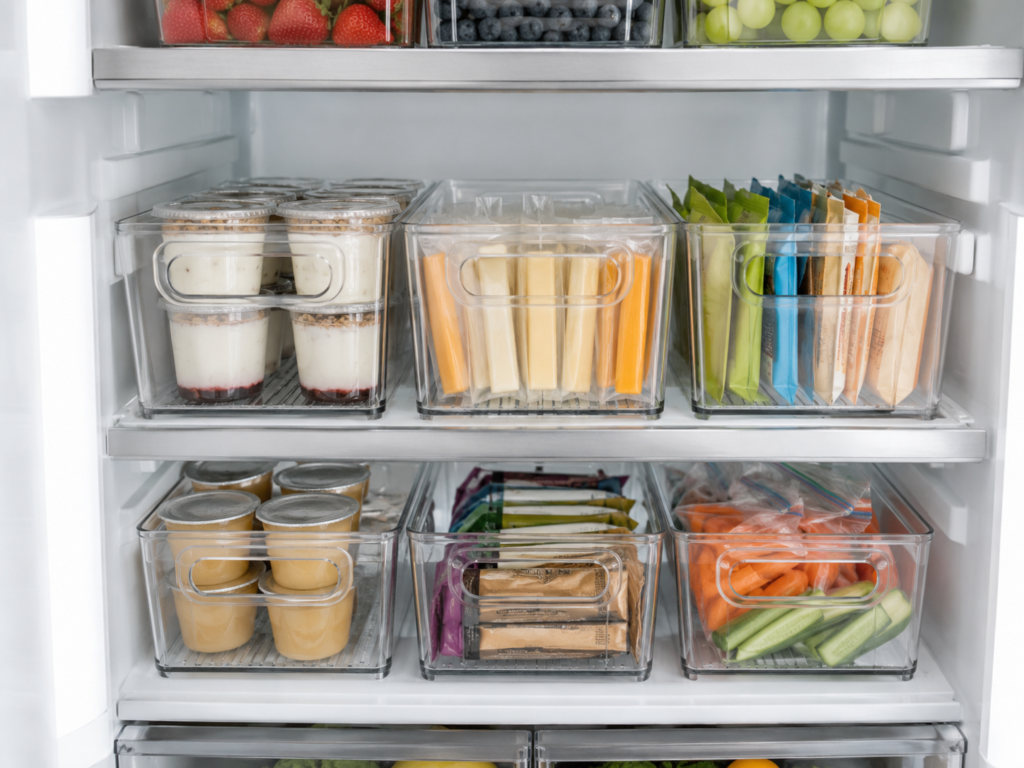
Small packages are some of the easiest things to lose in a refrigerator.
Cheese sticks, yogurt cups, snack packs, sauces, and small containers can spread across an entire shelf.
Clear bins give those items boundaries.
Clear refrigerator organizer bins → View on Amazon
Try categories such as:
- Snacks
- Yogurt
- Cheese
- Lunch supplies
- Meal-prep ingredients
Choose bins that are easy to pull out.
Being able to slide out an entire category is especially helpful on deeper refrigerator shelves.
Clear containers also let you see what’s inside without opening or labeling everything.
4. Keep an “Eat First” Bin
This might be the simplest refrigerator organization idea that actually saves money.
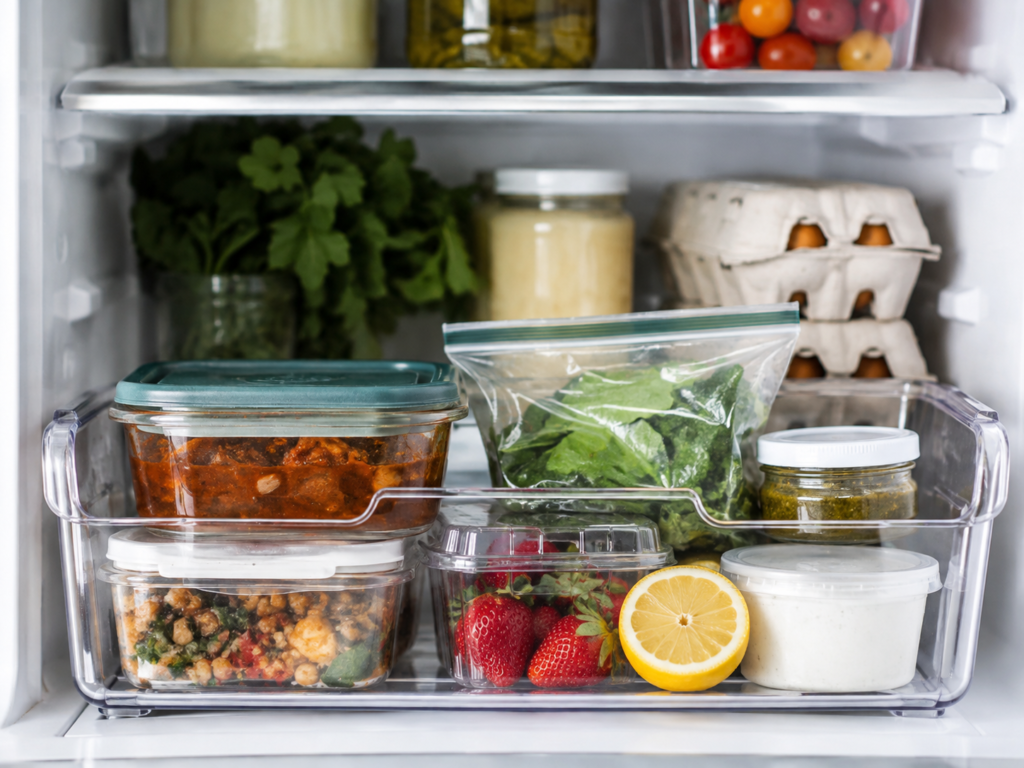
Designate one small bin or section for food that needs to be eaten soon.
Put things there such as:
- Leftovers
- Opened packages
- Produce nearing the end of its life
- Half-used ingredients
- Yogurt approaching its date
When someone wants a snack or you’re figuring out lunch, check that area first.
It prevents older food from getting pushed behind newer groceries.
You don’t need a fancy labeled container. Any visible, easy-to-reach bin can work.
5. Adjust Your Shelves Instead of Accepting the Default Layout
Refrigerator shelves are usually adjustable for a reason.
Yet many people leave them exactly where they were when the appliance arrived.
Look at what you regularly store.
If you have several inches of empty space above yogurt containers but nowhere convenient for taller bottles, rearranging the shelves may solve the problem immediately.
Try creating different heights for:
- Tall bottles
- Leftovers
- Short containers
- Meal-prep dishes
- Jars
The goal is to reduce wasted vertical space without making shelves so tight that food becomes difficult to access.
This is the same principle we use throughout small-space organization: make the existing space fit what you actually store.
For more ways to use awkward storage efficiently, see 17 Small Kitchen Organization Ideas for Maximizing Limited Space.
6. Use a Turntable for Jars and Condiments
Small jars and bottles have a habit of disappearing behind one another.
A refrigerator-safe turntable can make them much easier to reach.
Refrigerator turntable → View on Amazon
Use one for:
- Condiments
- Sauces
- Jams
- Dressings
- Small jars
Instead of moving several bottles to reach something in the back, rotate the turntable.
This can work particularly well on an upper shelf where visibility is limited.
Don’t overload it.
A turntable works best when everything has enough room to rotate without bottles falling over.
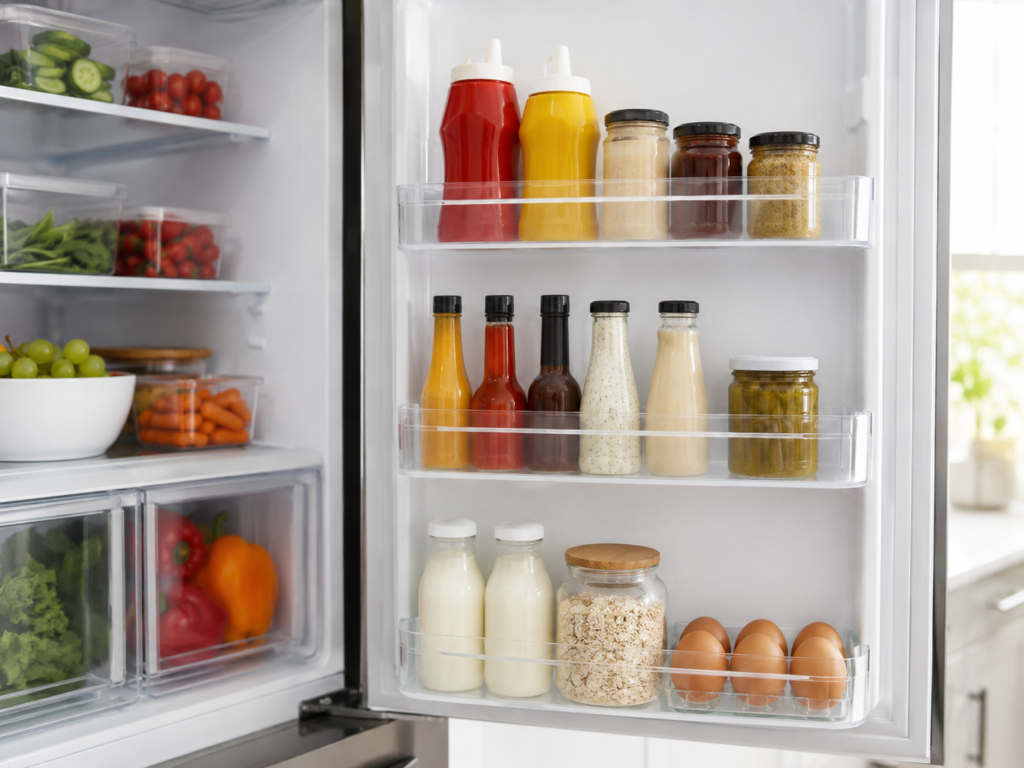
7. Organize the Door by Category
Refrigerator doors can quickly become a collection of unrelated bottles and jars.
Create simple groups instead.
For example:
Cooking
- Soy sauce
- Hot sauce
- Marinades
Breakfast
- Coffee creamer
- Syrup
- Jam
Condiments
- Mustard
- Ketchup
- Mayonnaise
Keep similar bottles together so you know where to look.
And avoid cramming every door shelf completely full.
Leaving a little room makes it easier to remove and return bottles without rearranging everything.
8. Store Produce So You Can Actually See It
Produce can’t get eaten if everyone forgets it’s there.
Crisper drawers are useful, but they can also turn into places where vegetables quietly disappear.
Avoid overfilling them.
Group similar produce together and keep frequently eaten items visible.
Depending on your refrigerator and the food involved, you might keep grab-and-go produce such as washed fruit or prepared vegetables in clear containers on a shelf.
The goal isn’t to move everything out of the crisper.
It’s to make sure you know what you have.
A refrigerator organization system that looks beautiful but causes you to forget about $15 worth of vegetables isn’t particularly useful.
9. Give Leftovers One Consistent Location
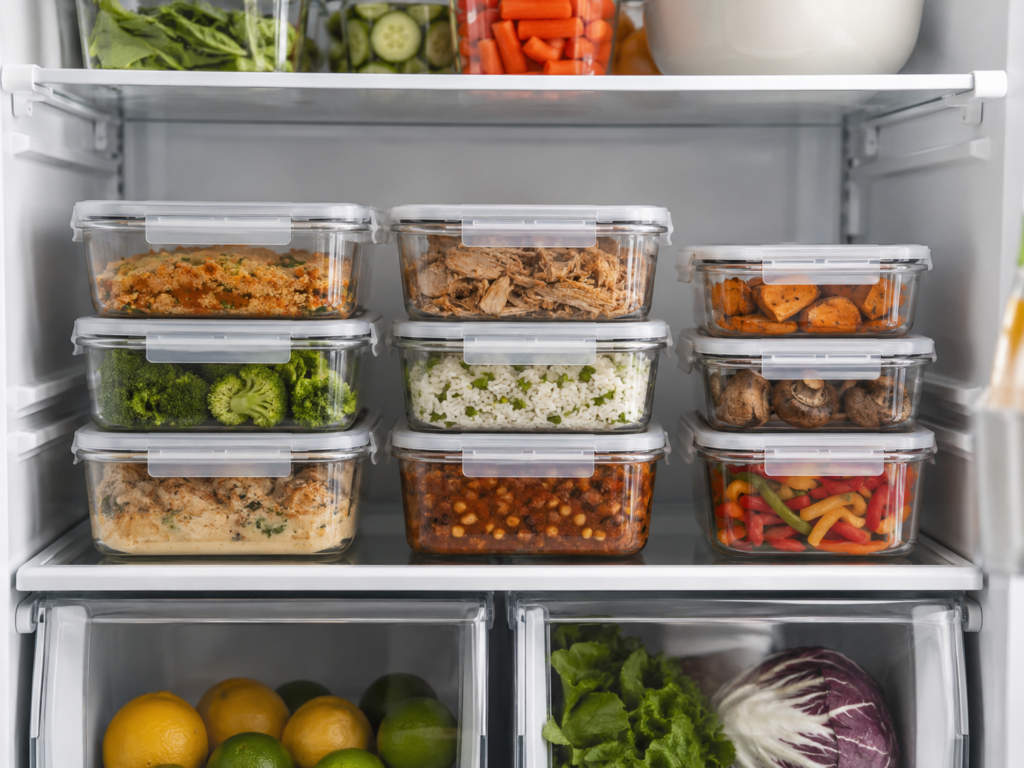
Leftovers become much easier to manage when they always go to the same place.
Stackable glass food-storage containers → View on Amazon
Reserve part of one shelf for:
- Dinner leftovers
- Meal-prep containers
- Open ingredients
- Food that needs to be finished soon
Keeping leftovers together prevents containers from getting scattered across multiple shelves.
It also makes it easier to check what needs to be eaten before cooking something new.
If possible, use clear containers so you can see what’s inside.
And avoid stacking containers so deeply that the bottom ones become invisible.
10. Use Stackable Containers Carefully
Stacking can help you use vertical space, but only when the containers remain easy to access.
Choose containers with relatively flat lids that stack securely.
They’re useful for:
- Leftovers
- Cut produce
- Meal prep
- Cheese
- Prepared ingredients
Avoid building tall towers.
If you need to remove four containers every time you want the one at the bottom, you’ve traded wasted space for inconvenience.
Two or three containers in a stable stack is usually much more practical.
This same idea applies inside kitchen cabinets.
If you’re working on those too, see 15 Kitchen Cabinet Organization Ideas That Make Every Shelf Work Harder.
11. Leave Room for Groceries
An organized refrigerator shouldn’t be completely full.
If every shelf, drawer, and bin is packed immediately after you organize it, there’s nowhere for the next grocery trip to go.
Try to leave some flexible space.
That makes it easier to accommodate:
- A large pot
- Takeout containers
- Extra produce
- Party food
- New groceries
- Unexpected leftovers
You don’t need an entirely empty shelf.
Just avoid designing a system where every square inch already has a permanent occupant.
A little breathing room makes the refrigerator much easier to maintain.
Refrigerator Organization Ideas That Reduce Food Waste
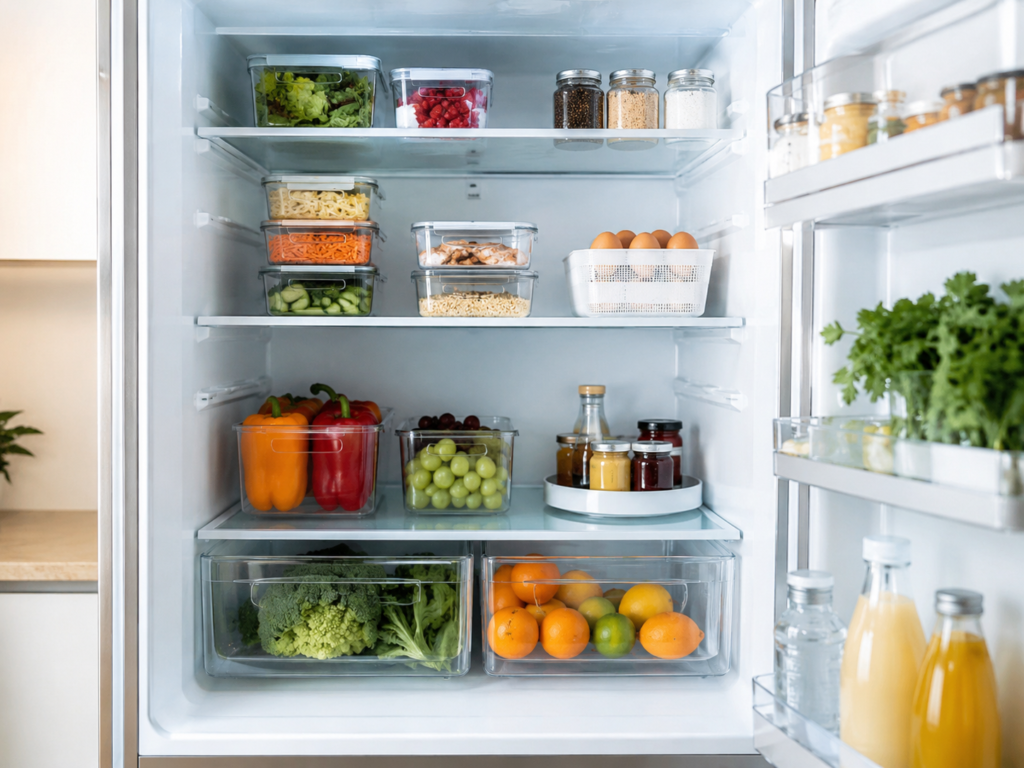
One of the biggest benefits of organizing a refrigerator isn’t aesthetics.
It’s visibility.
When you can see what you have, you’re more likely to use it.
That’s why some of the most useful refrigerator organization strategies are incredibly simple:
- Keep leftovers together
- Create an eat-first area
- Avoid overcrowding produce drawers
- Use clear containers when practical
- Keep categories consistent
- Leave enough space to see behind things
Before buying more groceries, quickly scan the refrigerator.
You may discover that tonight’s dinner is already sitting there.
Quick Refrigerator Organization Problem Solver
Problem: Small items disappear
Try: Clear category bins
Problem: Food keeps expiring
Try: An eat-first bin
Problem: Leftovers get forgotten
Try: One dedicated leftover zone
Problem: Bottles hide behind each other
Try: A turntable
Problem: Refrigerator feels cramped
Try: Adjust shelf heights and remove expired or duplicate food
Problem: Produce gets forgotten
Try: Keep drawers less crowded and frequently eaten produce visible
Problem: Nobody puts things back correctly
Try: Use fewer, broader zones
Problem: New groceries don’t fit
Try: Leave some flexible shelf space
Frequently Asked Questions About Refrigerator Organization
What is the best way to organize a refrigerator?
Start by removing expired and unwanted food, then create broad zones for categories such as breakfast foods, snacks, produce, leftovers, and meal ingredients.
Keep frequently used foods easy to reach and use clear bins when they make small items easier to contain.
Are refrigerator organizer bins worth it?
They can be when they solve a specific problem.
Bins work especially well for small packages that tend to scatter or disappear.
You don’t need to put every refrigerator item inside a bin. Too many containers can actually reduce usable space.
How do I keep leftovers from getting forgotten?
Give leftovers one consistent location and consider using an eat-first bin for food that should be consumed soon.
Clear containers can also help because you can immediately see what’s inside.
How do I organize a small refrigerator?
Focus on visibility and flexibility.
Adjust shelves to match the foods you actually store, use compact bins for small items, keep categories together, and avoid overfilling shelves.
Leaving some open space can make a small refrigerator much easier to use.
What should I put in refrigerator door shelves?
Door shelves work well for many condiments, sauces, jams, and other items that fit safely there according to your refrigerator manufacturer’s guidance.
Group similar products together so they’re easier to find.
How often should I reorganize my refrigerator?
You shouldn’t need to completely reorganize it frequently if the system is working.
A quick check before grocery shopping is usually enough to remove old food, identify leftovers that need to be eaten, and make room for new groceries.
A more thorough clean can be done whenever spills, expired foods, or clutter start accumulating.
Make Your Refrigerator Easier to Use
You don’t need rows of identical containers or a refrigerator that looks staged for a photograph.
You need to know what’s inside.
Give food predictable homes.
Keep older food visible.
Make leftovers easy to find.
Use bins where they genuinely help.
And leave enough open space that the refrigerator can handle real life.
A good refrigerator organization system should make one everyday question much easier to answer:
What do we already have to eat?