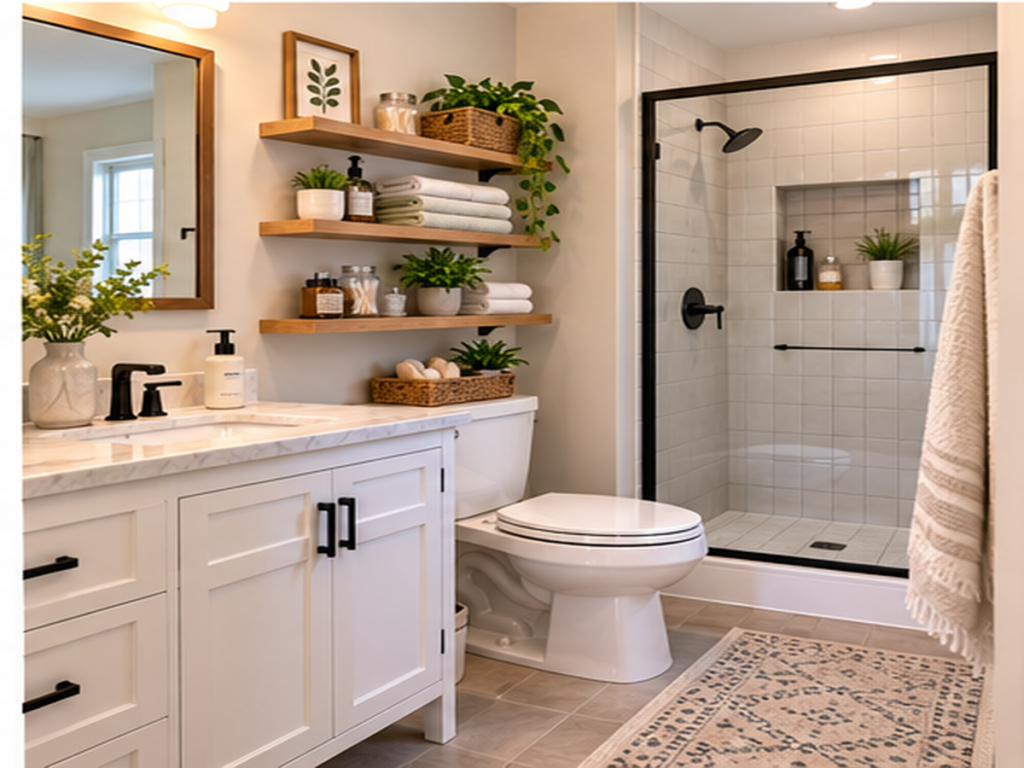
Good small bathroom shelving should add storage without making the room feel tighter.
That sounds simple, but bathroom shelves can create problems quickly.
A shelf that is too deep can stick into a walkway. A unit beside the sink can crowd the mirror. Shelves above a door can become impossible to reach. And open shelving can make a small bathroom look more cluttered if every surface is packed with bottles, towels, and baskets.
The best approach is to use shallow shelves in the right locations and reserve the easiest-to-reach areas for things you actually use every day.
Here are practical small bathroom shelving ideas that add useful storage without crowding the room.
Start by Looking for Unused Wall Space
Before buying shelving, look at the entire bathroom.
Useful wall areas may include:
- Above the sink
- Beside the mirror
- Above the toilet
- Above the bathroom door
- Beside the shower
- Narrow walls between fixtures
- Empty corners
- Walls above towel hooks
- Recessed areas between studs where appropriate
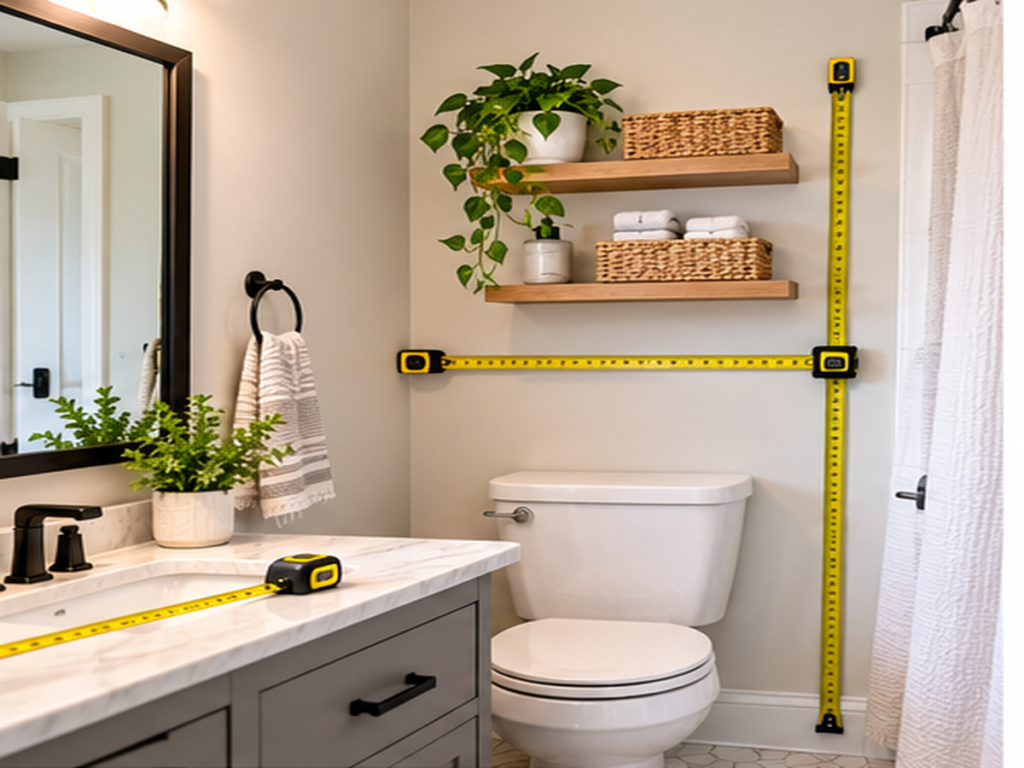
Then measure each area.
Record:
- Available width
- Available height
- Maximum comfortable shelf depth
- Door swing
- Cabinet-door clearance
- Mirror clearance
- Shower-door clearance
- Walking space
Do not assume the deepest shelf you can fit is the best choice.
In a small bathroom, several inches of unnecessary shelf depth can make the room feel much more cramped.
1. Add a Shallow Shelf Above the Sink
The wall above the sink can provide useful storage, especially if the bathroom has a small vanity.
A shallow shelf can hold:
- Everyday skincare
- Toothbrush supplies
- Small toiletries
- Hand soap refills
- Small baskets
Keep the shelf narrow enough that it does not interfere with the mirror or make the sink area feel crowded.
If you already have a large mirror, a shelf installed directly above it may work better than trying to squeeze one underneath.
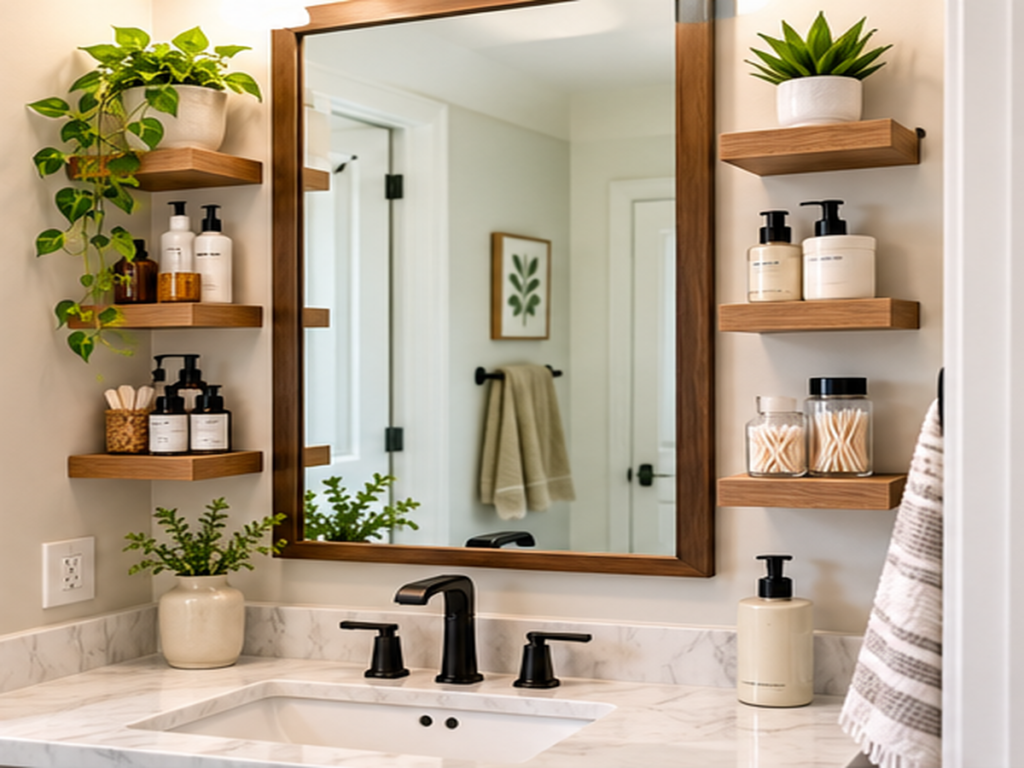
2. Use Narrow Shelves Beside the Mirror
The strips of wall beside a bathroom mirror are often overlooked.
A narrow vertical row of shelves can hold:
- Small bottles
- Perfume
- Grooming products
- Washcloths
- Small containers
This works particularly well when the wall is too narrow for a cabinet.
Keep the shelves shallow.
You do not want storage projecting into your face while you are using the sink.
Narrow floating bathroom shelves → Buy on Amazon
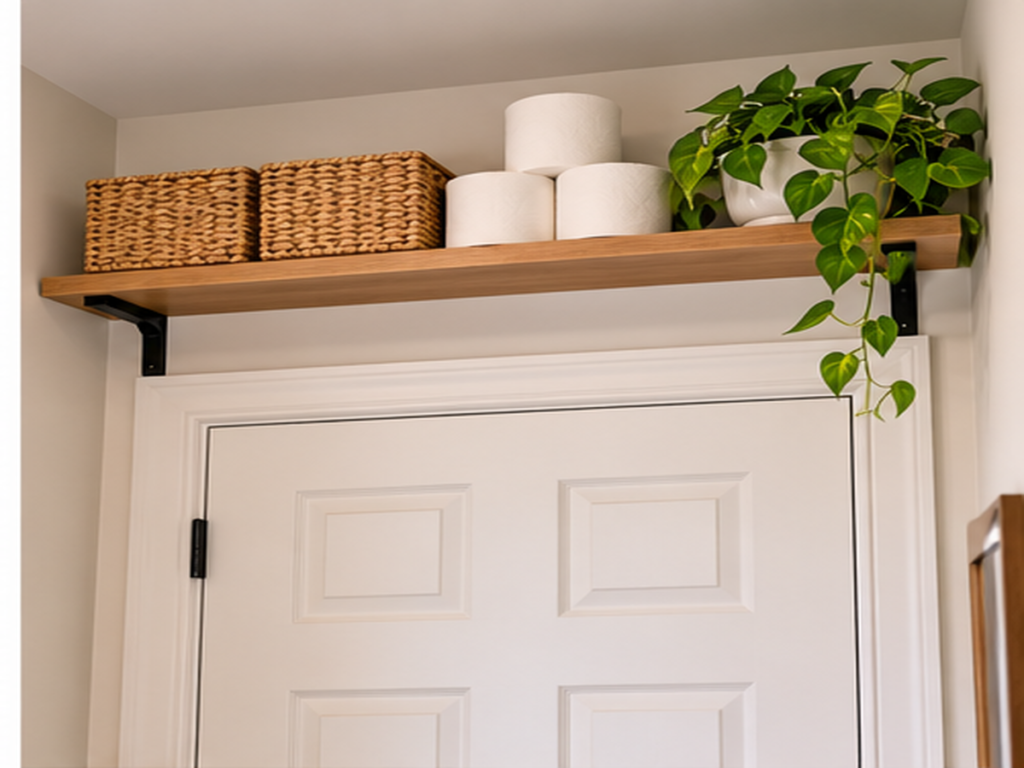
3. Use the Wall Above the Bathroom Door
The wall above the door is useful for items you do not need every day.
Good candidates include:
- Extra toilet paper
- Backup toiletries
- Spare towels
- Lightweight baskets
This is not prime storage because it is difficult to reach.
Use it for backstock rather than daily essentials.
Avoid storing very heavy or fragile items overhead.
4. Use Floating Shelves for a Lighter Look
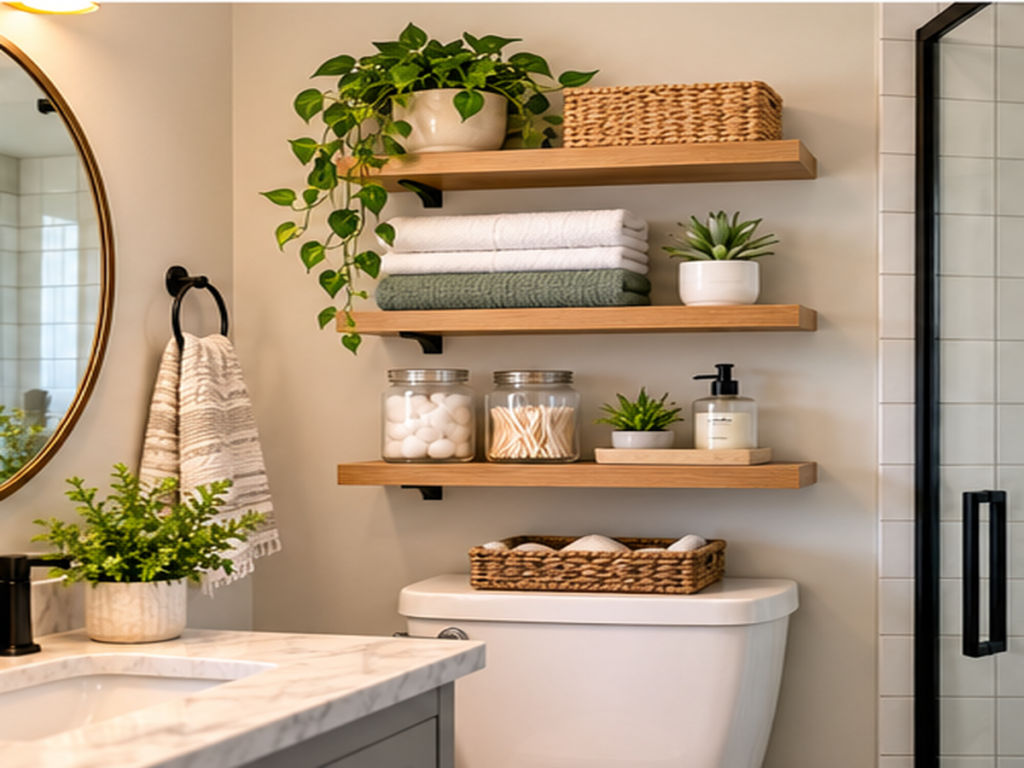
Floating shelves can add storage without the visual bulk of a freestanding unit.
They work well for:
- Towels
- Toiletries
- Small baskets
- Toilet paper
- Decorative containers
Use shelves with enough depth for the intended items but no more.
A shallow shelf usually looks better in a small bathroom than a deep shelf loaded with multiple rows of products.
5. Add Corner Shelving Where Flat Walls Are Limited
Corners can provide useful storage without taking over a large section of wall.
Small bathroom corner shelf → Buy on Amazon
Corner shelves can hold:
- Small toiletries
- Rolled washcloths
- Soap
- Plants
- Lightweight bathroom supplies
They are especially useful near a vanity or in an otherwise awkward corner.
Avoid oversized corner units.
The goal is to use the corner—not turn it into a tower of storage.
6. Use a Compact Corner Shelf Unit
If wall mounting is not practical, a narrow freestanding corner unit can work.
Look for a small footprint.
These units are useful for:
- Toilet paper
- Towels
- Cleaning supplies
- Baskets
Measure the base carefully.
A corner may appear empty while still being needed for:
- Door swing
- Cleaning access
- Shower entry
- Walking clearance
7. Use the Wall Above the Toilet Strategically
The wall above the toilet can provide substantial storage, but it deserves its own planning.
You might use:
- Floating shelves
- A wall cabinet
- A freestanding unit
- Baskets
If this is the main unused area in your bathroom, our full guide to over-the-toilet storage ideas covers tank clearance, shelf depth, plumbing access, and freestanding options in more detail.
For this article, the important point is that the toilet wall is only one potential shelving location.
You may have better opportunities elsewhere in the room.
8. Add a Shelf Above Towel Hooks
If your towels already hang on hooks, the wall above them may be unused.
A shelf can provide storage for:
- Clean towels
- Washcloths
- Extra toiletries
- Lightweight baskets
Keep wet towels below and clean backstock above.
This helps separate drying items from stored items.
If towels are one of your biggest storage problems, see how to store towels in a small bathroom when you have no linen closet.
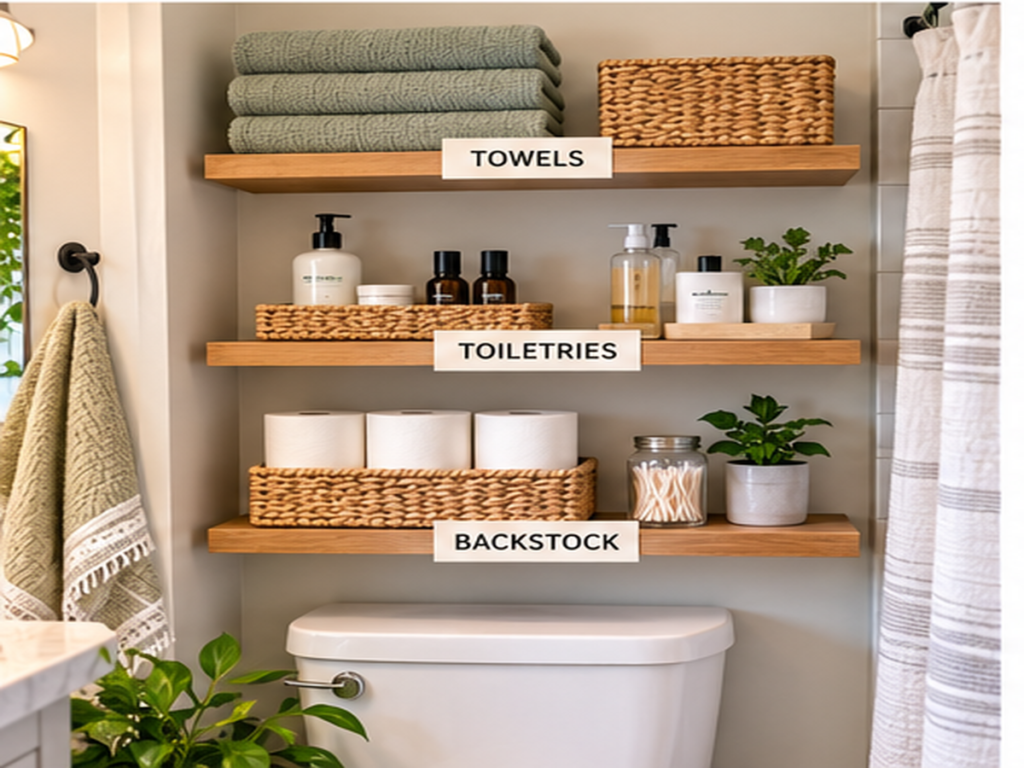
9. Create Separate Towel and Toiletry Zones
Do not mix every bathroom item onto every shelf.
Create zones.
For example:
Towel shelf
- Folded towels
- Washcloths
Toiletry shelf
- Skincare
- Hair products
- Grooming supplies
Backstock shelf
- Toilet paper
- Soap refills
- Extra products
Clear zones make open shelving look more organized and make it easier to find what you need.
10. Use Wall Baskets When a Shelf Would Be Too Deep
A wall basket can sometimes provide useful storage with less visual weight than a traditional shelf.
Wall baskets can hold:
- Rolled washcloths
- Toilet paper
- Lightweight toiletries
- Hair tools
- Small bottles
Choose baskets with enough depth to hold the items securely without projecting too far into the room.
Bathroom wall storage basket → Buy on Amazon
11. Consider Recessed Shelving
If you are remodeling, recessed storage can add shelving without projecting into the bathroom.
Potential locations include:
- Beside a vanity
- Above the toilet
- Between wall studs
- Near a shower, when properly designed for that environment
Recessed storage can be especially useful in very narrow bathrooms.
But this is not simply a matter of cutting into a wall.
Walls may contain:
- Plumbing
- Electrical wiring
- Structural components
- Venting
Any recessed installation should account for what is actually inside the wall.
12. Use Shower-Adjacent Shelves Carefully
Wall shelving near a shower can hold:
- Clean towels
- Bath products
- Extra toiletries
But the location matters.
Avoid materials that are not appropriate for repeated moisture exposure.
Also make sure the shelf does not interfere with:
- Shower doors
- Curtains
- Towel drying
- Entry and exit
A shelf outside the main splash zone is usually easier to maintain.
13. Use Moisture-Resistant Materials
Bathrooms are humid.
Choose shelving materials and finishes designed for bathroom conditions.
Repeated moisture can damage some:
- Unfinished woods
- Fiberboard
- Cardboard containers
- Metal finishes
This matters even if the shelf is not directly inside the shower.
Steam and humidity affect the entire room.
14. Keep Shelf Depth Shallow in Narrow Walkways
Shelf depth matters more in a small bathroom than most people expect.
A shelf can technically fit while still making the room uncomfortable.
This is especially important:
- Beside the toilet
- Near the doorway
- Beside the vanity
- Along narrow passage areas
Use the shallowest shelf that comfortably holds the intended items.
You do not need an 11-inch-deep shelf to hold bottles that are only a few inches deep.
15. Use Deeper Shelves Only Where the Room Allows
Some areas can tolerate deeper shelving.
For example:
- Above a wide vanity
- Inside a recessed alcove
- On a wall that does not border the walkway
Match depth to the room rather than making every shelf identical.
This creates more storage where the bathroom can handle it while preserving clearance in tighter areas.
16. Keep Everyday Items at Eye Level
Prime shelf space should go to items you use most.
Examples include:
- Skincare
- Grooming products
- Daily toiletries
- Hand towels
Keep these roughly within comfortable reach.
Higher shelves should hold lower-frequency items.
This reduces the need for stools or awkward reaching during everyday routines.
17. Put Backstock on Higher Shelves
High shelves work well for lightweight backup supplies.
Examples include:
- Toilet paper
- Soap refills
- Extra shampoo
- Spare towels
- Backup toiletries
Avoid putting your everyday products where you need to stretch to reach them.
The harder the shelf is to access, the less frequently you should need what is stored there.
18. Keep Heavy Items Low
Avoid storing dense or breakable items high overhead.
Heavy items are better on lower shelves or inside cabinets.
Use high shelving for:
- Towels
- Paper goods
- Lightweight baskets
This makes storage safer and easier to use.
19. Use Small Baskets to Control Loose Toiletries
A row of bottles can make an open shelf look cluttered very quickly.
Small baskets or trays can group categories such as:
- Skincare
- Hair products
- Dental supplies
- Shaving supplies
Use containers that fit the category rather than oversized baskets that waste shelf space.
20. Leave Frequently Used Products Visible When Helpful
Not everything needs to be hidden.
A small tray holding everyday products can be easier to use than a basket you constantly have to pull down.
Visible storage works well when:
- The category is small
- Products are used every day
- The shelf stays relatively tidy
Use concealed storage for messier categories.
21. Do Not Turn Every Shelf Into Décor
A plant or framed print can make bathroom shelving look good.
But if the room lacks storage, the shelves need to work first.
Use most of the shelf for useful storage.
Then add a small decorative element if space remains.
A tiny bathroom with four shelves of décor and no place for toilet paper is not well organized.
22. Leave Some Shelf Space Empty
A completely packed shelf is harder to use.
Leave enough room to:
- Pull items forward
- Add a temporary product
- Put things away easily
- Clean the surface
Open space also helps the bathroom feel less visually crowded.
23. Consider Adhesive Shelving for Very Lightweight Storage
Renters may be able to use adhesive-mounted bathroom organizers for lightweight items.
These can work for:
- Small toiletries
- Lightweight accessories
- Shower products where the organizer is specifically designed for that environment
Follow the manufacturer’s surface preparation and weight instructions.
Do not use adhesive shelving for heavy towels, glass containers, or large bottles unless the product is explicitly rated for those loads.
Adhesive bathroom shelf → Buy on Amazon
24. Use Freestanding Shelving When You Cannot Drill
A compact freestanding shelf unit can work when wall mounting is not an option.
Compact bathroom shelf unit → Buy on Amazon
Look for:
- Narrow depth
- Small footprint
- Moisture-resistant materials
- Stable construction
Use it in areas such as:
- Beside the vanity
- Beside the toilet
- In an unused corner
Do not add floor shelving if it creates a cramped walkway.
Wall storage is usually preferable when floor space is extremely limited.
25. Use Vertical Space Before Adding More Floor Furniture
Before adding another cabinet or cart, look upward.
The bathroom may already have unused wall space above:
- The toilet
- The sink
- Hooks
- Doors
- Existing furniture
Our guide to vertical storage ideas for small spaces covers the same strategy throughout the home.
In a bathroom, moving storage upward can preserve valuable floor area.
26. Keep Bathroom Shelving Easy to Clean
Bathroom shelves collect:
- Dust
- Hair
- Product residue
- Moisture
Avoid arranging dozens of tiny objects across every shelf.
Containers and defined categories make cleaning easier because you can move one basket instead of fifteen individual products.
27. Make Sure Shelves Do Not Block Doors or Drawers
Check every moving part before installing a shelf.
Open:
- Bathroom door
- Vanity drawers
- Medicine cabinet
- Shower door
- Cabinet doors
A shelf that seems perfectly positioned may still block something when it opens.
28. Avoid Shelves at Head and Shoulder Height in Tight Areas
In narrow passage areas, projecting shelves can be uncomfortable or even hazardous.
Avoid deep shelves:
- Near doorways
- Beside the toilet
- Along narrow walking paths
- Near shower entry
Shallow shelves or wall baskets are usually better choices in these areas.
29. Use Several Small Shelf Zones Instead of One Giant Unit
A huge shelving unit may provide more capacity, but it can visually overwhelm a small bathroom.
Several carefully placed shelves may work better.
For example:
- One shelf above the sink
- Two narrow shelves beside the mirror
- One high shelf above the door
This distributes storage without making one wall feel overloaded.
30. Keep the Room’s Main Sightline Simple
When you enter the bathroom, the first wall you see has a big effect on how crowded the room feels.
If possible, avoid covering that entire wall with storage.
Keep at least one visual area relatively simple.
This makes the bathroom feel calmer even when other walls are doing more storage work.
Where Should You Put Shelves in a Small Bathroom?
Look for unused wall areas that do not interfere with movement.
Good locations include:
- Above the sink
- Beside the mirror
- Above the toilet
- Above the door
- In corners
- Above towel hooks
Prioritize the locations that offer storage without projecting into the main walkway.
For broader storage ideas beyond shelving, see our guide to small bathroom storage ideas when you have almost no storage.
How Deep Should Small Bathroom Shelves Be?
There is no single ideal depth.
The shelf should be deep enough for the intended items without sticking farther into the room than necessary.
A toiletry shelf can often be shallower than a towel shelf.
Measure the items you plan to store before choosing shelf depth.
Are Floating Shelves Good for a Small Bathroom?
Yes.
Floating shelves can add useful storage without taking up floor space or adding the visual bulk of a freestanding cabinet.
They work especially well for:
- Towels
- Toiletries
- Small baskets
- Toilet paper
Choose appropriate mounting hardware and bathroom-suitable materials.
What Should You Put on Bathroom Shelves?
Useful shelf categories include:
- Towels
- Washcloths
- Toiletries
- Toilet paper
- Grooming supplies
- Backup products
- Small baskets
Keep frequently used items easy to reach and lightweight backstock higher.
Are Open Shelves Good in a Small Bathroom?
Open shelves can work very well, but they require some visual control.
Use baskets or trays for loose categories.
Avoid completely filling every shelf.
If you strongly dislike visible products, a wall cabinet may be a better option.
Can Renters Add Bathroom Shelving?
Freestanding units are the simplest renter-friendly option.
Adhesive organizers may work for lightweight items when installed according to the manufacturer’s directions.
If you want to mount shelves with hardware, check your lease or landlord requirements first.
Small Bathroom Shelving Works Best When It Uses the Wall Without Taking Over the Room
The best bathroom shelves do not simply create more places to put things.
They use space that would otherwise sit empty.
Put shallow shelves beside mirrors.
Use corners.
Take advantage of the wall above a door.
Separate towel and toiletry zones.
Move lightweight backstock higher.
Keep everyday items within reach.
And leave enough open space that the room still feels comfortable.
In a small bathroom, good shelving adds storage while disappearing into the layout instead of dominating it.