
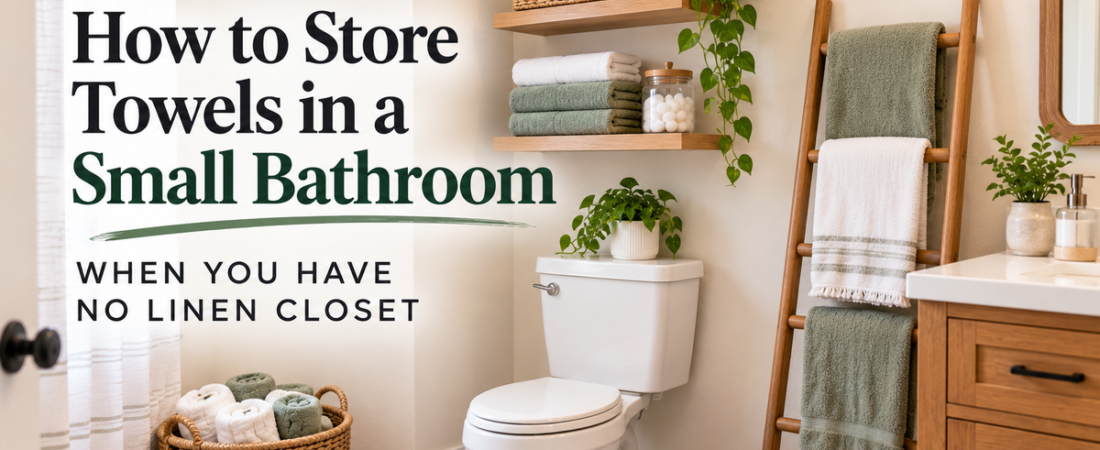
Figuring out towel storage for a small bathroom gets tricky fast when you don’t have a linen closet.
Bath towels are bulky, clean towels need somewhere dry to live, used towels need enough airflow to dry properly, and a small bathroom may not have much wall or floor space left after the toilet, sink and shower are accounted for.
The solution usually isn’t finding one giant cabinet.
It’s separating towels by how they’re used, deciding how many actually need to stay in the bathroom, and then choosing storage that fits the space without making the room feel even smaller.
Here are the most practical ways to store towels in a small bathroom when a linen closet isn’t an option.
Start by Separating Clean Towels From Towels in Use
Before buying shelves, baskets or cabinets, separate your towels into two groups:
Towels currently in use need airflow and a place to dry.
Clean backup towels need dry storage but don’t necessarily need to be immediately accessible.
Those two jobs require different solutions.
A towel bar or hook may be perfect for today’s bath towel, but it’s a poor place to store four clean backups.
Likewise, a closed cabinet may protect clean towels beautifully but won’t help a damp towel dry.
Keeping those functions separate makes a small bathroom much easier to organize.
1. Keep Fewer Backup Towels in the Bathroom
The easiest way to create towel storage is sometimes to reduce the number of towels you’re trying to fit into the room.
A small bathroom may not need to hold every towel the household owns.
Consider keeping:
- one towel in use per person
- one or two clean backup bath towels
- a few hand towels
- a small supply of washcloths
Everything else can live in a bedroom closet, dresser, laundry area or another dry storage location.
That keeps your limited bathroom storage focused on what you actually need there.
2. Use the Wall Above the Toilet
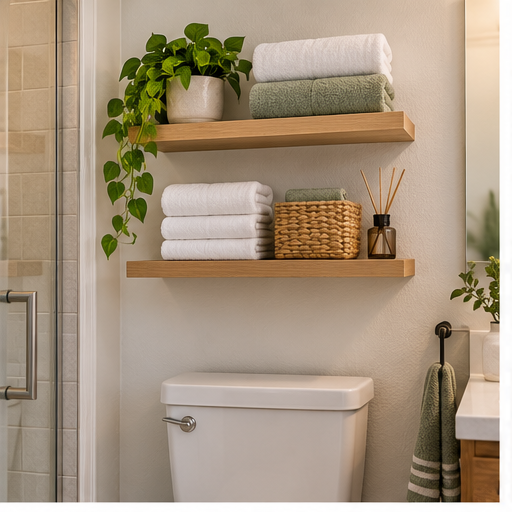
The area above the toilet is often one of the largest unused vertical spaces in a small bathroom.
Floating shelves can hold folded or rolled towels without consuming any floor space.
This works especially well for clean bath towels, hand towels and washcloths.
If you use open shelving, don’t overcrowd it. A few neatly folded towels usually look intentional. A tower of twelve towels tends to make a small bathroom feel cluttered.
You can also combine towels with a small basket for toiletries or extra toilet paper.
If your bathroom has almost no built-in storage at all, our 15 Small Bathroom Storage Ideas for Bathrooms With No Storage has more ways to use walls, doors and narrow spaces.
Wall-mounted bathroom shelves → Buy on Amazon
3. Add an Over-the-Toilet Storage Unit
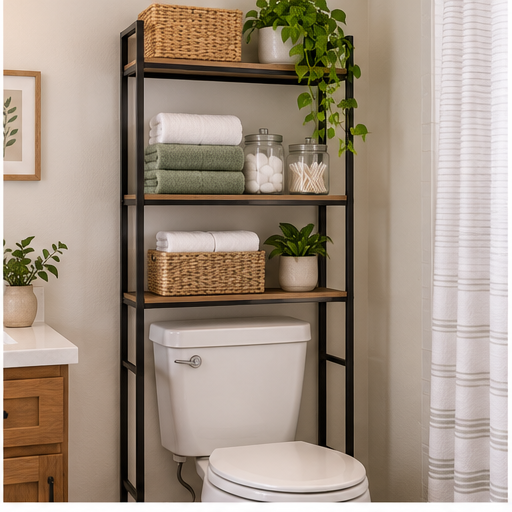
If you need more capacity than a couple of floating shelves provide, an over-the-toilet storage unit can create several levels of storage in essentially the same footprint as the toilet.
Open shelving keeps towels visible and easy to grab.
Cabinet-style units can hide visual clutter and protect clean towels from dust.
Before buying one, measure carefully around:
- the toilet tank
- toilet lid
- flush handle
- wall-mounted accessories
- baseboards
- nearby electrical outlets
Also make sure the lowest shelf doesn’t interfere with removing the toilet tank lid if maintenance is ever needed.
Over-the-toilet storage unit → Buy on Amazon
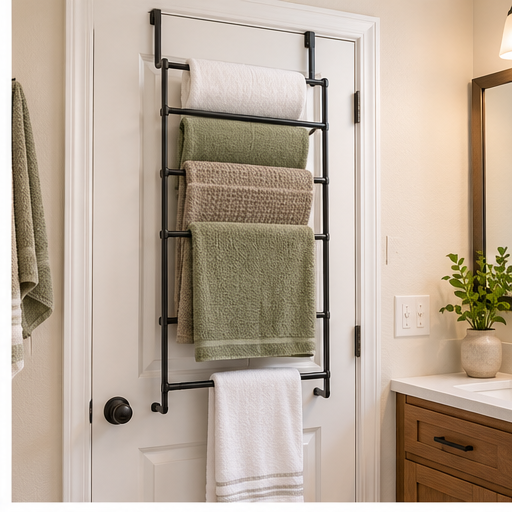
4. Hang an Over-the-Door Towel Rack
The back of the bathroom door can provide useful storage without taking up any wall or floor space.
An over-the-door rack can hold clean folded towels, towels in use or both, depending on the design.
This is especially useful for renters because many models don’t require drilling.
But check the top clearance before ordering.
Some bathrooms have doors that fit very tightly against the frame, and thick over-door hooks can prevent the door from closing properly.
Also check what happens when the door opens fully. A loaded rack shouldn’t smash into a wall, cabinet or shower enclosure.
Over-the-door towel rack → Buy on Amazon
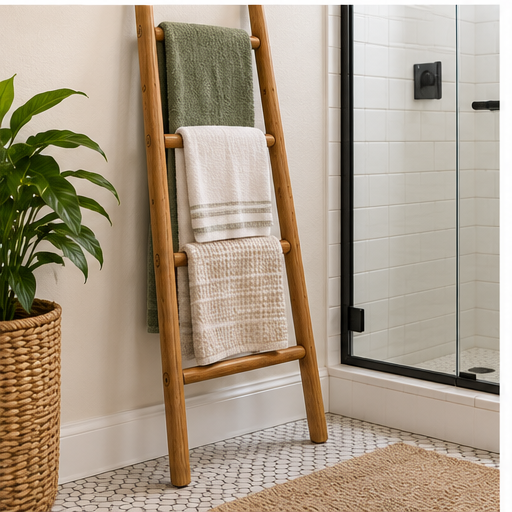
5. Use a Towel Ladder
A towel ladder gives you several vertical hanging points while using relatively little floor space.
It’s a good option when you’re allowed to lean something against the wall but don’t want to install several towel bars.
Ladders are especially useful for towels that are actively being used because hanging them separately provides more airflow than stacking them.
The tradeoff is depth.
Even a slim ladder extends into the room slightly, so it works best against a wall that isn’t part of a narrow walking path.
Measure the footprint at the floor, not just the width of the ladder itself.
Freestanding towel ladder → Buy on Amazon
6. Install a Second Towel Bar
Sometimes the simplest solution is adding more drying space rather than more storage furniture.
If you already have one towel bar, see whether another can fit:
- above it
- on another wall
- behind the door
- on the side of a vanity
Two bars let multiple towels hang separately instead of being layered on top of each other.
That matters because damp towels dry more slowly when they’re folded over one another.
If you’re renting, look for removable or adhesive options rated for bathroom humidity, but follow the manufacturer’s weight limits carefully.
7. Use Hooks for Towels in Daily Use
Hooks need much less wall width than towel bars.
That makes them useful in bathrooms where several people need somewhere to hang towels but there isn’t room for multiple long bars.
You can place hooks:
- behind the door
- beside the shower
- on a narrow wall
- on the side of cabinetry
Leave enough distance between hooks so wet towels aren’t pressed tightly together.
Hooks are convenient, but towels generally dry best when they’re spread out. If your bathroom stays humid, a bar may still be better for thick bath towels.
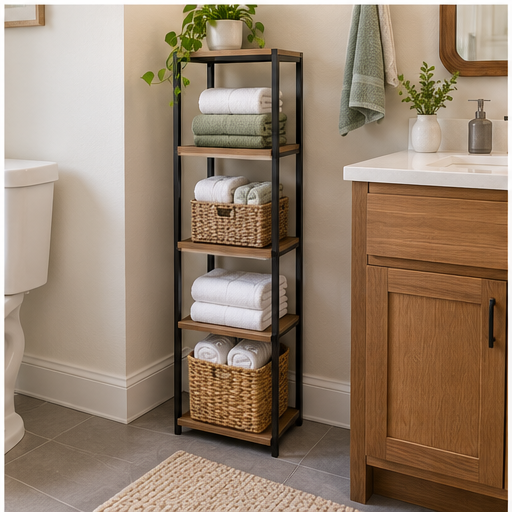
8. Add Narrow Freestanding Shelving
A slim shelving tower can work well in a narrow gap between fixtures or beside a vanity.
Use the larger lower shelves for folded bath towels and smaller upper shelves for washcloths, hand towels or toiletries.
The key measurement is not just width.
Also check:
- shelf depth
- overall height
- baseboard clearance
- whether doors or drawers nearby can open
- whether the shelf narrows the walkway
A shelving unit that fits on paper can still make the room irritating to use if it protrudes too far.
If you’re unsure how much usable space you actually have, our How to Measure for Storage Organizers Before You Buy guide covers width, depth, clearance and the common measurements people miss.
Narrow bathroom shelving tower → Buy on Amazon
9. Use Baskets to Separate Towels by Type
Baskets can help open shelving feel more organized.
Instead of stacking everything together, assign separate baskets for:
- washcloths
- hand towels
- clean bath towels
- guest towels
That makes smaller items much easier to keep contained.
Choose baskets that actually fit the shelf depth rather than protruding beyond the edge.
And avoid packing damp towels into baskets.
Baskets are for clean, dry towels unless they’re specifically designed as ventilated laundry storage.
10. Roll Towels When Shelf Depth Is Limited
Rolling towels isn’t magically more space-efficient in every situation, but it can work well on shallow shelves or in narrow baskets.
Rolled towels can also be easier to remove individually without disturbing the rest of the stack.
This works especially well for:
- hand towels
- washcloths
- thinner bath towels
For thick oversized bath sheets, traditional folding may still use the available space more efficiently.
Try both methods with the towels you actually own before buying storage around one particular folding style.
11. Store Towels Under the Sink — Carefully
If the vanity has usable space under the sink, clean towels can sometimes fit there.
But plumbing makes under-sink storage awkward, and bathrooms can be humid.
Use bins or shelf organizers to keep towels away from plumbing connections and cleaning products.
I would not place towels directly beneath joints or valves where a slow leak could soak them before you notice.
If the cabinet already holds cleaners and toiletries, separate those from textiles.
Our 15 Under-Sink Organization Ideas That Maximize Every Inch covers ways to work around pipes and irregular cabinet geometry.
12. Use the Side of the Vanity
The side panel of a vanity is often overlooked.
Depending on the layout, you may be able to add:
- a towel bar
- hooks
- a small rack
- a hanging basket
This works particularly well for hand towels or washcloths.
Check that whatever you install won’t interfere with the toilet, doorway or walking path.
In a very narrow bathroom, even a few inches of projection can matter.
13. Put Clean Towels in a Small Wall Cabinet
If you prefer concealed storage, a shallow wall-mounted cabinet can hold towels without using floor space.
Look for a cabinet with enough interior depth for your folded towels but a shallow enough exterior profile that it doesn’t overwhelm the room.
This is a good option above the toilet or on an open wall.
Keep heavier towels on lower shelves and lighter items higher up.
And anchor wall-mounted cabinets properly according to the manufacturer’s instructions.
14. Use a Basket Tower for Small Towels
A vertical basket tower can work well when you have a collection of washcloths and hand towels that doesn’t justify a full cabinet.
The vertical shape makes use of height while keeping the footprint small.
Use lower baskets for larger towels and upper baskets for smaller, lighter items.
For a bathroom, choose materials that tolerate moisture reasonably well.
Natural woven baskets look good, but they shouldn’t stay damp.
15. Store Extra Towels Outside the Bathroom
If the bathroom simply doesn’t have the space, don’t force it.
A nearby bedroom closet, hallway cabinet, dresser drawer or laundry shelf can handle the bulk of your towel inventory.
Keep only the active and next-use towels in the bathroom.
This is often a better solution than adding bulky furniture to an already cramped room.
Small-space organization works best when you stop assuming every category has to live exactly where it’s used.
How to Decide Which Towel Storage Solution Fits Your Bathroom
Start with the constraint you actually have.
No floor space:
Use floating shelves, wall cabinets, hooks or over-the-door storage.
No wall space:
Use the back of the door, side of the vanity or under-sink cabinet.
Need towels to dry:
Prioritize towel bars, ladders and well-spaced hooks.
Need to store clean backups:
Use shelves, cabinets or baskets.
Renting:
Look for freestanding, over-door or removable options.
Very humid bathroom:
Avoid tightly packing towels into enclosed storage before they’re completely dry.
Large household:
Separate active towels from clean backstock rather than trying to put everything on one rack.
The right solution depends less on the number of towels a product claims to hold and more on how the space actually functions.
Don’t Ignore Bathroom Humidity
Towels absorb moisture easily, even when they’re technically clean.
Avoid storing clean towels where they’re constantly exposed to splashing or trapped against damp surfaces.
If your bathroom stays humid after showers, good ventilation becomes especially important.
Let towels dry completely before folding them back into enclosed storage.
And don’t cram shelves or baskets so tightly that air can’t circulate around textiles.
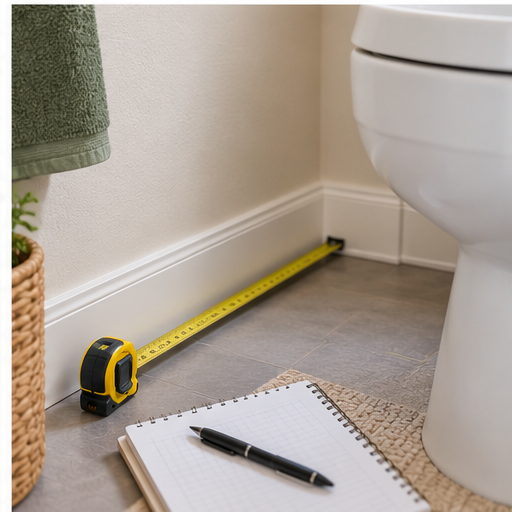
Measure Before Buying Towel Storage
Bathroom fixtures create more obstacles than an empty wall measurement suggests.
Before buying shelves, cabinets or freestanding storage, check:
- usable wall width
- available floor depth
- toilet clearance
- shower-door swing
- bathroom-door swing
- vanity drawers and cabinet doors
- towel bar projection
- baseboards
- electrical outlets
- plumbing access
- shelf depth
For anything mounted above the toilet, also consider how easily you can reach it.
A shelf can technically fit near the ceiling and still be impractical for everyday towels.
Frequently Asked Questions
Where do you put towels when you don’t have a linen closet?
Keep a small supply in the bathroom using shelves, baskets, wall cabinets or over-the-door storage, and store the rest elsewhere in the home. A bedroom closet, dresser or laundry area can hold backup towels that don’t need daily access.
How do you store towels in a very small bathroom?
Use vertical and overlooked surfaces first. The space above the toilet, back of the door, side of the vanity and narrow wall areas can provide storage without consuming much floor space.
Is it okay to store clean towels in the bathroom?
Yes, as long as the towels remain dry and the bathroom has reasonable ventilation. Avoid storing clean towels where they’re regularly exposed to splashing or trapped moisture.
Should you roll or fold towels in a small bathroom?
Use whichever method fits your storage geometry better. Rolling can work well in shallow shelves and baskets, while folding often works better for deep shelves and thick bath towels.
What is the best way to dry towels in a small bathroom?
Spread them out as much as possible. Towel bars generally provide better airflow than tightly packed hooks, although hooks can work when wall width is limited. Avoid layering damp towels on top of each other.
Make the Bathroom Store Only What It Needs
When you don’t have a linen closet, the goal isn’t to recreate one inside a tiny bathroom.
Keep the towels you use most often close at hand, give damp towels enough room to dry, and move excess inventory somewhere less valuable.
Use walls before adding bulky furniture. Use narrow vertical storage before giving up more floor space. And measure around toilets, doors, vanities and plumbing before buying anything.
A small bathroom may never hold a giant stack of towels — but it doesn’t need to.
It just needs to hold the right towels in the right places.