
A refrigerator does not have to be completely disorganized to stop working well.
Usually the system just drifts.
Leftovers get pushed to the back, condiments multiply, produce disappears into drawers, half-empty containers take up valuable shelf space, and the organization you started with slowly stops matching how you actually use the fridge.
That is where a fridge reset helps.
Instead of emptying the entire refrigerator and starting from scratch, you can spend about 30 minutes clearing out old food, wiping the main surfaces, regrouping categories, and restoring a few simple zones.
The goal is not a perfectly styled refrigerator.
It is a fridge where you can quickly see what you have, use food before it goes bad, and put groceries away without rearranging everything first.
What Is a Fridge Reset?
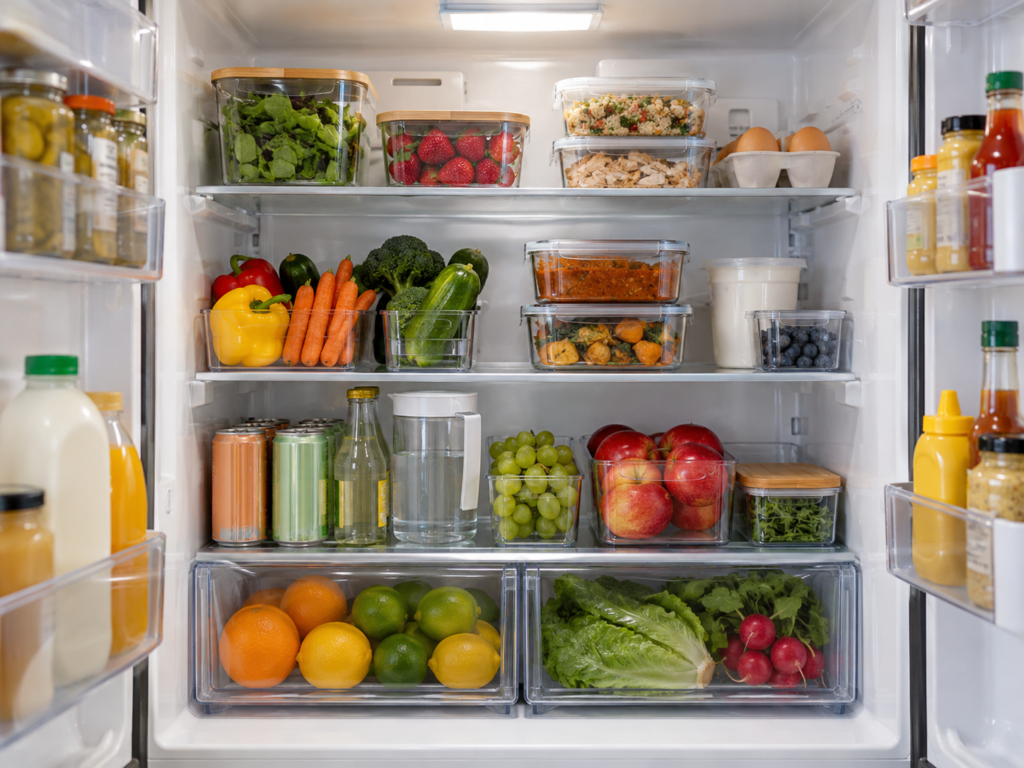
A fridge reset is a quick organization and maintenance routine rather than a complete refrigerator overhaul.
You are essentially bringing the fridge back to its normal functional baseline.
That usually means:
- Removing spoiled or expired food
- Checking leftovers
- Wiping obvious spills
- Grouping similar items
- Restoring your main food zones
- Moving food that should be eaten soon where you can see it
- Making room for the next grocery trip
You do not need to scrub every shelf, remove every drawer, or buy a new set of refrigerator organizers.
If your refrigerator needs a complete organization system rather than a reset, start with my refrigerator organization ideas guide.
Before You Start, Give Yourself 30 Minutes
Set a timer if you tend to turn small organization jobs into major projects.
A good fridge reset should take roughly:
- 5 minutes to remove obvious waste and old food
- 5 minutes to wipe the main surfaces
- 10 minutes to regroup and reset zones
- 5 minutes to check what needs to be used soon
- 5 minutes to restock and finish
You may need longer the first time.
But once you have a basic system, future resets should become faster.
1. Start With Obvious Trash and Spoiled Food
Do the easiest part first.
Look for:
- Empty packages
- Spoiled produce
- Moldy leftovers
- Empty condiment bottles
- Expired items
- Containers with only a spoonful left
- Food you know you are not going to eat
This immediately creates space.
Do not spend ten minutes debating every questionable item.
Use normal food safety judgment and discard anything that is clearly spoiled or no longer appropriate to keep.
2. Check Leftovers Before Anything Else
Leftovers are one of the biggest sources of refrigerator clutter.
Pull them forward and quickly identify:
- What is still good
- What needs to be eaten soon
- What should be discarded
- What can be combined
Avoid having five half-filled containers scattered across multiple shelves.
If two containers hold the same food, combine them when appropriate.
This gives you a clearer picture of what is actually available.
3. Reset One Zone at a Time
Do not empty the entire refrigerator onto the kitchen counter.
That turns a 30-minute reset into a much larger project.
Instead, work through one section at a time:
- Top shelf
- Middle shelf
- Bottom shelf
- Door
- Produce drawers
Remove the items from one zone, wipe the surface, and put the food back before moving to the next.
This keeps the job manageable.
4. Wipe the Shelves as You Go
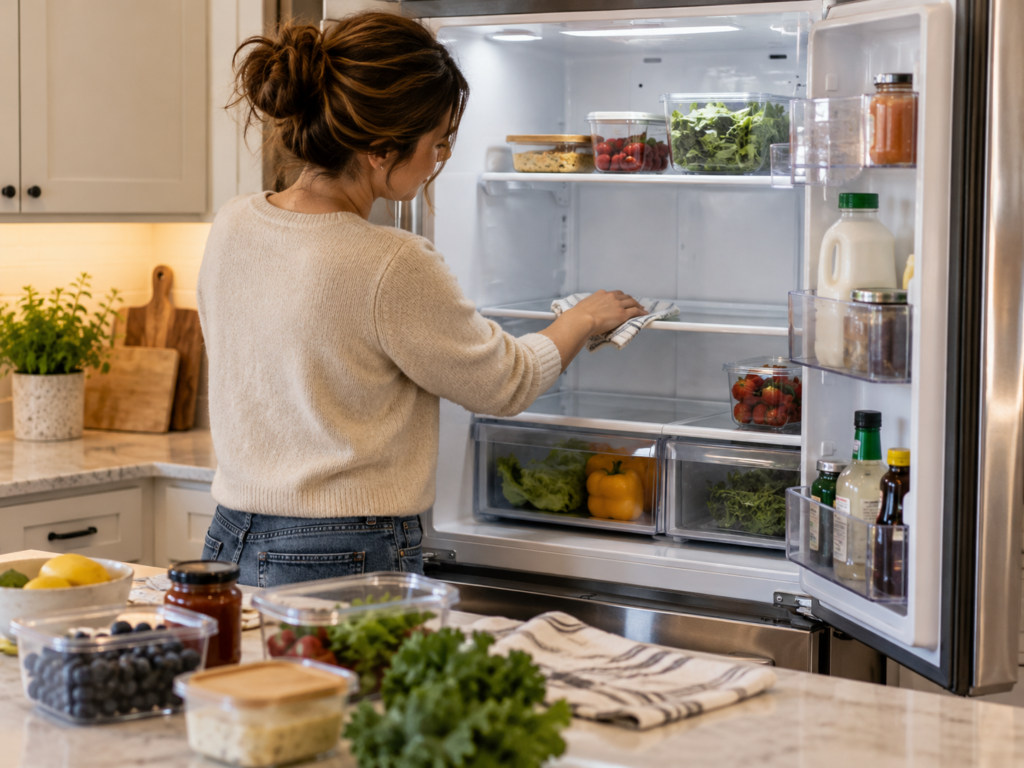
Once a shelf is partially empty, take advantage of the opportunity.
Wipe:
- Small spills
- Sticky rings
- Crumbs
- Condensation
- Food residue
You do not need to dismantle the refrigerator during every reset.
Focus on the surfaces that are already accessible.
If a shelf or drawer needs a serious deep clean, add that to a separate cleaning task instead of letting it derail the reset.
5. Group Similar Foods Together
Once the obvious waste is gone, bring basic categories back together.
Common categories might include:
- Dairy
- Leftovers
- Drinks
- Snacks
- Condiments
- Produce
- Meal prep
- Breakfast foods
The exact categories matter less than consistency.
If yogurt sometimes lives on three different shelves, you are more likely to forget what you already have.
Grouping similar foods makes inventory easier to see.
6. Create a Leftovers Zone
Give leftovers one defined section of the refrigerator.
This might be:
- One shelf
- Half of a shelf
- One clear bin
- A specific front corner
The important part is keeping leftovers visible.
A defined zone makes it easier to answer:
What needs to be eaten before I cook something new?
It also reduces the chance of discovering a mystery container two weeks later.
7. Create an Eat First Zone
An eat first area is one of the most useful fridge-reset habits.
Use a small section for foods that should be used soon, such as:
- Open packages
- Ripe produce
- Leftovers
- Half-used ingredients
- Yogurt approaching its date
- Food from an earlier grocery trip
Keep this zone near the front.
It does not need a fancy labeled container.
A simple clear bin or designated shelf area works.
Clear refrigerator bin → Buy on Amazon
8. Put Produce Where You Will Actually See It
Produce storage should help you use the food.
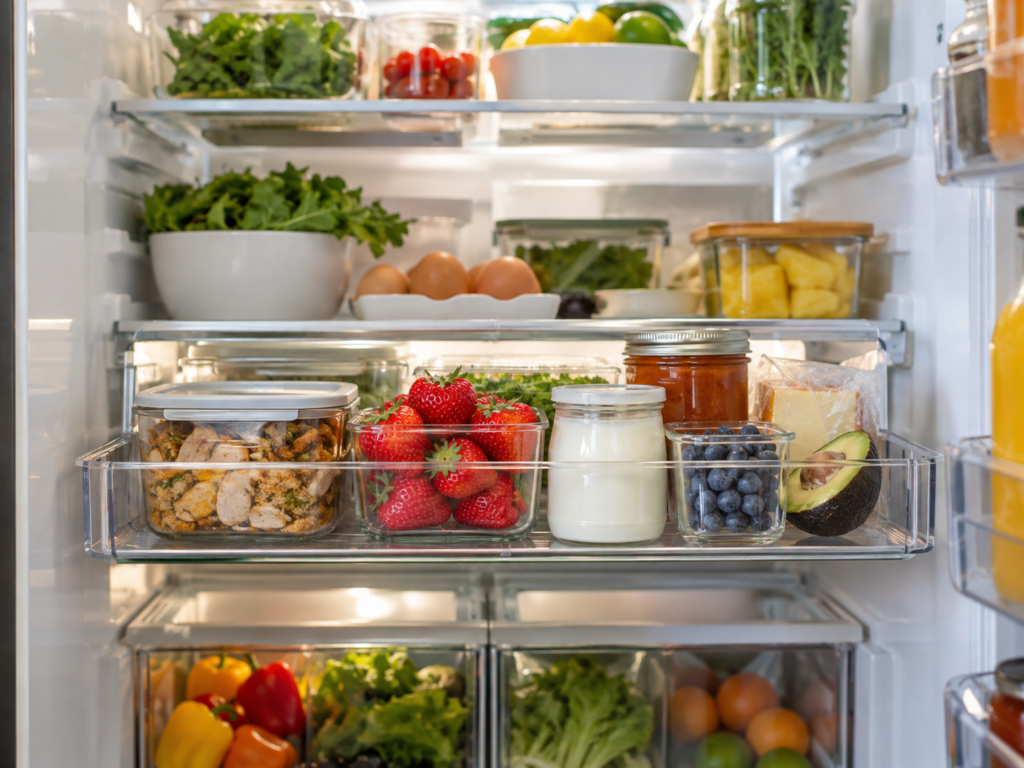
If something disappears into the back of a deep drawer every week, consider changing where you keep it.
Keep frequently eaten produce easy to see.
For example:
- Berries near the front
- Washed snacks at eye level
- Leafy greens in the appropriate drawer
- Larger vegetables grouped together
Do not move every fruit and vegetable into decorative containers simply because it looks good online.
Use the refrigerator’s drawers when they make sense.
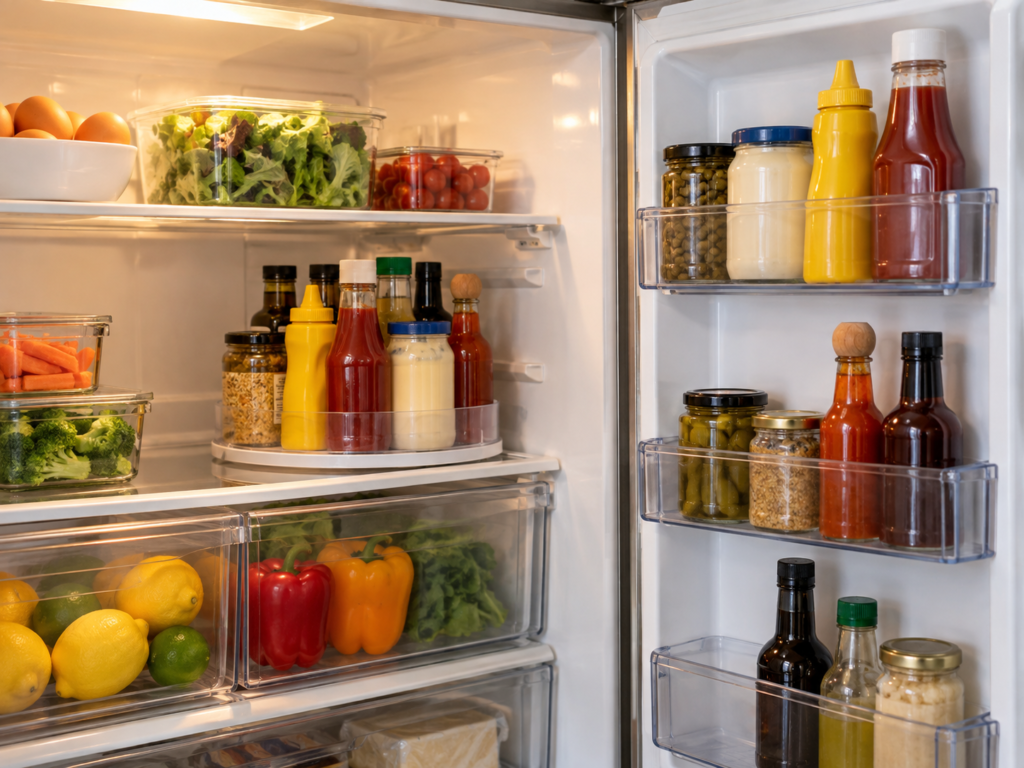
9. Rein in the Condiments
Refrigerator doors can become crowded with duplicate and rarely used condiments.
Quickly check for:
- Multiple open bottles
- Nearly empty containers
- Old sauces
- Expired dressings
- Condiments you never use
Group similar items together.
For example:
- Salad dressings
- Sauces
- Breakfast condiments
- Asian sauces
- Hot sauces
A small turntable can help if you have a deep shelf rather than door storage.
Small refrigerator turntable → Buy on Amazon
10. Give Drinks Their Own Zone
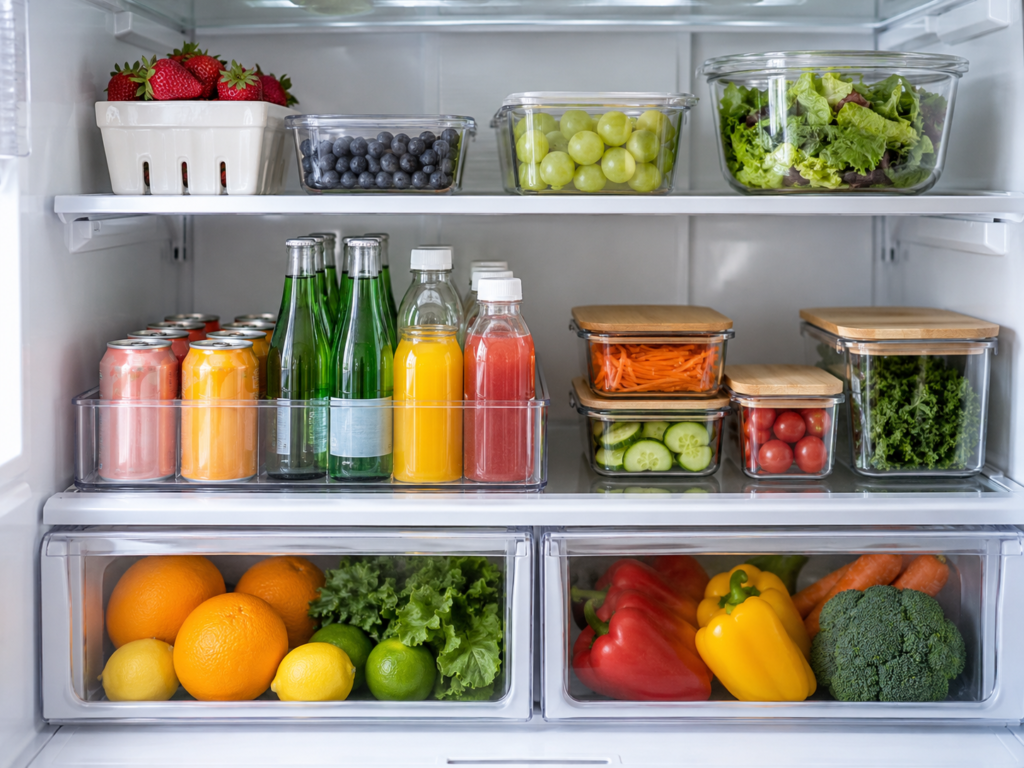
Beverages can take over a refrigerator quickly.
Choose one area for:
- Soda
- Sparkling water
- Juice
- Bottled water
- Canned drinks
Keep them together instead of filling every open gap with individual cans.
If canned beverages regularly roll around or consume too much shelf width, a narrow can organizer may help.
Refrigerator can organizer → Buy on Amazon
11. Create a Grab and Go Snack Area
If you regularly reach for yogurt, cheese sticks, fruit cups, or similar snacks, grouping them together can make the fridge easier to use.
This is especially useful for households where several people are looking for quick snacks.
Possible items include:
- Yogurt
- Cheese
- Fruit
- Snack vegetables
- Small drinks
- Prepared snack containers
Avoid filling a giant bin just because you have one.
Choose the smallest container that comfortably fits the category.
12. Stop Overfilling Refrigerator Bins
Bins can improve organization, but too many bins can actually make a refrigerator harder to use.
A bin becomes a problem when:
- You cannot see behind it
- It wastes shelf depth
- You have to remove it to reach everything
- Food gets buried inside it
- The bin itself takes up more room than the category needs
Use bins for categories that genuinely benefit from containment.
Do not turn every shelf into a row of plastic boxes.
13. Measure Before Buying Organizers
Refrigerators vary dramatically.
Before buying bins, turntables, drawers, or can organizers, measure:
- Shelf width
- Shelf depth
- Vertical clearance
- Door clearance
- Drawer dimensions
Measure the actual usable space, not just the refrigerator’s overall dimensions.
My guide to measuring for storage organizers explains how to account for usable clearance instead of relying on rough measurements.
You can also use my storage bin size guide when deciding whether smaller or larger containers make sense.
14. Avoid Unnecessary Decanting
You do not need to move every refrigerator item into a prettier container.
Decanting can work for some foods, but it can also create:
- Extra dishes
- Lost expiration information
- Forgotten cooking instructions
- More cleaning
- Wasted storage space
Keep foods in their original packaging when that packaging is practical.
Organization should reduce work.
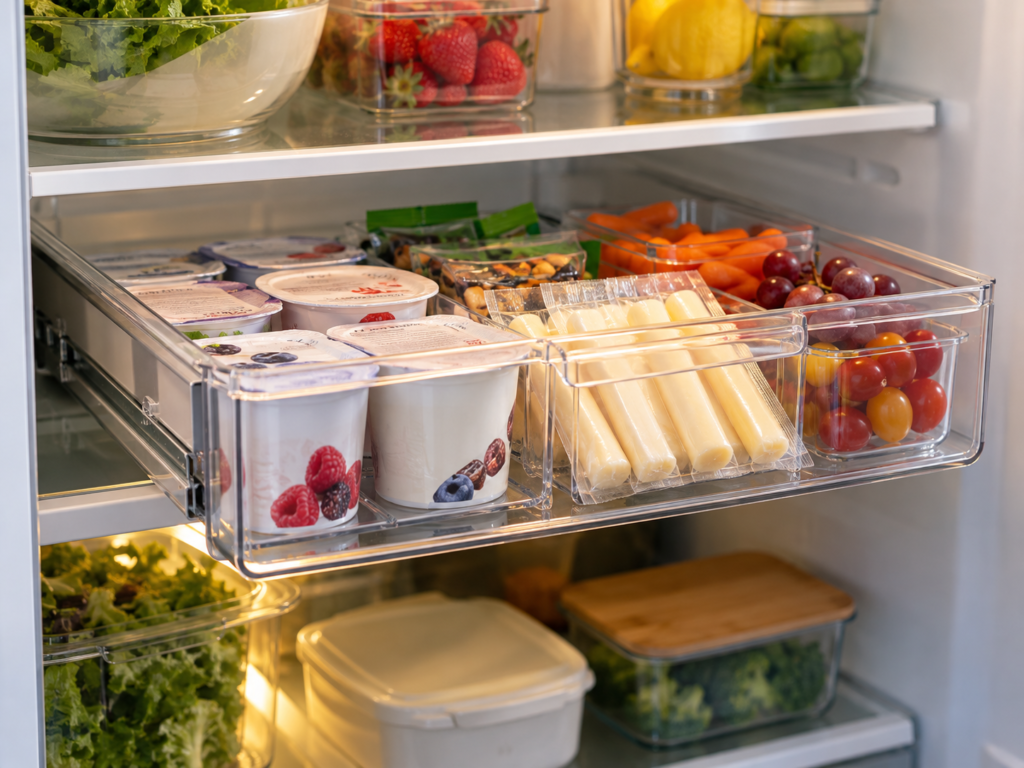
15. Use Drawer Style Bins for Hard to Reach Shelves
Some refrigerators have deep shelves where small items constantly disappear toward the back.
A pull-out or drawer-style bin can make those spaces easier to access.
They can work well for:
- Snacks
- Cheese
- Yogurt
- Small produce
- Packaged ingredients
Choose one only if it solves a specific access problem.
Drawer-style refrigerator bin → Buy on Amazon
16. Check Your Inventory Before Restocking
Once everything is grouped again, take a quick inventory.
Look for things you actually need.
For example:
- Milk
- Eggs
- Produce
- Yogurt
- Drinks
- Lunch supplies
- Condiments
Add missing essentials to your grocery list.
This is more useful than automatically buying your usual list and discovering you already had three jars of something hidden in the back.
17. Leave Some Empty Space
A completely full refrigerator is difficult to maintain.
Leave some space for:
- Leftovers
- Grocery day
- Meal prep
- Large containers
- Temporary items
Empty space is useful.
You do not need to fill every shelf simply because there is room.
A little flexibility makes it much easier to keep the system working.
18. Put Everything Back Based on How You Use It
Your refrigerator does not need to match someone else’s organization system.
Put frequently used items where they are easiest to reach.
Keep less-used items farther back or higher.
Think about your normal habits.
If you make lunch every morning, lunch ingredients should be easy to grab.
If you regularly forget produce, move it somewhere more visible.
The best organization system is the one that matches your actual behavior.
19. Take Out the Trash Immediately
Once the reset is finished, deal with the food and packaging you removed.
Do not leave a bag of old refrigerator items sitting in the kitchen for the rest of the day.
Take out anything that may smell or leak.
Then wipe the counter you used during the reset.
That gives the project a clear finish.
A 30 Minute Fridge Reset Schedule
Here is a simple timeline if you want to move quickly.
Minutes 0–5: Remove Waste
Discard spoiled food, empty packages, and clearly old leftovers.
Minutes 5–10: Wipe Surfaces
Work shelf by shelf and clean obvious spills.
Minutes 10–18: Regroup Categories
Return dairy, snacks, drinks, produce, and condiments to defined zones.
Minutes 18–23: Reset Leftovers and Eat First Foods
Move foods that need attention to the front.
Minutes 23–27: Check Inventory
Make a short grocery list.
Minutes 27–30: Finish
Take out trash and wipe the counter.
Done.
How Often Should You Do a Fridge Reset?
For most households, a quick reset once a week or every couple of weeks is enough.
A good time is:
- Before grocery shopping
- Before meal planning
- During your weekly reset
- Before trash day
If you already use a Sunday reset routine, the refrigerator check can be one small part of that process.
You do not necessarily need the full 30-minute version every week.
Some weeks may only require five minutes.
What Not to Do During a Fridge Reset
Avoid turning the reset into a complete refrigerator renovation.
Do not automatically:
- Remove every shelf
- Buy a full organizer system
- Replace every container
- Decant every food
- Reorganize the freezer
- Empty the entire refrigerator
- Rebuild every category
Those can be separate projects if necessary.
The point of a reset is to quickly restore a system that has drifted.
Do You Need Refrigerator Organizers?
Not necessarily.
You may only need a few.
Organizers make the most sense when they solve specific problems.
For example:
Clear Bin
Useful for defining an eat-first or snack zone.
Turntable
Useful for bottles and condiments on a deep shelf.
Can Organizer
Useful when beverages roll around or take up too much shelf space.
Drawer Bin
Useful when small items disappear toward the back.
Buying organizers without identifying the problem first usually creates more stuff rather than better storage.
How Do You Keep a Refrigerator Organized After the Reset?
Use a few simple habits:
- Put leftovers in the same zone
- Keep eat-first food visible
- Group similar foods
- Check produce regularly
- Remove empty packaging
- Avoid stuffing new groceries wherever they fit
- Do a quick check before shopping
The less complicated the system is, the easier it will be to maintain.
Reset the Fridge Without Starting Over
A fridge reset works because you are not trying to create a brand-new refrigerator organization system every week.
You are restoring the system you already have.
Remove old food, wipe the main surfaces, bring categories back together, create visible leftovers and eat-first zones, and leave enough open space for real life.
Thirty focused minutes can make the refrigerator easier to use, reduce forgotten food, and make the next grocery trip much easier to put away.