
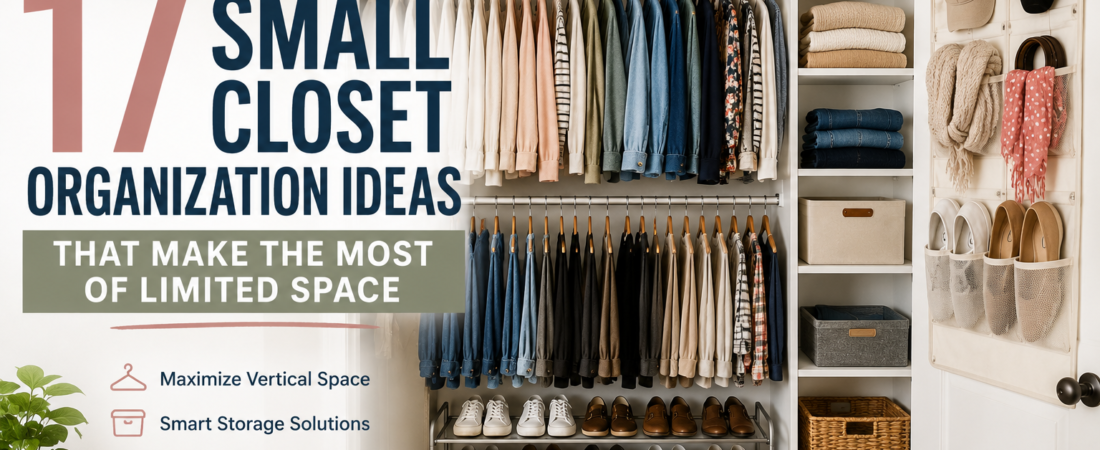
A small closet can get overwhelmed fast.
A few pairs of shoes on the floor, bulky sweaters stacked on a shelf, clothes squeezed onto one hanging rod, and suddenly finding one shirt means moving half the closet.
The problem isn’t always that the closet is too small.
Often, a surprising amount of its space simply isn’t being used very well.
The best small closet organization ideas take advantage of vertical space, doors, shelves, walls, and the area beneath hanging clothes while keeping everyday items easy to reach.
You don’t need an expensive custom closet system to make a meaningful difference, either.
Here are 17 practical ways to organize a small closet and make the most of the space you already have.
1. Start by Removing What You Don’t Wear
Before buying bins, shelves, or organizers, go through what’s already taking up space.
Pull out clothing that:
- No longer fits
- Is damaged beyond repair
- You consistently avoid wearing
- You own several nearly identical versions of
- Hasn’t been worn in a long time
You don’t need to get rid of something simply because you haven’t worn it recently. Seasonal clothing and special-occasion pieces obviously serve a purpose.
But a small closet doesn’t have much room for clothes you realistically aren’t going to wear again.
Decluttering first also prevents you from spending money organizing things you don’t actually want.
2. Add a Second Hanging Rod
Most closets have one rod installed several feet above the floor.
If you’re hanging shirts, jackets, or folded pants from it, there may be a huge amount of unused space underneath.
A second hanging rod can turn that empty area into another row of clothing storage.
Adjustable double closet rod → View on Amazon
Use the upper rod for:
- Shirts
- Blouses
- Jackets
And the lower rod for:
- Pants
- Skirts
- Children’s clothing
- Additional shirts
Double rods work best for shorter garments.
Keep one section of the closet with full-height hanging space if you need somewhere for dresses, long coats, or other longer pieces.
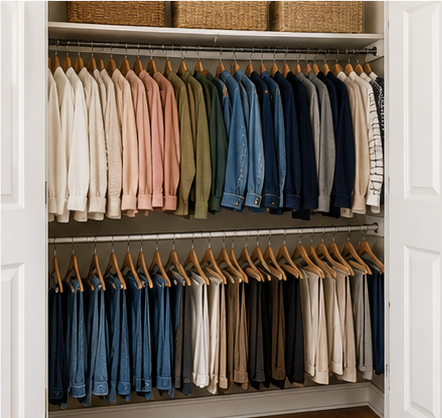
3. Use Slim Hangers
Bulky hangers consume more rod space than you might realize.
Switching to slim hangers can create noticeable breathing room without changing anything about the closet itself.
Using the same hanger style also keeps clothes at a more consistent height, which can make the space beneath them easier to use.
But don’t treat the extra room as permission to cram in another 40 shirts.
The goal is easier access.
You should still be able to slide clothing along the rod without fighting for every inch.
Slim space-saving velvet hangers → View on Amazon
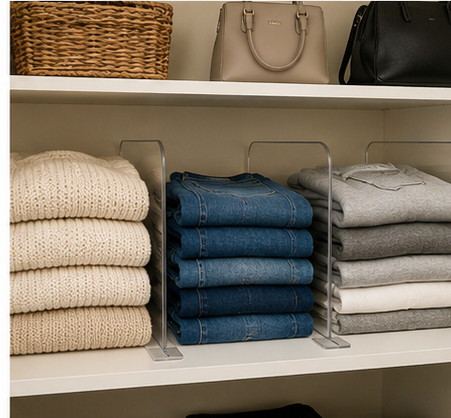
4. Add Shelf Dividers to Control Stacks
Closet shelves often start organized and gradually turn into leaning towers of sweaters, jeans, towels, or bags.
Shelf dividers create boundaries between those stacks.
Use them to separate:
- Sweaters
- Jeans
- Sweatshirts
- Handbags
- Towels
- Seasonal clothing
They can be especially helpful on a long upper shelf where categories tend to drift into one another.
Keep stacks reasonably short.
If you need to remove six sweaters to reach the one on the bottom, the shelf may be holding too much.
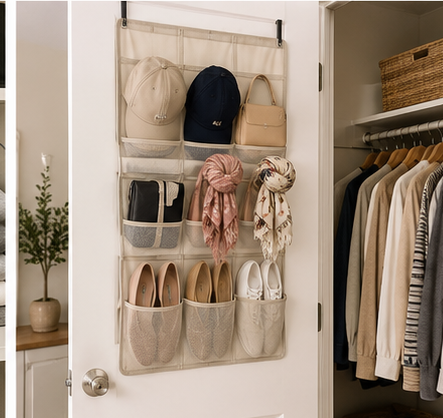
5. Use the Closet Door
The back of the closet door is one of the easiest storage opportunities to overlook.
An over-the-door organizer can hold:
- Shoes
- Scarves
- Belts
- Hats
- Small bags
- Accessories
Hooks are another simple option.
You don’t necessarily need a large organizer covering the entire door. A few well-placed hooks may be enough.
Choose storage based on what actually needs a home rather than trying to fill every available surface.
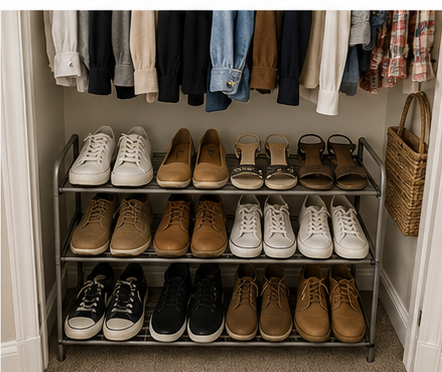
6. Get Shoes Off the Floor
Shoes scattered across the closet floor make a small space feel even smaller.
They also make it harder to use the storage underneath your clothes.
Depending on the closet, consider:
- A low shoe rack
- Stackable shoe shelves
- Clear shoe boxes
- Vertical cubbies
- An over-the-door shoe organizer
Stackable closet shoe rack → View on Amazon
Keep the shoes you wear most often easiest to reach.
Special-occasion or seasonal shoes can go higher up or farther back.
7. Use Bins on the Top Shelf
The top shelf often becomes a dumping ground because it’s difficult to reach.
Bins can turn it into more useful storage.
They’re particularly good for categories such as:
- Seasonal accessories
- Swimsuits
- Winter hats and gloves
- Extra linens
- Handbags
- Less frequently used clothing
Label bins if you can’t easily see what’s inside.
You don’t want to drag down four containers every time you’re looking for one scarf.
Lightweight items are usually best for high shelves since they’re easier and safer to retrieve.
8. Store Seasonal Clothes Somewhere Else
Your prime closet space should ideally be reserved for clothing you can actually wear now.
If bulky winter sweaters are occupying half the closet in July, consider moving them into:
- Under-bed storage
- Lidded bins
- A spare closet
- Vacuum storage bags
- High shelving
Under-bed storage containers → View on Amazon
Rotate seasonal clothing as the weather changes.
This doesn’t increase the physical size of the closet, but it reduces how much the closet needs to hold at one time.
That’s often just as valuable.
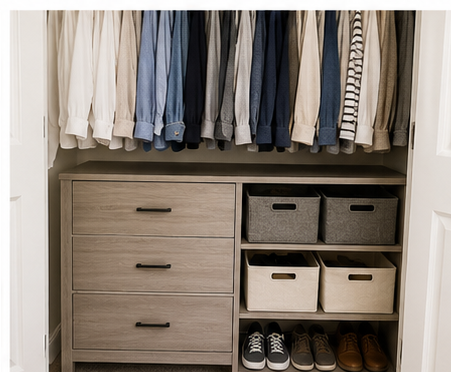
9. Use the Space Under Short Hanging Clothes
Look underneath your shirts and jackets.
There may be two or three feet of unused vertical space.
Depending on the available height, you could add:
- A small dresser
- Drawer units
- Shoe shelves
- Storage cubes
- Baskets
- A second hanging rod
This is one of the biggest opportunities in many small closets.
Don’t automatically assume hanging space needs to extend all the way to the floor.
10. Add Hooks to Empty Wall Space
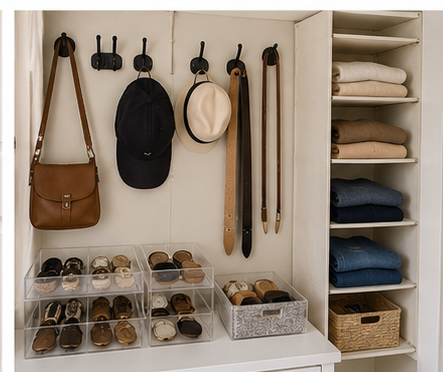
Small sections of closet wall can be surprisingly useful.
Install hooks for:
- Belts
- Bags
- Hats
- Robes
- Scarves
- Tomorrow’s outfit
Hooks are particularly useful on narrow side walls that aren’t deep enough for shelving.
Keep them relatively flat against the wall so hanging items don’t interfere with clothing on the rod.
Even three or four hooks can prevent accessories from ending up on the floor or buried on a shelf.
11. Use Vertical Organizers for Folded Clothes
Not everything needs to be stacked on a shelf.
Hanging fabric organizers create vertical compartments that work well for:
- Sweaters
- Jeans
- T-shirts
- Shoes
- Handbags
They attach directly to the closet rod, so they’re useful in closets without much built-in shelving.
Hanging closet shelf organizer → View on Amazon
There is a tradeoff: they consume hanging space.
Use one when you need folded storage more than you need another section of hanging rod.
12. Keep Small Accessories Contained
Small items create visual clutter quickly.
Instead of letting belts, scarves, jewelry, hats, and accessories spread across shelves, give each category a defined home.
Try:
- Small bins
- Drawer organizers
- Hooks
- Hanging organizers
- Divided trays
Avoid creating an overly complicated system.
If putting away a belt requires opening a box, removing a lid, moving another container, and carefully folding it into a specific shape, that system probably won’t last.
Easy storage gets used.
13. Store Less-Used Items Higher
Think of your closet as having different levels of valuable real estate.
The easiest areas to reach should hold things you use constantly.
The highest shelves should hold things you use less often.
For example:
Easy-to-reach areas
- Everyday clothes
- Frequently worn shoes
- Work clothes
- Daily accessories
Higher storage
- Seasonal accessories
- Special-occasion items
- Extra bedding
- Travel bags
Organizing based on frequency of use makes the closet easier to live with, even if the total amount of storage doesn’t change.
14. Use Clear Containers When Visibility Matters
Clear containers can be helpful for small accessories and less frequently used items.
They’re especially useful when several similar bins are stored together.
You can quickly see what’s inside without opening each one.
Use them for things like:
- Scarves
- Belts
- Small purses
- Seasonal accessories
- Swimwear
Opaque bins can look cleaner, but they generally need labels.
Choose whichever system makes it easiest to find what you need.
15. Create a Simple Everyday Zone
The easiest part of your closet should contain the things you reach for most often.
That might mean keeping:
- Work shirts together
- Everyday pants together
- Frequently worn shoes nearby
- Daily accessories on a hook or tray
You could even reserve one hook for tomorrow’s outfit.
The point isn’t to create another elaborate organizational system.
It’s to reduce friction during your normal routine.
The things you use every day shouldn’t be the hardest things in the closet to reach.
16. Avoid Overfilling Every Storage Area
One of the biggest closet organization mistakes is treating every empty inch as a problem that needs to be filled.
It doesn’t.
A little empty space makes a closet easier to use.
Clothes slide along the rod more easily.
Stacks are easier to remove.
Shoes are easier to grab.
New purchases have somewhere to go.
Storage capacity and usable storage aren’t the same thing.
A closet that’s packed to 100% of its theoretical capacity can be far less functional than one that’s comfortably 80–90% full.
17. Organize the Closet Around Your Routine
The best closet system isn’t necessarily the prettiest one.
It’s the one that matches how you actually get dressed.
If you wear work clothes five days a week, give them prime space.
If you rarely wear formal clothes, move them somewhere less convenient.
If shoes constantly end up on the floor, put shoe storage exactly where you naturally take them off.
If you always toss a handbag onto the shelf, install a hook there.
Pay attention to where clutter naturally forms.
Often, that tells you exactly where the storage solution needs to go.
Small Closet Organization Ideas: Focus on Usable Space
The goal isn’t to squeeze the maximum number of possessions into the smallest possible closet.
It’s to make the closet easier to use.
That means being able to:
- See your clothes
- Reach what you need
- Put things away easily
- Keep shoes off the floor
- Prevent shelves from becoming piles
- Use vertical space intelligently
Start with the part of the closet that frustrates you most.
If the hanging rod is packed, declutter and switch to slimmer hangers.
If the floor is covered in shoes, solve shoe storage first.
If the upper shelf is chaos, add bins or dividers.
One improvement can make the next problem much easier to see.
Connect Your Closet to the Rest of Your Small-Space Storage
Closet organization works even better when you stop expecting the closet to hold absolutely everything.
Seasonal clothing might fit better under the bed.
Extra household supplies might belong elsewhere.
And if you’re working through several cramped areas of the house, many of the same principles apply: use vertical space, make awkward areas accessible, and reserve prime storage for things you use frequently.
Working on other tight spaces around the house? See 17 Small Kitchen Organization Ideas for Maximizing Limited Space for more ways to make limited storage work harder.
And if you’re tackling cabinets specifically, our guide to 15 Kitchen Cabinet Organization Ideas That Make Every Shelf Work Harder covers shelf risers, pull-outs, vertical dividers, bins, and other ways to reclaim cabinet space.
Quick Small Closet Problem Solver
Problem: Not enough hanging space
Try: A second hanging rod and slim hangers
Problem: Shoes cover the floor
Try: A low shoe rack or vertical shoe storage
Problem: Folded clothes collapse into piles
Try: Shelf dividers or a hanging organizer
Problem: Top shelf is chaotic
Try: Lightweight labeled bins
Problem: Accessories don’t have a home
Try: Hooks, small bins, or divided organizers
Problem: Lots of empty space below shirts
Try: Drawers, cubes, shoe shelves, or a second rod
Problem: Closet feels completely packed
Try: Seasonal rotation and removing rarely worn clothing
Problem: Closet gets messy again immediately
Try: Simplifying the system around your actual routine
Frequently Asked Questions About Small Closet Organization
How do I organize a small closet with too many clothes?
Start by removing clothing you no longer wear and moving seasonal pieces out of prime storage.
Then maximize the space you already have with slim hangers, double hanging rods, shelf dividers, and storage beneath shorter garments.
The goal should be making clothing accessible rather than fitting as many pieces as physically possible.
How can I double the storage in a small closet?
A second hanging rod can dramatically increase hanging capacity when most of your clothing is relatively short.
You can also use the space beneath hanging clothes, the back of the door, high shelves, and narrow wall areas.
Not every closet will literally double in capacity, but using previously wasted vertical space can create a substantial amount of additional storage.
What should go on the top shelf of a closet?
Use the top shelf for lightweight items you don’t need every day.
Good options include seasonal accessories, extra linens, handbags, travel items, and out-of-season clothing.
Bins can keep categories separated and prevent the shelf from becoming a pile.
Are closet organizers worth buying?
They can be, but only when they solve a specific problem.
A second rod is useful if you’re wasting vertical hanging space. Shelf dividers help if folded clothes constantly collapse. Shoe racks help if shoes cover the floor.
Buying a complete organizer system before identifying the actual problem can result in spending money without making the closet much easier to use.
How should I organize shoes in a small closet?
Keep frequently worn shoes in the easiest-to-reach location.
A low rack beneath hanging clothes works well in many closets.
If floor space is limited, consider vertical cubbies, stackable shoe shelves, clear boxes, or an over-the-door organizer.
How can I make a small closet look less cluttered?
Reduce the amount stored there, keep the floor relatively clear, group similar items together, and avoid overfilling shelves and hanging rods.
Using consistent hangers can also make the closet visually calmer while taking up less space.
Make the Closet Work for You
A small closet doesn’t have to hold everything you own.
It needs to hold the things you actually use in a way that makes them easy to find and put away.
Use the height.
Use the door.
Use the floor intentionally.
Take advantage of the space underneath shorter clothes.
And don’t fill every available inch simply because you can.
The best small closet organization system is one you barely have to think about once it’s in place.
That’s when the space is truly working harder for you.