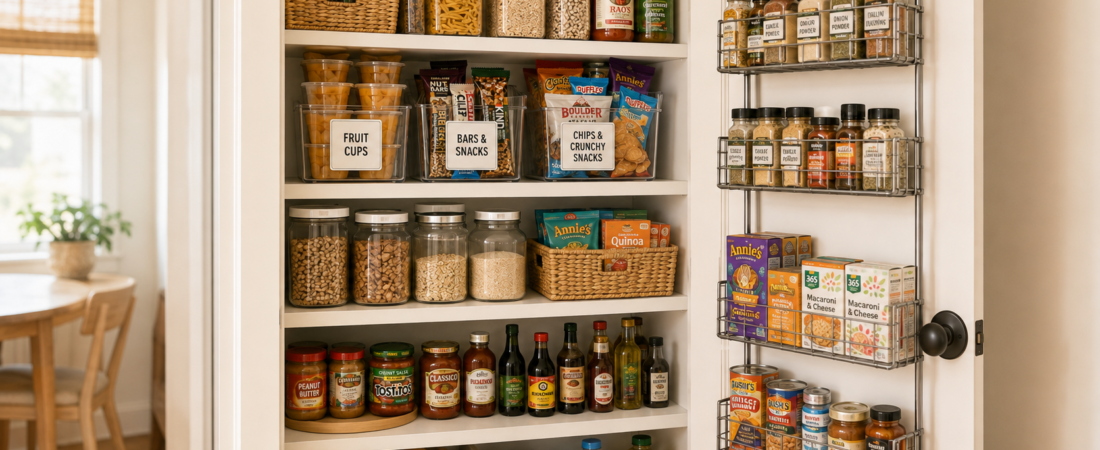
A small pantry can hold a surprising amount of food — but only when you can actually use the space you have.
Deep shelves hide cans behind cereal boxes. Half-empty bags collapse into each other. Snacks migrate into every available corner. And somehow, the one ingredient you need is always behind six things you don’t.
The good news is that organizing a small pantry doesn’t require a full renovation or an expensive collection of matching containers.
The biggest improvements usually come from using overlooked vertical space, making deep shelves easier to access, grouping similar foods together, and choosing organizers that solve a specific problem.
Here are 21 small pantry organization ideas that actually save space — whether you have a tiny walk-in pantry, a narrow cabinet pantry, or just a few shelves to work with.
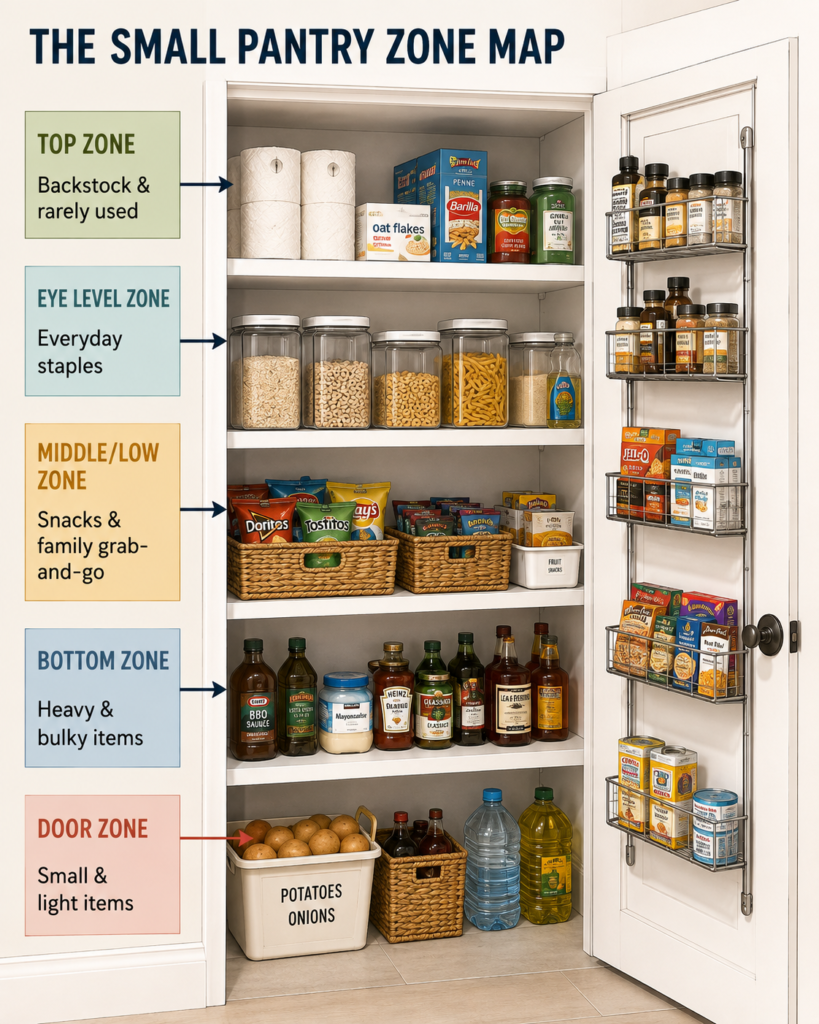
1. Create Pantry Zones Before Buying Organizers
The easiest way to waste money on pantry organizers is to buy them before deciding what actually needs to go where.
Start by grouping your food into broad categories such as:
- Breakfast
- Snacks
- Baking
- Pasta and grains
- Canned foods
- Sauces and condiments
- Meal ingredients
- Backstock
You don’t need fifteen hyper-specific categories. In a small pantry, simpler is usually better.
Once everything has a general home, you’ll immediately see which areas actually need bins, risers, baskets, or other organizers.
Space Well Used Tip: Organize around how you use food rather than how it looks. If everyone grabs snacks every day, put them somewhere easy to reach — not on the top shelf because the containers happen to look nice there.
2. Use Shelf Risers to Double Short Shelf Space
One of the biggest wastes of pantry space is stacking one short item on a tall shelf.
If a shelf holds cans that are only five inches tall but there’s another six inches of empty space above them, a shelf riser lets you use that wasted vertical space.
They’re especially useful for:
- Canned foods
- Jars
- Short containers
- Spices
- Small boxes
Shelf risers → View on Amazon
The bonus is visibility. Instead of building a wall of cans three rows deep, you can elevate the back row so you can actually see what’s there.
3. Put Deep Shelves on Turntables
Deep pantry shelves seem useful until something disappears into the back corner for eleven months.
A turntable — often called a Lazy Susan — converts that awkward depth into accessible storage.
They’re especially useful for bottles and jars that are difficult to stack:
- Oils
- Vinegars
- Sauces
- Nut butters
- Condiments
- Syrups
Instead of moving five bottles to reach the one behind them, rotate the turntable.
For corners, a round turntable can also make use of space that rectangular bins don’t handle particularly well.
Pantry turntable → View on Amazon
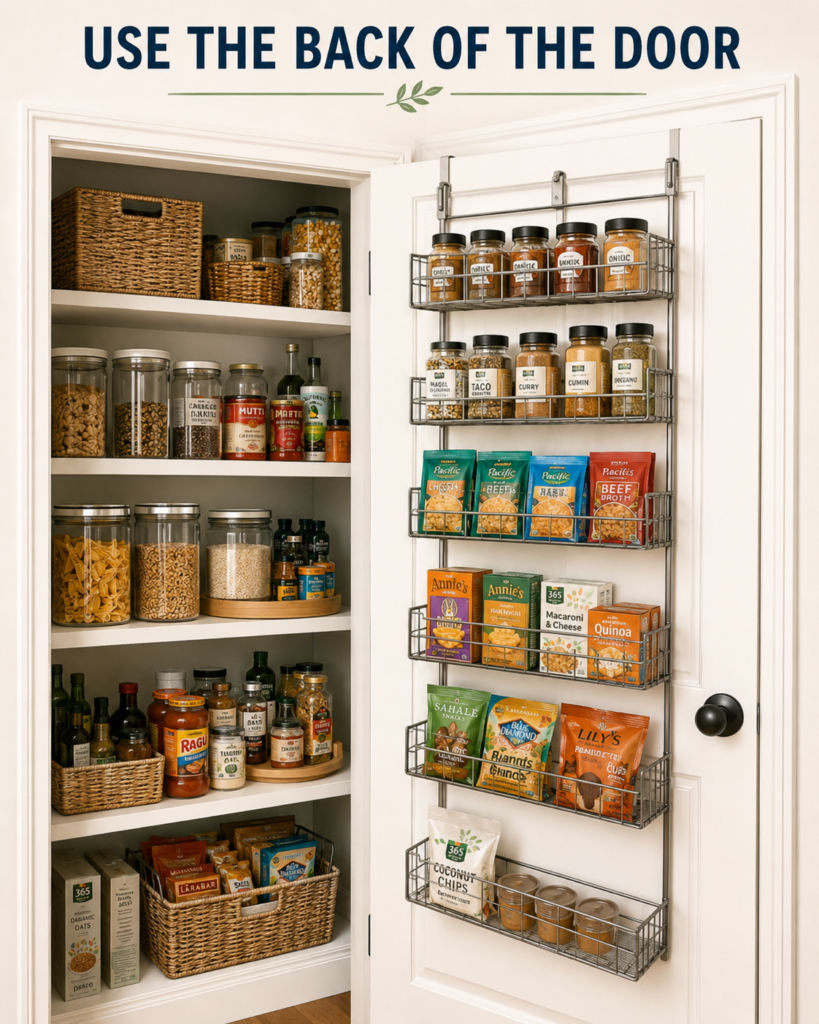
4. Use the Back of the Pantry Door
If your pantry has a traditional door, you’re looking at several square feet of potential storage.
An over-the-door pantry organizer can hold smaller items without consuming shelf space.
Good candidates include:
- Seasoning packets
- Snack bars
- Small bags
- Wraps and foil
- Drink mixes
- Condiments
- Lightweight pantry staples
Keep heavier glass containers on sturdy shelving unless the door organizer is specifically designed to support the weight.
Over-the-door organizer → View on Amazon
5. Stop Stacking Cans in Pyramids
Stacking cans directly on top of each other technically saves space.
Until you need the bottom can.
A tiered can organizer or stepped shelf lets cans occupy roughly the same footprint while keeping labels visible and individual cans easier to retrieve.
Another option is a gravity-feed can rack if your household regularly keeps several cans of the same foods.
The goal isn’t to create a miniature grocery store. It’s simply to stop cans from becoming an unstable wall of mystery.
6. Use Clear Bins for Loose Categories
Bins work extremely well in small pantries — when they have a job.
A clear bin can turn ten loose snack packages into one organized unit. Pull the bin out, grab what you need, and slide it back.
Useful categories include:
- Snacks
- Baking supplies
- Breakfast foods
- Pasta
- Meal kits
- School-lunch supplies
Clear bins make it easier to see when you’re running low without pulling everything out.
But don’t automatically put everything into a bin. Adding a container around an item sometimes uses more space rather than less.
Use bins where they contain clutter or improve access. – Check out my storage bin size guide
Stackable Clear Storage Bins → View on Amazon
7. Choose Bins With Straight Sides
This sounds ridiculously minor until you line six storage bins across one shelf.
Bins with dramatically tapered sides, oversized handles, or decorative curves can waste valuable inches between containers.
For a small pantry, look for:
- Straight sides
- Minimal exterior handles
- Stackability
- Sizes that fit your shelf depth
The prettiest organizer isn’t necessarily the one that gives you the most usable storage.
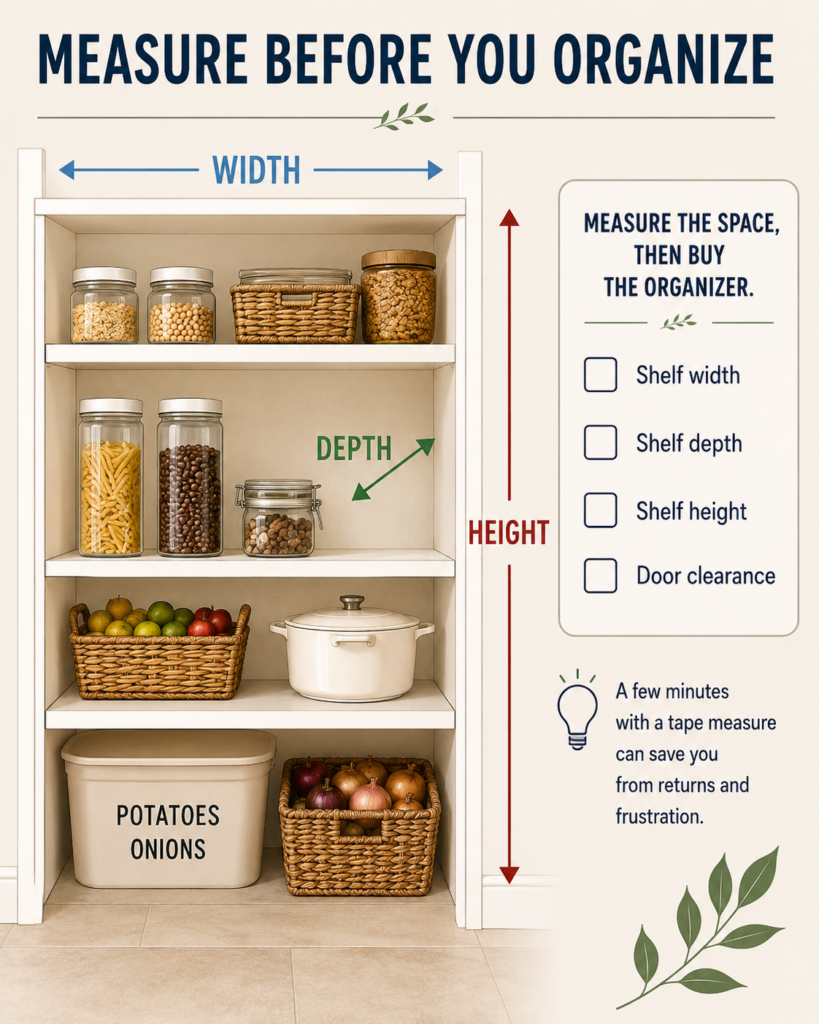
8. Measure Your Pantry Before Buying Anything
Before ordering organizers, measure:
Shelf width × shelf depth × available height.
Also measure the distance between shelves if they’re fixed.
For door organizers, check both the width of the door and the clearance between the door and pantry shelves when it closes.
Those five minutes can prevent a pile of organizers that almost fit.
9. Use Under-Shelf Baskets
Look underneath your pantry shelves.
If there’s a large gap between the top of your food and the shelf above it, an under-shelf basket can turn some of that empty air into storage.
These work particularly well for lightweight items such as:
- Tortillas
- Bread
- Snack bags
- Wraps
- Paper goods
Because many versions simply slide onto an existing shelf, they can add storage without drilling or permanently changing the pantry.
Under-Shelf Baskets → View on Amazon
10. Decant Only the Foods That Make Sense
Matching containers can make a pantry look beautiful.
They can also turn pantry organization into a part-time job.
You do not need to decant every box, bag, noodle and cracker that enters your house.
Airtight containers make the most sense for foods you buy repeatedly and want to protect from moisture or messy packaging, such as:
- Flour
- Sugar
- Rice
- Oats
- Cereal
- Frequently used baking ingredients
If transferring something into another container adds an unnecessary chore without improving storage, leave it in the original package.
Function beats matching containers.
Every time.
11. Get Bulky Packaging Out of the Way
Some packaging takes up far more room than the food inside it.
Individually wrapped snacks are a perfect example.
Instead of keeping several half-empty cardboard boxes, remove the individually packaged items and combine them in a snack bin.
You can do the same with:
- Granola bars
- Fruit snacks
- Oatmeal packets
- Drink packets
- Single-serving chips
Just don’t discard cooking instructions or important expiration information you may need later.
12. Store Backstock Away From Prime Pantry Space
Buying in bulk can save money.
Storing every duplicate item at eye level does not save space.
Your prime pantry shelves should hold the food you’re actively using. Extra unopened items can go on a high shelf or in a dedicated backstock area elsewhere if you have one.
When the active item runs out, replace it from backstock.
This keeps six jars of pasta sauce from pushing tonight’s dinner ingredients into oblivion.
13. Use Narrow Vertical Organizers for Flat Items
Not everything needs to lie flat.
Dividers or narrow vertical organizers can make awkward flat items much easier to store, including:
- Cutting boards
- Serving trays
- Reusable bags
- Foil and plastic-wrap boxes
- Baking sheets, if your pantry stores cookware
Turning horizontal piles into vertical storage eliminates the need to unstack an entire pile every time you need the bottom item.
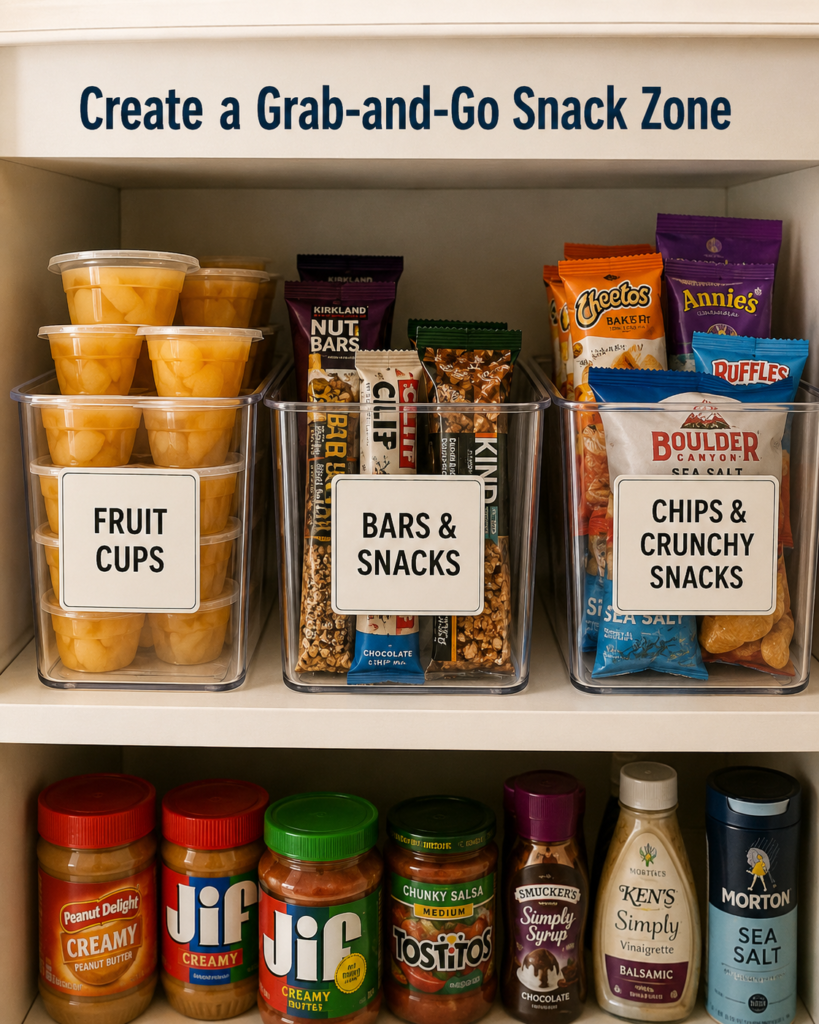
14. Make One Grab-and-Go Snack Zone
Instead of scattering snack foods throughout the pantry, give them one defined area.
For households with kids, put everyday snacks at an appropriate height so they can grab something without rearranging the pantry.
You can divide the area further if necessary — salty snacks, bars, fruit cups — but don’t create a complicated filing system nobody will maintain.
A single snack bin is already a huge improvement over eight open boxes.
15. Put Heavy Items Down Low
Small pantries often force you to use every inch, including the floor.
That’s actually a good location for heavier items such as:
- Cases of drinks
- Large containers
- Bulk staples
- Extra beverages
- Heavy appliances
Keeping heavier items low also makes them safer and easier to retrieve than storing them overhead.
Use a sturdy floor bin if smaller items tend to spread around.
16. Add Drawers to Deep Lower Shelves
A deep lower shelf often turns into a cave.
Pull-out pantry drawers or sliding bins solve the problem by bringing the contents toward you.
Instead of kneeling down and excavating the shelf, you pull the entire category forward.
This can be particularly useful for:
- Potatoes and onions
- Snacks
- Baking supplies
- Small appliances
- Food-storage supplies
Pull-out Patry Drawer → View on Amazon
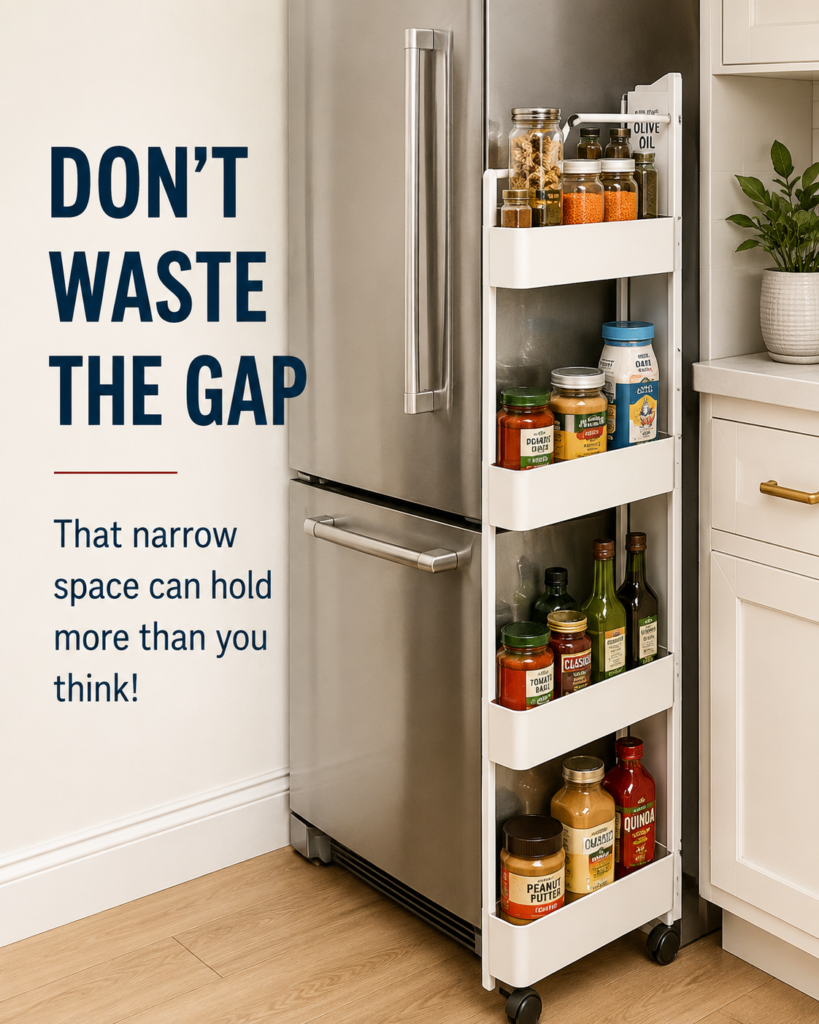
17. Use a Slim Rolling Cart for the Awkward Gap
Have a narrow gap beside the pantry, refrigerator, cabinet, or wall?
It might be usable storage.
Slim rolling carts are available in very narrow widths and can hold canned foods, bottles, spices, snacks, or other small pantry items.
Measure carefully before buying one — especially if you’re trying to fit it beside an appliance that needs ventilation clearance.
A six-inch gap isn’t much use as empty space.
A six-inch rolling pantry can hold quite a bit.
Slim rolling pantry cart → View on Amazon
18. Label Categories, Not Every Single Container
Labels are helpful when they tell everyone where something belongs.
They’re less helpful when maintaining the labeling system becomes harder than maintaining the pantry.
Try broad labels:
SNACKS
BREAKFAST
BAKING
PASTA + GRAINS
BACKSTOCK
That gives items a home while allowing the pantry to change as your grocery habits change.
You don’t need a permanent acrylic label for quinoa if you buy quinoa twice a year.
19. Keep Everyday Foods Between Waist and Eye Level
Your most accessible pantry space should hold your most frequently used food.
It’s simple, but it’s one of the easiest pantry mistakes to make.
Think of your pantry as storage real estate:
Prime space: everyday foods.
High shelves: lightweight backstock and infrequently used ingredients.
Low shelves: heavier and bulky items.
If you make breakfast every morning, breakfast supplies shouldn’t require a step stool.
Organization should reduce effort.
20. Leave a Little Empty Space
This might be the hardest small-pantry organization idea to accept:
You don’t need to fill every inch.
A pantry packed to 100% capacity is difficult to maintain because there’s nowhere to put groceries when you come home.
Even a small amount of open space makes it easier to:
- See what you own
- Move items around
- Put groceries away
- Notice food before it expires
If organizing your pantry still leaves it completely packed, the next solution probably isn’t another organizer.
It may be owning less pantry inventory.
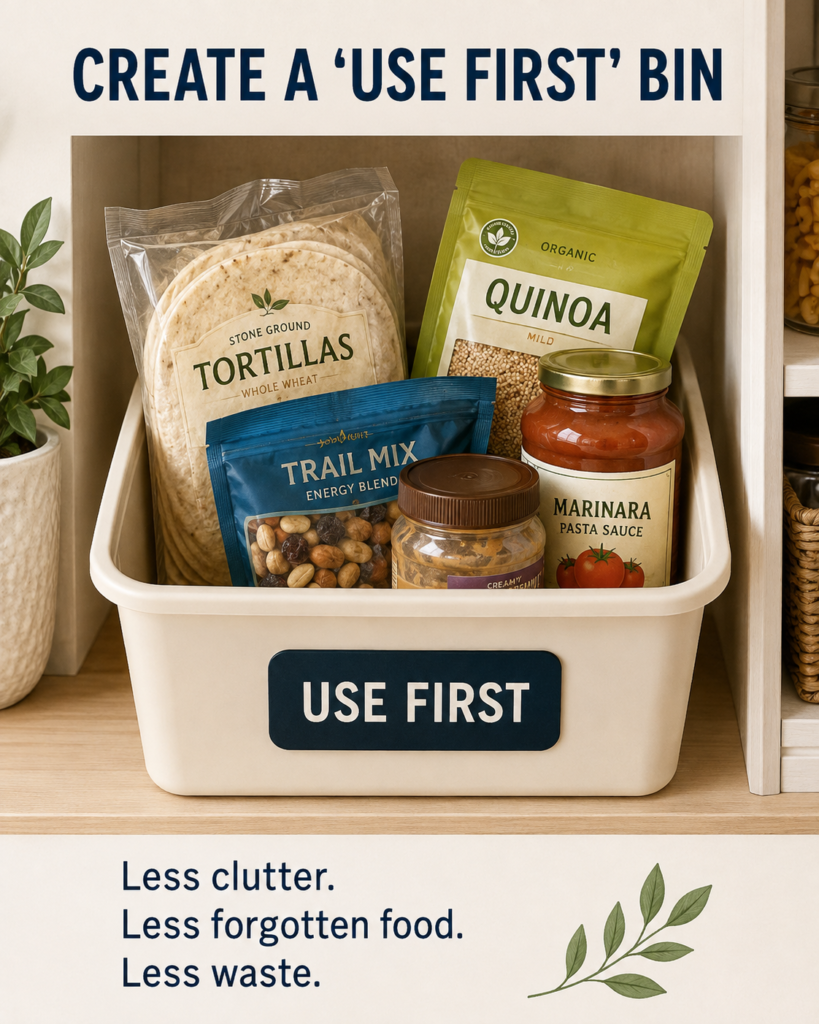
21. Create a “Use This First” Bin
Every pantry eventually develops stragglers:
The crackers someone opened.
The tortillas approaching their date.
The last two snack bars.
The pasta with just enough left for one serving.
Give those items a temporary home in a small Use First bin.
Before opening something new, check there.
It’s a tiny organization trick that can reduce both clutter and food waste — and keeps half-empty packages from spreading throughout the pantry.
Where Should You Start With a Messy Pantry?
Don’t try to install 21 organization ideas this weekend.
Start with the problem that’s making your pantry hardest to use.
If you can’t see what’s in the back, try a turntable or pull-out bin.
If you’re running out of shelf space, look upward and add shelf risers or under-shelf baskets.
If loose packages are everywhere, create a few broad categories and contain them with bins.
If the pantry is simply overflowing, pull everything out and decide what actually deserves space before buying more storage.
A good pantry organization system isn’t the one with the most containers.
It’s the one your household can still use six months from now.
Small Pantry Organization Ideas: Quick Problem Solver
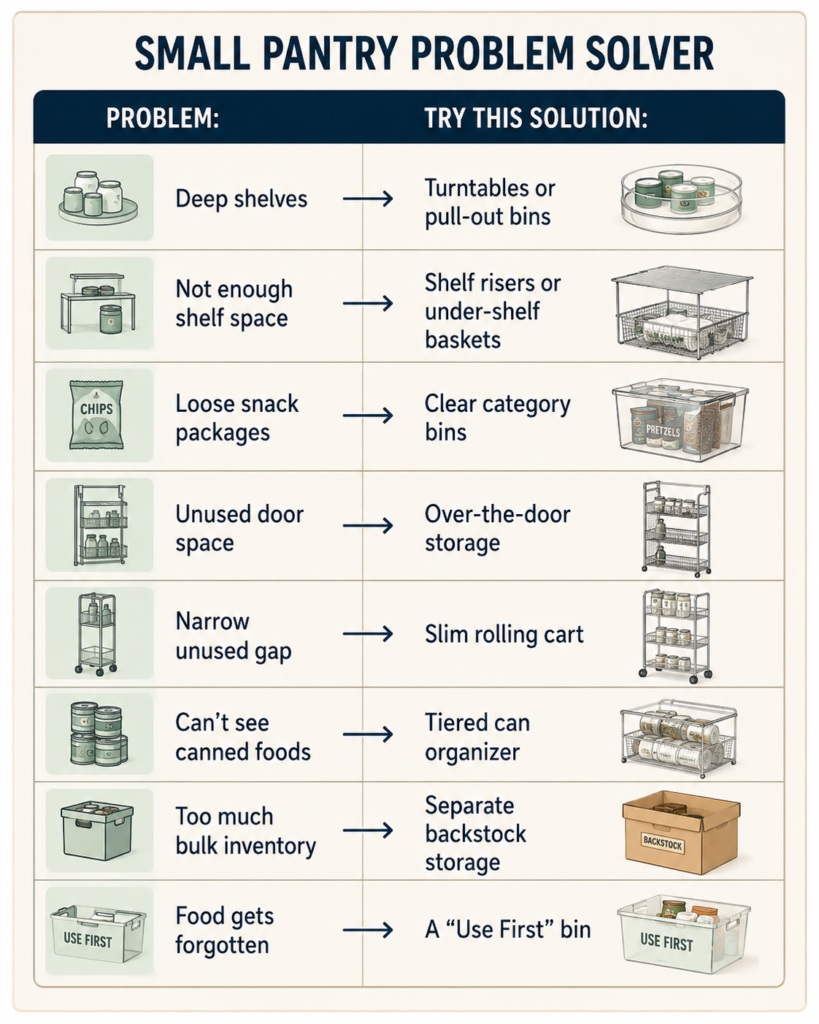
For quick reference:
Deep shelves: Turntables or pull-out bins
Not enough shelf space: Shelf risers or under-shelf baskets
Loose snack packages: Clear category bins
Unused door space: Over-the-door storage
Narrow unused gap: Slim rolling cart
Can’t see canned foods: Tiered can organizer
Too much bulk inventory: Separate backstock storage
Food gets forgotten: A Use First bin
Ready to tackle another cluttered spot in the kitchen? Check out our guide to 15 Under-Sink Organization Ideas That Maximize Every Inch.
Frequently Asked Questions
How do I organize a small pantry with deep shelves?
Avoid storing lots of small items individually in deep rows. Use turntables, pull-out bins, drawers, or containers that allow you to bring the entire group forward. Shelf risers can also make items in the back easier to see.
How can I create more pantry space without remodeling?
Start by using vertical and overlooked space. Shelf risers, under-shelf baskets, over-the-door organizers, stackable containers, and narrow rolling carts can increase usable storage without changing the pantry itself.
Removing bulky packaging and relocating excess backstock can free additional space without buying anything.
Are clear containers worth it for pantry organization?
Sometimes.
Clear containers are useful when they make food easier to see, keep frequently purchased dry goods fresh, or allow awkward packages to stack efficiently.
They’re unnecessary when you’re simply transferring food from one perfectly functional container into another for appearance.
What should go on the top shelf of a pantry?
Use high shelves for lightweight items you don’t need every day, such as extra paper goods, unopened backstock, specialty ingredients, or seasonal supplies.
Avoid storing very heavy items overhead.
How do you keep a small pantry organized?
Make the system easy enough to maintain.
Use broad categories, keep frequently used foods accessible, avoid overfilling the pantry, and give new groceries an obvious place to go.
Every few weeks, check for empty packages, expired foods, duplicate purchases, and items that should move into your Use First area.
Make Your Pantry Work Harder — Not Just Look Prettier
You don’t need a giant walk-in pantry to create useful food storage.
And you definitely don’t need to transfer every ingredient you own into an identical clear container.
Start with the space that’s already there.
Use the back of the door. Capture unused vertical space. Make deep shelves accessible. Give loose items a home. Keep the things you use most where they’re easiest to reach.
The goal isn’t a pantry that looks perfect immediately after you organize it.
It’s a pantry that still works on a random Tuesday three months later.
That’s space well used.