Finding good clothes storage for a small space gets harder when your closet is already doing all it can.
At that point, the answer usually isn’t another round of squeezing, stacking, and adding more hangers. You need to decide which clothes deserve prime closet space and which ones can move somewhere else.
The goal is not to turn your bedroom into a second closet. It’s to create overflow clothing storage that stays contained, accessible, and visually calm.
Here are practical clothes storage ideas for small spaces when your closet is full.
Start by Separating Everyday Clothes From Overflow
Before buying another organizer, divide your clothing into three groups:
- Clothes you wear every week
- Clothes you wear occasionally
- Seasonal or rarely used clothes
Your everyday clothing should get the easiest storage.
Seasonal clothing, formalwear, backup coats, specialty items, and rarely worn pieces can move farther away from your main closet.
This one decision often creates more usable space than adding another organizer.
If the closet itself still needs work, start with our small closet organization ideas before moving half your wardrobe into the bedroom.
1. Use Under-Bed Storage for Seasonal Clothing
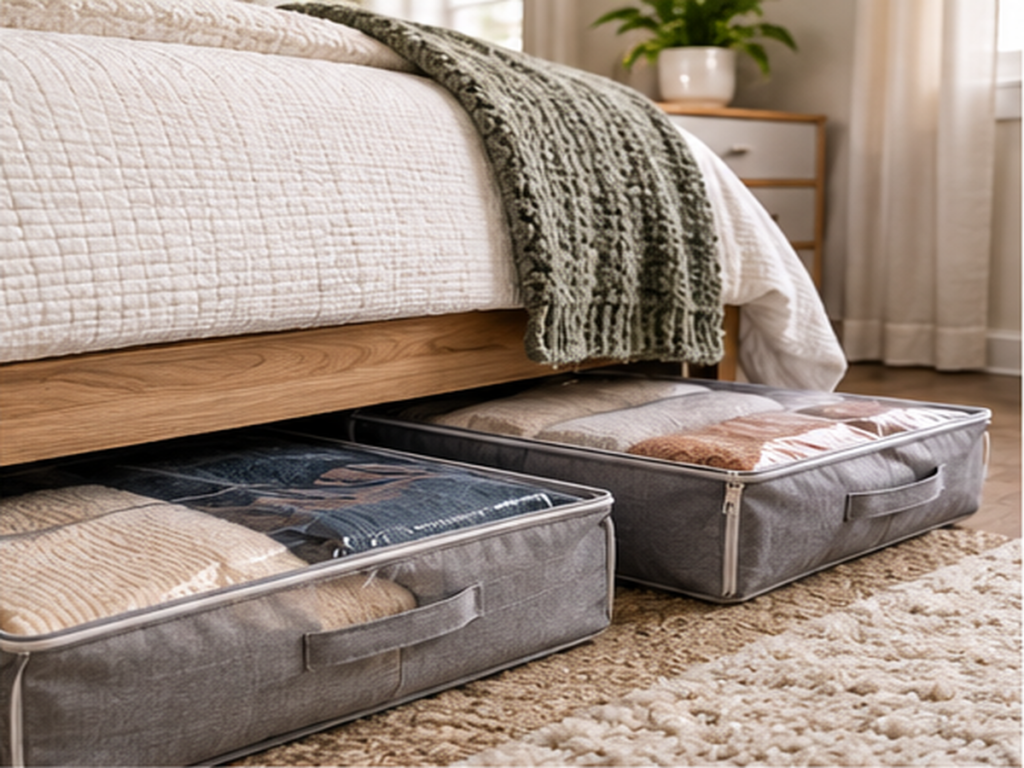
The space under the bed is one of the best overflow zones in a small bedroom because it adds capacity without using more floor space.
Good candidates include:
- Sweaters
- Jeans
- Seasonal shirts
- Pajamas
- Lightweight jackets
- Off-season clothing
- Extra bedding
Measure from the floor to the lowest obstruction beneath the bed, not just the visible bed frame.
A storage case that is technically shorter than the bed may still hit center supports, slats, or frame hardware.
For low-clearance beds, soft-sided zip cases can sometimes fit where rigid bins will not.
If you want specific container options, see our guide to the best under-bed storage for small bedrooms.
Avoid putting these under the bed long-term
Be cautious with:
- Damp clothing
- Leather
- Delicate formalwear
- Heavily embellished garments
- Items you need every day
Under-bed clothing storage case → Buy on Amazon
Under-bed storage works best for contained overflow, not clothing you constantly have to retrieve.
2. Add a Narrow Garment Rack for Overflow Hanging Clothes
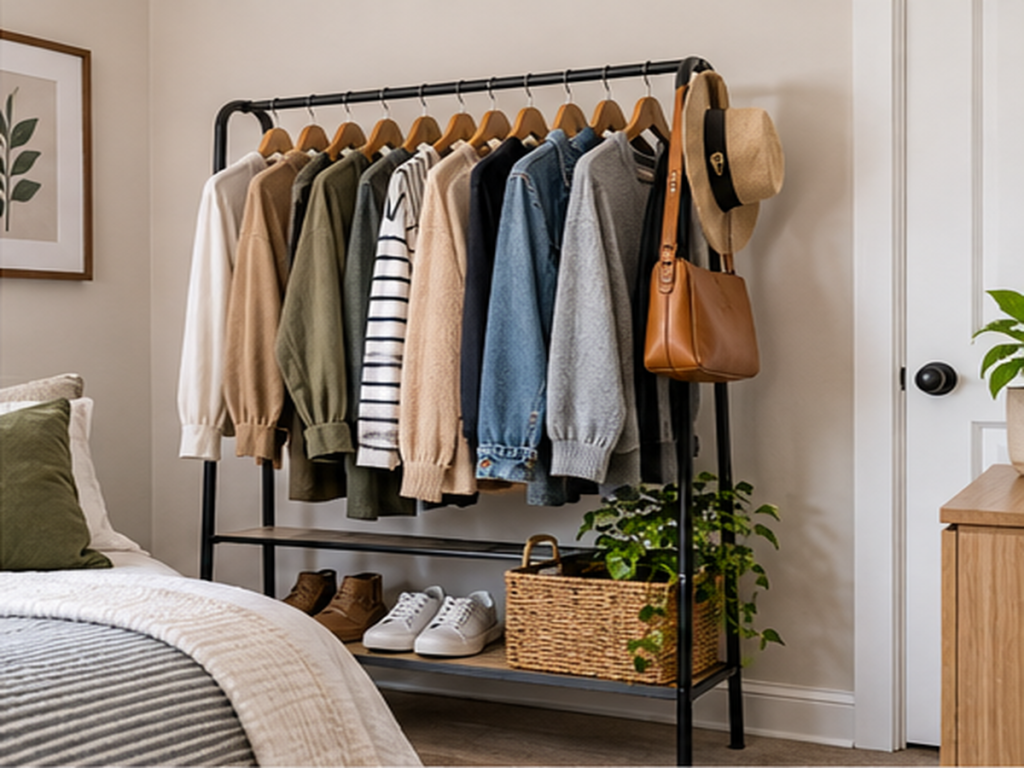
A freestanding garment rack can work when the closet is full but you still have clothing that should remain hanging.
The key is choosing a rack that fits the room rather than simply buying the largest one you can find.
Measure:
- Available wall width
- Rack depth
- Walking clearance
- Door swing
- Drawer clearance
- Distance from the bed
In a small bedroom, a rack around 16 to 20 inches deep can project significantly into the room once clothing hangs from it.
That means placement matters.
A narrow rack works best along a wall that is already difficult to furnish, rather than in a main walkway.
Use it for a limited category such as:
- Work clothes
- Jackets
- Frequently worn outfits
- Clothing being rotated into the closet
Don’t let it become a permanent holding zone for everything that no longer fits elsewhere.
Narrow garment rack → Buy on Amazon
3. Use a Hanging Shelf Organizer for Folded Clothes
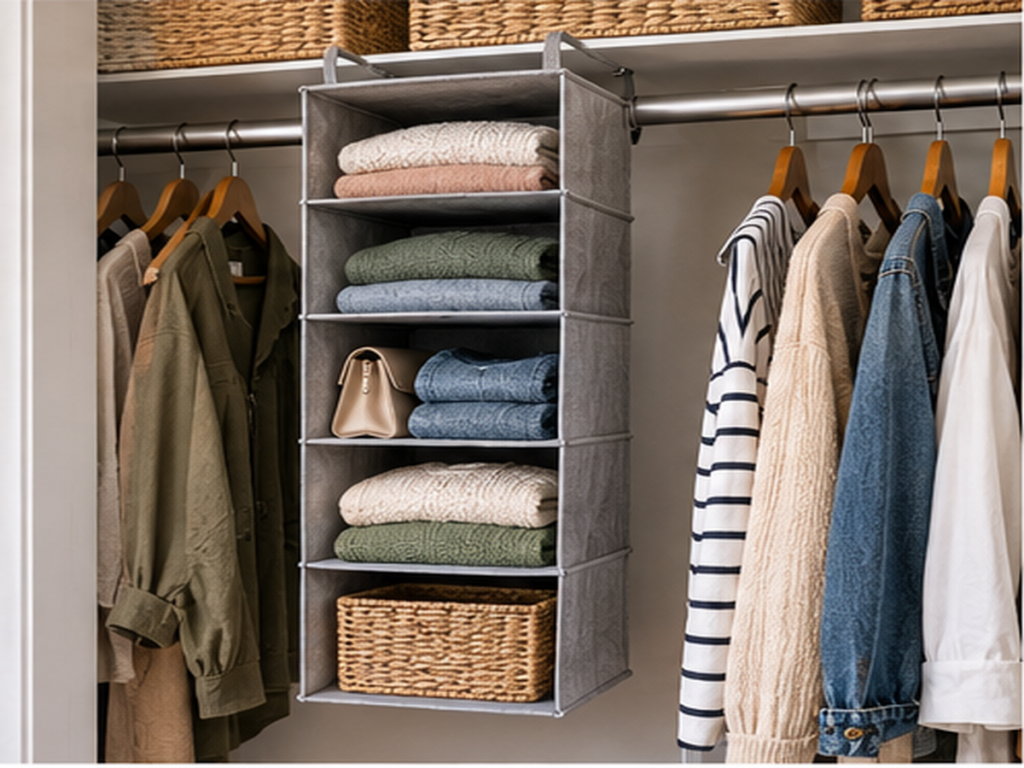
If you have hanging-rod space but not enough shelving, a hanging fabric organizer can turn part of the rod into folded storage.
It works well for:
- T-shirts
- Leggings
- Sweaters
- Workout clothes
- Pajamas
- Small handbags
The tradeoff is obvious: every hanging organizer takes away horizontal rod space.
Use one when you genuinely need more folded storage than hanging storage.
If your closet is dominated by shirts, coats, and dresses, a hanging organizer may solve one problem while creating another.
Our guide to small closet shelving ideas covers how to decide when shelving is worth sacrificing hanging space.
Hanging shelf organizer → Buy on Amazon
4. Replace a Bulky Dresser With Narrow Drawer Storage
A traditional wide dresser can consume a surprising amount of wall and floor space.
If the room is tight, consider whether you actually need one large dresser or simply need enclosed drawers.
Narrow drawer towers can fit:
- Beside a closet
- Between furniture
- In a corner
- Beside the bed
- Along a short wall
This works especially well for smaller items such as:
- Socks
- Underwear
- T-shirts
- Workout clothing
- Sleepwear
- Accessories
Measure drawer depth before buying.
A narrow unit that sticks 20 inches into a tight walkway can still make a small bedroom feel cramped.
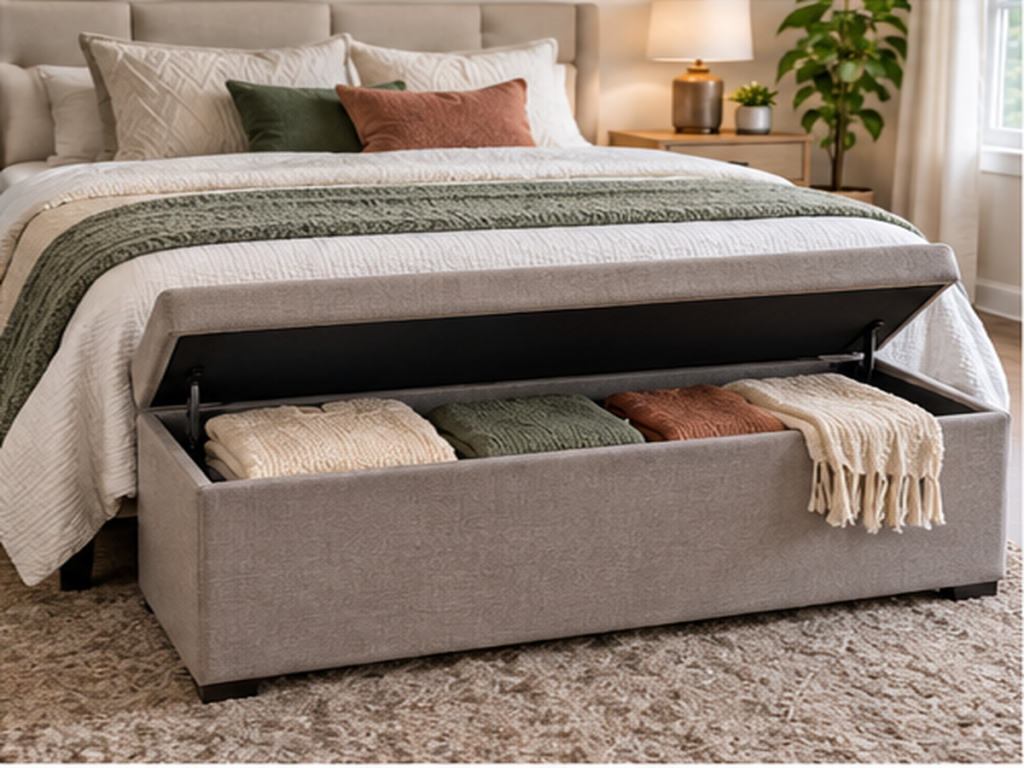
5. Use a Storage Bench for Clothing You Don’t Need Daily
A storage bench can combine seating and concealed clothing storage.
Good candidates include:
- Extra blankets
- Sweatshirts
- Seasonal clothing
- Workout gear
- Bags
- Clothing waiting to be donated
This works best if you already wanted a bench at the foot of the bed or beneath a window.
Don’t add one solely for storage if it makes the room harder to walk through.
In a very small bedroom, multifunctional furniture should replace another piece, not simply become additional furniture.
Storage bench for clothing → Buy on Amazon
6. Use High Shelves for Low-Frequency Clothing
Wall space above normal furniture is often underused.
A high shelf can hold lightweight bins containing:
- Off-season accessories
- Swimsuits
- Winter hats and gloves
- Specialty clothing
- Formal accessories
- Clothing you only use a few times per year
Avoid putting everyday clothing high overhead.
The harder something is to reach, the less often you should need it.
Also avoid placing very heavy containers on high shelves.
The best upper storage is light, clearly labeled, and rarely accessed.
For more ways to use wall height effectively, see our vertical storage ideas for small spaces.
7. Use the Back of the Door for Lightweight Clothing and Accessories
Door storage can take pressure off drawers and shelves without using floor space.
Depending on the setup, you can store:
- Belts
- Scarves
- Hats
- Robes
- Light jackets
- Handbags
- Accessories
Use hooks or slim organizers that don’t interfere with the door closing.
Avoid loading the door with heavy storage systems unless the hardware and door are designed to support it.
This is most useful for items that tend to get dropped on chairs or doorknobs anyway.
8. Store Clothes Inside Furniture You’re Already Using
Small-space storage works best when it uses cavities that already exist.
Look for storage inside or beneath:
- Bed frames
- Ottomans
- Benches
- Nightstands
- Window seats
- Platform beds
- Modular seating
This keeps clothing concealed without adding another visible organizer.
If you’re trying to avoid adding more furniture altogether, our guide to creating more storage in a small apartment uses the same strategy: reclaim unused volume before adding another storage piece.
9. Use Slim Hangers Before Expanding Beyond the Closet
If your closet is packed shoulder-to-shoulder, hanger thickness may be part of the problem.
Slim hangers can reduce the amount of rod width used by each garment.
That doesn’t mean you should squeeze unlimited clothing onto the rod.
You still need enough space to move hangers and see what you own.
But if you’re using thick wooden or molded plastic hangers for everyday shirts, switching to slimmer hangers can recover meaningful rod space before you start storing clothes elsewhere.
Use sturdy hangers for heavy coats and garments that need more support.
Slim space-saving hangers → Buy on Amazon
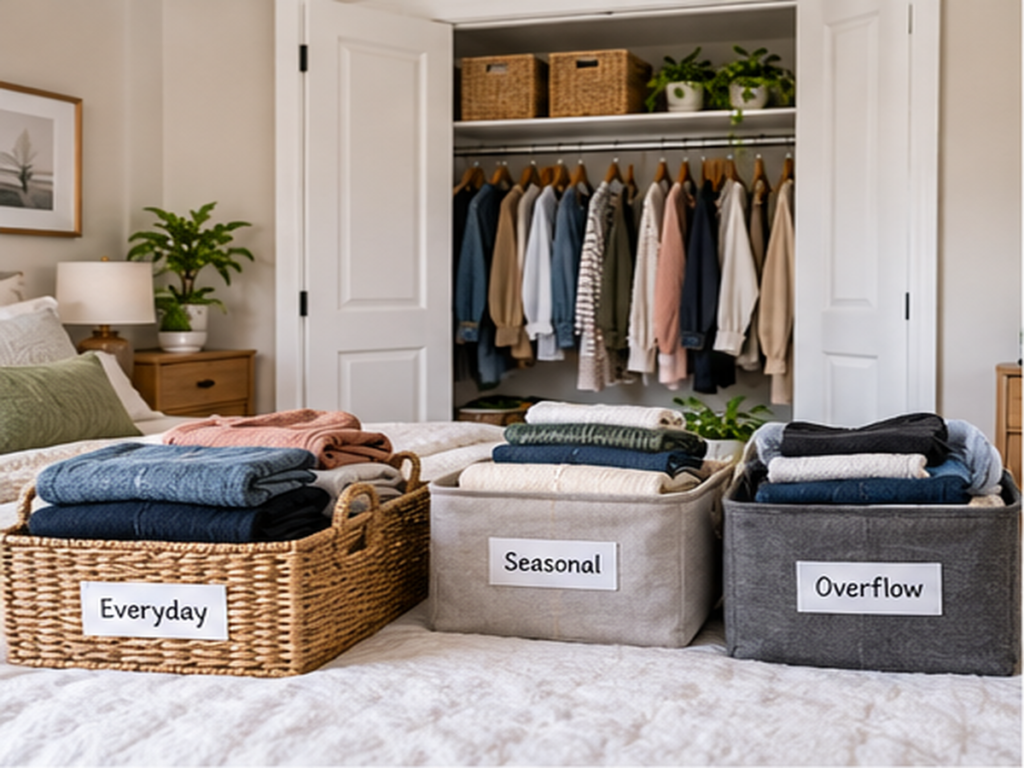
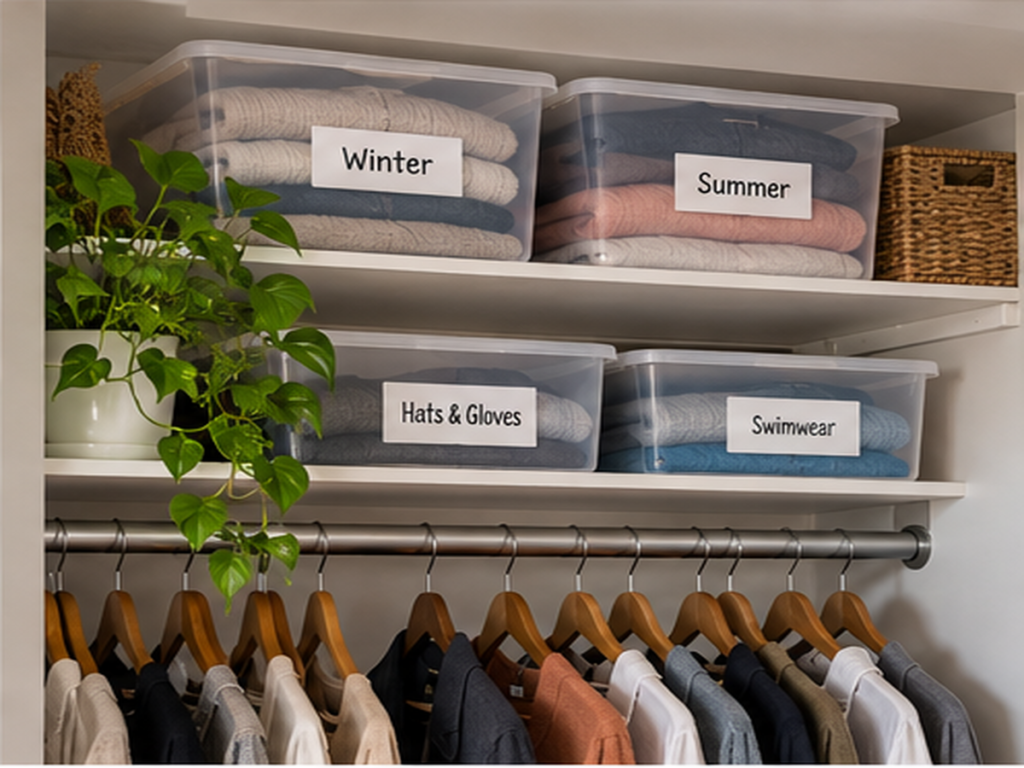
10. Keep Seasonal Clothes in Lidded Bins
Seasonal rotation works best when clothing is actually contained.
Use bins for categories such as:
- Winter sweaters
- Summer clothing
- Holiday clothing
- Swimwear
- Cold-weather accessories
Choose containers that fit the storage location first.
A giant bin may hold more clothing but become impossible to slide under the bed, place on a shelf, or lift safely.
Label the outside by category rather than using a generic label such as “clothes.”
Specific labels make seasonal swaps much easier.
11. Use Vacuum Storage Bags Selectively
Vacuum bags can reduce the volume of bulky textiles, but they’re not the right answer for every garment.
They work best for soft, compressible items such as:
- Puffer coats
- Extra bedding
- Bulky synthetic clothing
- Some sweaters
- Seasonal soft goods
Avoid using compression as the default for delicate garments or items that depend on maintaining their shape.
Clothing that wrinkles badly or needs to remain structured is usually better stored hanging or loosely folded.
Vacuum bags are most useful when you’re trying to reclaim space from bulky seasonal items, not as permanent everyday clothing storage.
12. Create a Small Clothing Rotation Zone
Instead of giving your entire wardrobe equal access, create a rotation system.
Keep the current season in your closet and drawers.
Move the next season into secondary storage.
Move rarely used items into deeper or higher storage.
This lets a small closet function like a larger one because not everything competes for the same prime space.
The system works particularly well in areas with strong seasonal changes.
When the weather shifts, rotate the next group into the closet and move the outgoing group into under-bed bins or high storage.
13. Use Visible Storage Only for Clothing That Stays Neat
Open garment racks and shelves can look good, but only when the contents stay reasonably controlled.
Visible storage works best for:
- A limited color palette
- Frequently worn clothing
- Jackets
- Shoes
- Handbags
- Neatly folded basics
It works poorly for overflowing piles of mixed clothing.
If you know you dislike visual clutter, prioritize bins, drawers, cabinets, and storage benches over open racks.
A storage solution that technically fits but makes the room feel chaotic is not a good small-space solution.
14. Use Concealed Bins for the Messier Categories
Some clothing categories rarely stay visually neat.
Examples include:
- Workout gear
- Pajamas
- Kids’ clothing
- Socks
- Scarves
- Swimwear
- Seasonal accessories
These are often better in a bin or drawer than on an open shelf.
A simple opaque bin can make the room look significantly calmer even if the contents are not perfectly folded.
For small spaces, visual organization matters almost as much as physical organization.
15. Don’t Store All Clothing in the Bedroom
If your bedroom is already full, look beyond it.
Some categories can live elsewhere.
Examples:
- Coats near the entryway
- Workout gear near exercise equipment
- Seasonal accessories in hallway storage
- Formalwear in a less-used closet
- Extra bedding in a linen or utility area
Your bedroom closet doesn’t have to hold every textile you own.
Distributing storage based on where items are actually used can reduce pressure on the main closet.
16. Define an Overflow Limit
Overflow storage works only if it has a boundary.
If you add one under-bed bin, fill it.
If you add one garment rack, keep clothing within the rack.
If you add one seasonal shelf, don’t let the category expand across three more shelves.
Without a limit, every new storage solution becomes permission to keep more.
A good rule is:
The storage container defines the category limit—not the other way around.
When the container is full, something needs to move, be donated, or replace something else.
What Is the Best Clothes Storage Ideas for Small Spaces?
The best option depends on what type of clothing is overflowing.
If you have too many folded clothes:
Use under-bed storage, drawer towers, hanging shelf organizers, or storage benches.
If you have too many hanging clothes:
Use slim hangers, seasonal rotation, or a narrow garment rack.
If seasonal clothing is the problem:
Use labeled bins, under-bed storage, high shelves, or carefully chosen vacuum bags.
If visual clutter is the problem:
Choose concealed bins, drawers, benches, and hidden storage rather than open shelving.
If the room has almost no extra floor space:
Prioritize under-bed, wall, door, and vertical storage.
Is It Better to Fold or Hang Clothes in a Small Space?
Neither method is always more space-efficient.
Fold:
- T-shirts
- Jeans
- Leggings
- Workout clothes
- Many sweaters
- Pajamas
Hang:
- Dresses
- Blouses
- Jackets
- Suits
- Clothing prone to wrinkling
- Structured garments
The goal is to reserve hanging space for clothing that genuinely benefits from it.
If something stores perfectly well folded, hanging it may use valuable closet width unnecessarily.
Where Should You Store Clothes With No Closet Space Left?
Start with storage that does not increase your room’s footprint:
- Under the bed
- Inside existing furniture
- High shelves
- Door storage
- Narrow vertical drawers
Only after those options are exhausted should you consider adding a garment rack or another piece of furniture.
If the room doesn’t have a usable closet at all, our guide to small bedroom storage ideas when you don’t have a closet covers more complete closet alternatives.
How Do You Store Clothes Without Making a Small Bedroom Look Cluttered?
Use fewer visible storage systems.
Open racks and shelving can be useful, but they expose everything.
A calmer small bedroom usually combines:
- One controlled hanging area
- Concealed bins
- Closed drawers
- Under-bed storage
- A limited number of visible categories
Matching containers can help visually, but the bigger improvement comes from reducing the number of separate storage zones.
Six different baskets, racks, hooks, and shelves often look more cluttered than two larger, well-defined systems.
When Your Closet Is Full, Stop Treating the Closet as the Only Storage Option
A full closet doesn’t necessarily mean you need a bigger closet.
It may mean your everyday, seasonal, folded, hanging, and rarely used clothing are all competing for the same space.
Start by protecting the easiest-access storage for the clothes you wear most.
Then move overflow into the places that make sense:
- Under the bed
- High shelves
- Narrow drawers
- Storage furniture
- Door storage
- Seasonal bins
- A carefully sized garment rack
The best clothes storage for a small space is not one giant organizer.
It’s a system where everyday clothing stays easy to reach and everything else has a defined place outside the main closet.