
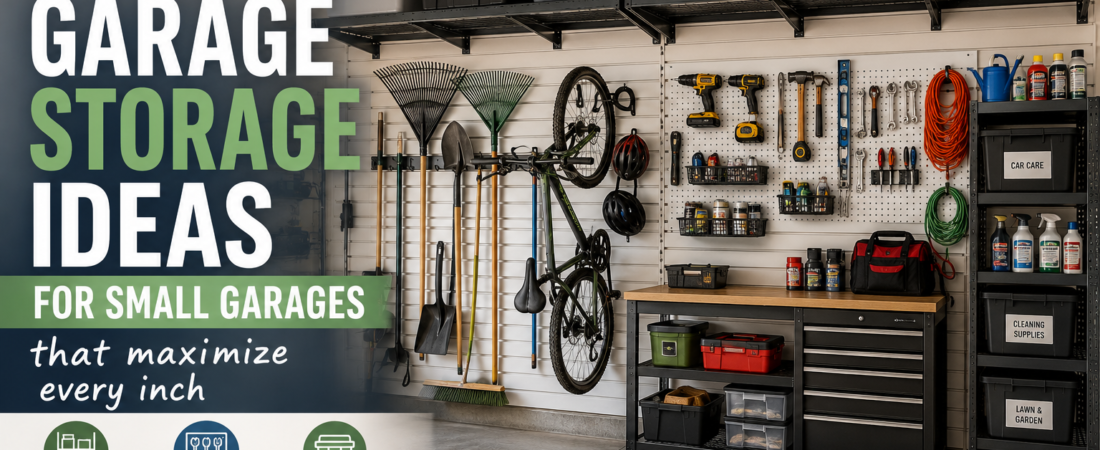
A small garage can run out of usable space surprisingly fast.
Park a car inside, add a lawn mower, a few tools, sports equipment, seasonal decorations, cleaning supplies, and several boxes you haven’t opened in two years, and suddenly there’s barely enough room to walk.
The problem isn’t always the square footage.
Garages have walls, corners, ceilings, doors, and vertical space that often aren’t being used efficiently.
The best garage storage ideas for small garages move belongings off the floor, group similar items together, and make frequently used things easy to reach.
You don’t need an expensive custom garage system, either.
Here are 15 practical garage storage ideas that can help a small garage hold more without making it feel packed from floor to ceiling.
1. Start by Clearing the Garage Floor
Before installing shelves or buying storage bins, figure out what’s actually taking up space.
Sort items into broad categories:
- Tools
- Automotive supplies
- Lawn and garden equipment
- Sports gear
- Seasonal decorations
- Cleaning supplies
- Household overflow
- Items to donate or discard
Pay particular attention to boxes that haven’t been opened in years.
A small garage doesn’t have enough room to become permanent storage for things nobody remembers owning.
Once you’ve removed unnecessary items, try to keep as much of the floor clear as possible.
Floor space is valuable because you need it for vehicles, walking, projects, and accessing everything else.
2. Install Wall-Mounted Shelving
Walls are one of the biggest storage opportunities in a small garage.
Wall-mounted shelves can hold items that would otherwise occupy valuable floor space.
Use them for:
- Storage bins
- Automotive supplies
- Paint supplies
- Gardening products
- Cleaning supplies
- Household overflow
Place less frequently used items higher and everyday supplies at a comfortable height.
Make sure shelves and fasteners are rated for the weight they’ll hold and installed appropriately for your wall construction.
You don’t want forty pounds of garage supplies depending on a couple of questionable drywall anchors.
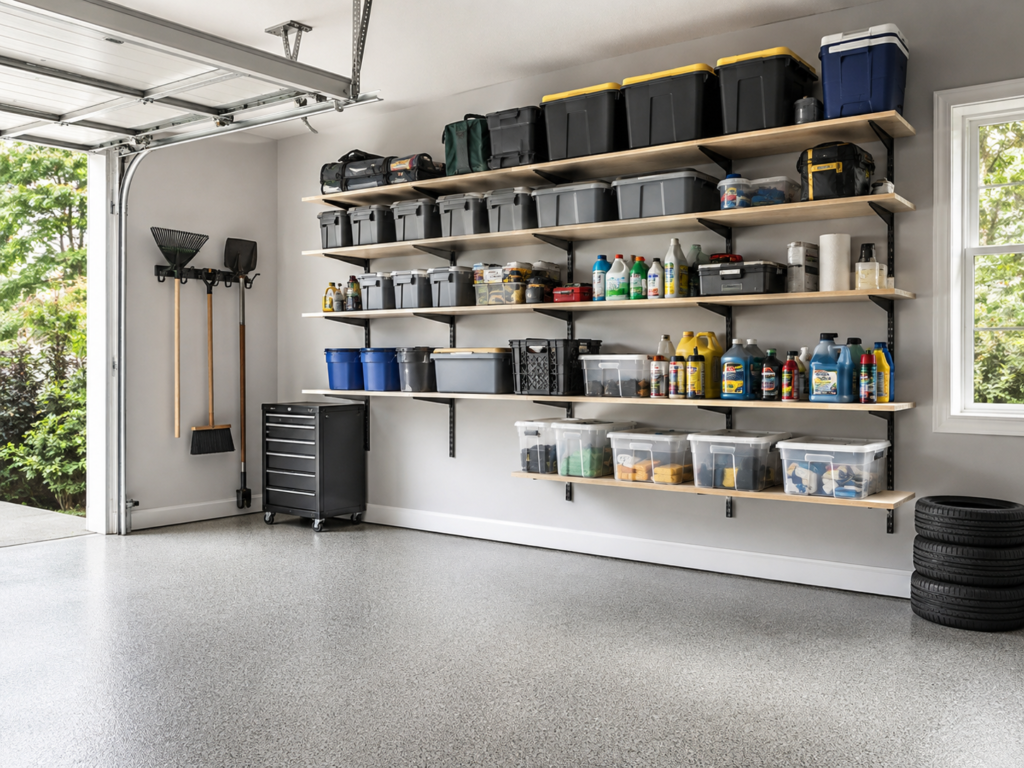
3. Use Clear or Consistently Labeled Storage Bins
Garage bins are useful until you have fifteen identical containers and no idea what’s inside any of them.
Clear bins solve part of that problem.
For opaque containers, use large, readable labels.
Useful categories might include:
- Holiday decorations
- Camping
- Car care
- Painting
- Gardening
- Kids’ sports
- Outdoor toys
Keep categories broad enough that putting things away remains easy.
You don’t need a separate container for every tiny type of item.
A storage system that requires everyone to remember 47 categories probably isn’t going to survive very long.
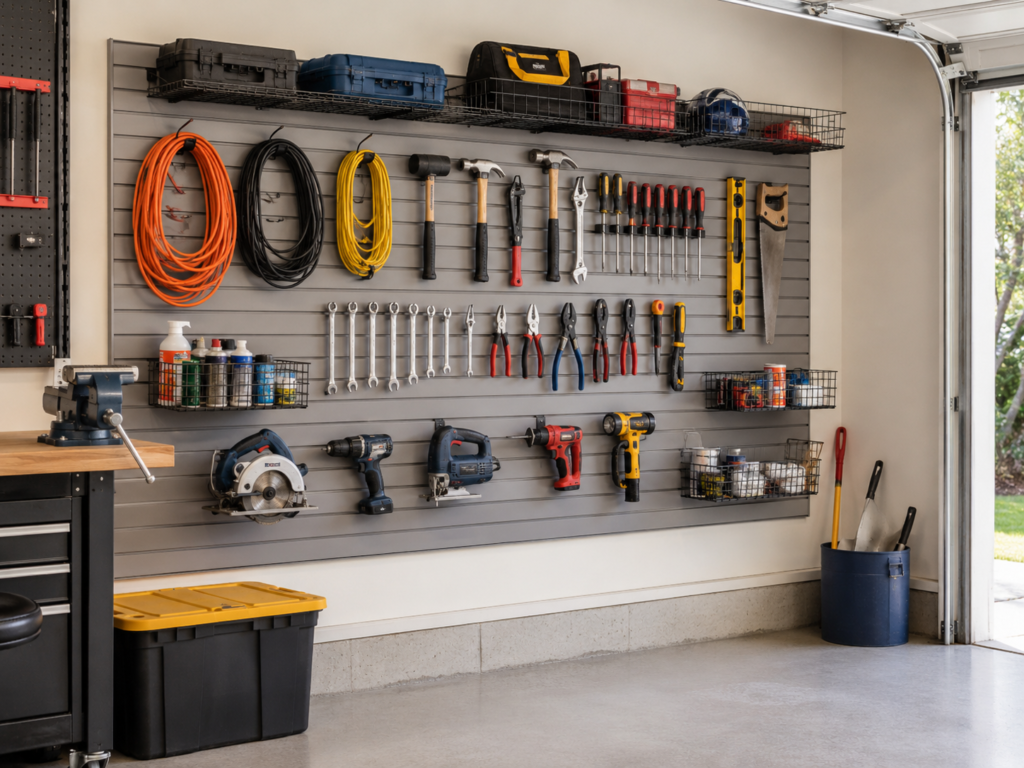
4. Add a Pegboard or Slatwall for Tools
Tools are easier to use when you can actually see them.
A pegboard or slatwall system turns an open garage wall into flexible tool storage.
Garage pegboard organizer kit → View on Amazon
Depending on the system, you can hang:
- Hand tools
- Extension cords
- Small power tools
- Safety equipment
- Gardening tools
- Baskets for small supplies
The biggest advantage is flexibility.
Hooks and accessories can usually be moved as your storage needs change.
Keep frequently used tools around eye or chest level and less-used items higher.
5. Store Long-Handled Tools Vertically
Rakes, shovels, brooms, and similar tools become frustrating when they’re leaned into a corner.
One falls over, then three more follow.
A wall-mounted tool rack keeps them upright and separated.
Wall-mounted garage tool rack → View on Amazon
Use it for:
- Rakes
- Shovels
- Brooms
- Garden hoes
- Weed trimmers
- Other long-handled equipment
Install the rack somewhere the tools can be removed without hitting a vehicle or blocking a doorway.
Vertical storage uses very little wall width compared with letting tools spread across the floor.
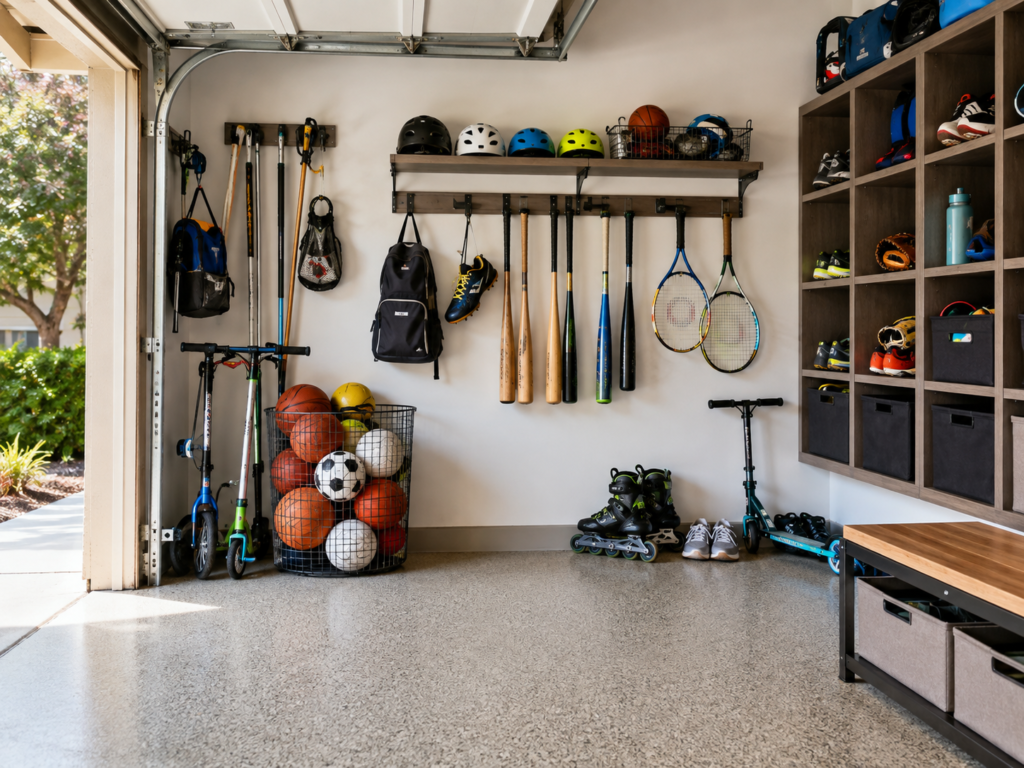
6. Create a Dedicated Sports Equipment Zone
Balls, helmets, bats, rackets, scooters, and other sports equipment can migrate across an entire garage.
Give them one defined area.
Depending on what your household uses, try:
- Ball baskets
- Tall wire bins
- Wall hooks
- Shelving
- Equipment racks
- Open cubbies
Keep children’s frequently used equipment low enough that they can reach it themselves.
If putting away a basketball requires an adult with a ladder, that basketball is going right back onto the garage floor.
7. Use the Space Above the Garage Door Carefully
The wall space above the garage door is easy to overlook.
Depending on your garage’s construction and door hardware, it may provide room for shelving or specialized overhead storage.
This area is best for lightweight or less frequently used items such as:
- Seasonal decorations
- Camping gear
- Empty coolers
- Lightweight bins
Do not install anything that interferes with the garage door, tracks, opener, springs, or required clearances.
And don’t put extremely heavy items overhead simply because they fit.
For overhead garage storage, proper installation and weight ratings matter.
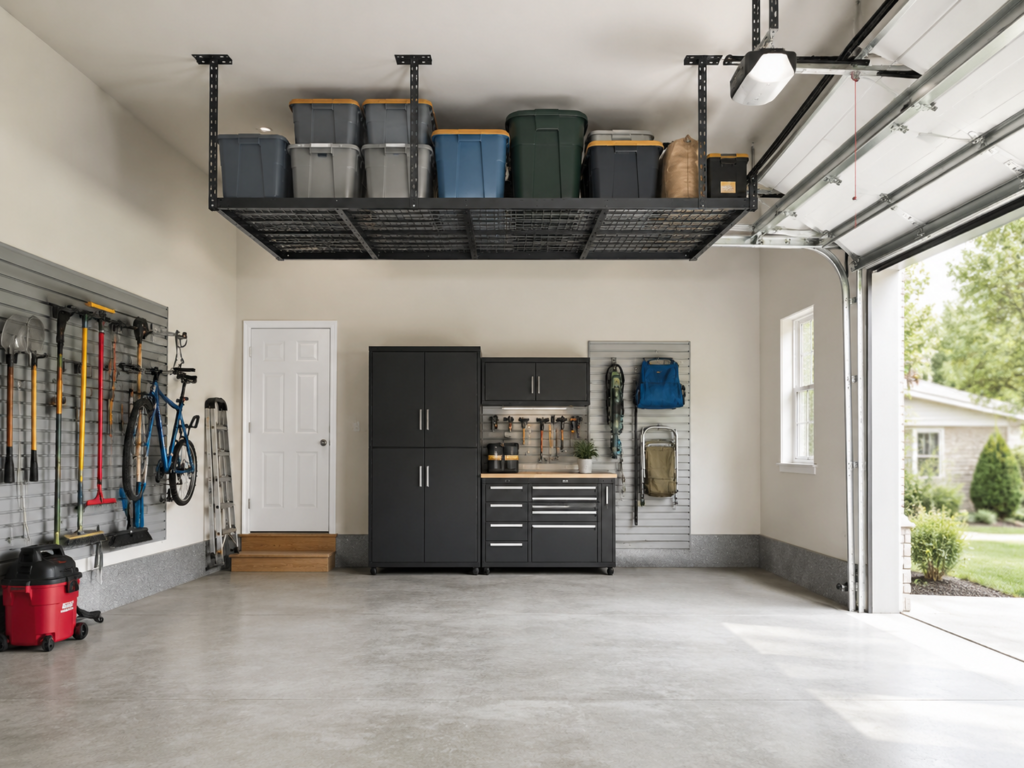
8. Use Ceiling Storage for Seasonal Items
If the ceiling height and garage structure allow it, overhead racks can free up substantial wall and floor space.
They’re particularly useful for bulky items you only need occasionally.
See adjustable overhead garage storage racks → View on Amazon
Examples include:
- Holiday decorations
- Camping equipment
- Seasonal sports gear
- Empty luggage
- Lightweight outdoor equipment
Keep frequently used belongings somewhere easier to access.
Overhead storage is useful precisely because it moves low-priority items out of your prime storage areas.
Always follow the rack manufacturer’s installation and load requirements.
9. Add Hooks for Bikes
Bicycles consume a surprising amount of floor space.
Wall-mounted bike hooks or racks can move them out of the way.
Wall-mounted bike storage rack → View on Amazon
Depending on your garage layout, bikes can be stored:
- Horizontally against a wall
- Vertically by one wheel
- On adjustable wall racks
Choose a system that’s realistic for the person using the bike.
If lifting a heavy bicycle overhead every afternoon is inconvenient, the bike will probably end up back on the floor.
For frequently used bikes, easy access matters more than maximum storage density.
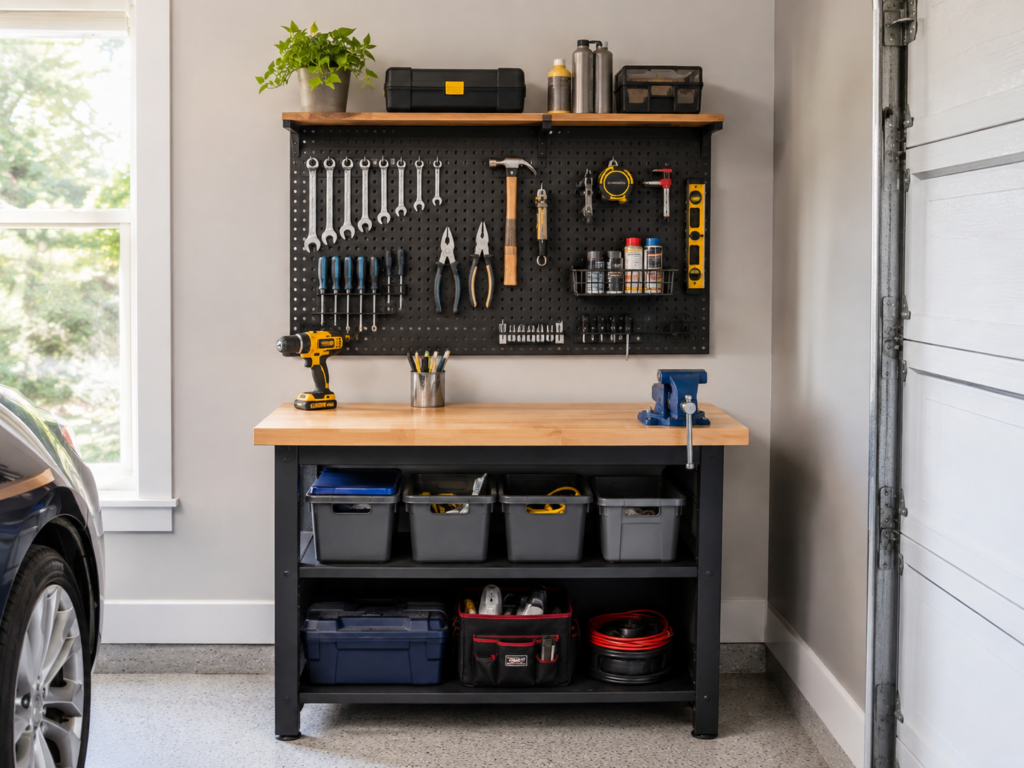
10. Create a Small Workbench Zone
You don’t need a giant workshop to have a useful project area.
A compact workbench can create one dedicated location for repairs, tools, and household projects.
In particularly tight garages, consider:
- Narrow workbenches
- Wall-mounted benches
- Fold-down work surfaces
- Workbenches with storage underneath
Use the wall above the bench for frequently used tools.
Drawers or bins underneath can hold supplies.
Keeping project tools together also prevents them from spreading onto unrelated garage shelves.
11. Use Narrow Shelving in Awkward Gaps
Small garages often have narrow spaces beside doors, between wall features, or next to appliances.
A slim shelving unit can make those gaps useful.
Slim garage shelving unit → View on Amazon
Store appropriately sized items such as:
- Cleaning supplies
- Car-care products
- Gardening supplies
- Small tools
- Household extras
Measure carefully before buying anything.
You don’t want shelving that interferes with a car door, walkway, utility equipment, or access panel.
The goal is to reclaim genuinely unused space without making the garage harder to move through.
12. Create Zones Based on How You Use the Garage
A garage becomes much easier to maintain when related items stay together.
Your zones might include:
CAR CARE
- Cleaning products
- Washer fluid
- Towels
- Tire supplies
LAWN & GARDEN
- Hand tools
- Gloves
- Pots
- Watering supplies
SPORTS
- Balls
- Helmets
- Rackets
- Outdoor toys
HOUSEHOLD STORAGE
- Bulk supplies
- Seasonal items
- Extra household goods
You don’t need signs hanging over every zone.
The point is simply to make the storage layout predictable.
This is the same principle that works inside the house: give related items a consistent home.
If you’re working through other tight spaces, see 17 Small Closet Organization Ideas That Make the Most of Limited Space.
13. Keep Frequently Used Items Near the Garage Entrance
Prime storage should go to the things you actually use.
If you enter the house through the garage every day, the area near that doorway may be perfect for:
- Reusable shopping bags
- Pet supplies
- Everyday tools
- Outdoor accessories
- Frequently used sports equipment
Less-used items can move farther away or higher up.
Organizing based on frequency of use reduces the amount of digging, climbing, and rearranging required during normal life.
It also makes putting things away easier.
14. Don’t Let Bulk Purchases Take Over
Garages often become overflow pantries for paper towels, drinks, cleaning products, and household supplies.
There’s nothing wrong with storing extras there when temperature and product-storage requirements allow it.
But give bulk supplies a defined limit.
One shelving section or a few bins is manageable.
An ever-expanding warehouse of paper towels and bottled drinks can consume a small garage quickly.
If household backstock keeps spreading, reconsider how much you’re buying at once.
For indoor food-storage ideas, our guide to 21 Small Pantry Organization Ideas That Actually Save Space covers ways to make pantry storage more efficient.
15. Leave Enough Open Space to Use the Garage
This is the part that’s easy to forget.
Your garage isn’t just a storage unit.
You may need to:
- Park a vehicle
- Open car doors
- Walk through safely
- Access a freezer
- Reach utilities
- Complete projects
- Move equipment in and out
Don’t organize the garage so efficiently that you eliminate its ability to function.
Leave clear pathways.
Keep items away from doors and important equipment.
And avoid filling every wall simply because another shelf could technically fit there.
Garage Storage Ideas for Small Garages: Think Vertically
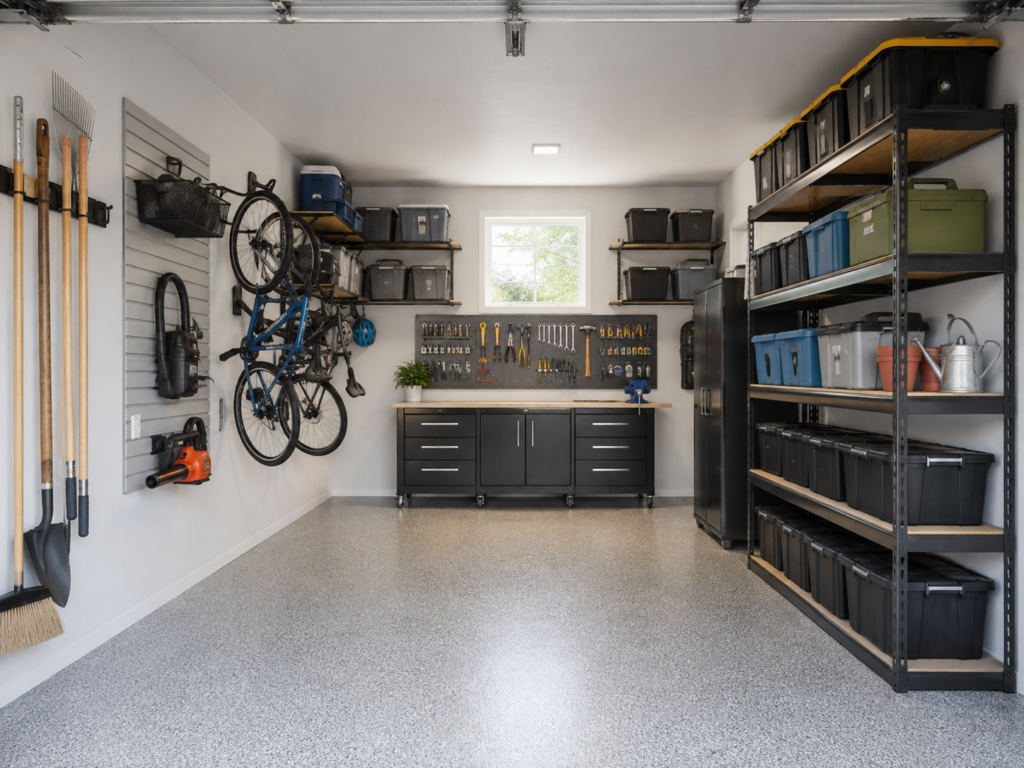
When floor space is limited, the biggest opportunity is usually above it.
Look at:
- Empty walls
- Space above shelving
- High wall areas
- Appropriate overhead areas
- Narrow vertical gaps
Then decide which belongings can move there.
Every rake hanging on a wall is one less thing leaning in a corner.
Every seasonal bin stored safely overhead is one less container occupying prime shelving.
Every bike moved onto a rack gives you more usable floor space.
But vertical storage only works when it’s safe and accessible.
Don’t put something in an inconvenient location just because you technically can.
Quick Small Garage Storage Problem Solver
Problem: Floor is covered with boxes
Try: Wall-mounted shelving and labeled bins
Problem: Tools are scattered everywhere
Try: Pegboard or slatwall storage
Problem: Rakes and shovels keep falling over
Try: A vertical wall-mounted tool rack
Problem: Sports gear spreads across the garage
Try: One dedicated equipment zone
Problem: Bikes take up too much room
Try: Wall-mounted bike storage
Problem: Seasonal bins occupy prime shelves
Try: Properly installed overhead storage
Problem: No project space
Try: A narrow or fold-down workbench
Problem: Garage becomes messy again quickly
Try: Fewer categories and clearer storage zones
Frequently Asked Questions About Small Garage Storage
How do I maximize storage in a small garage?
Start by getting belongings off the floor.
Use wall-mounted shelving, pegboards, hooks, vertical tool racks, and appropriately installed overhead storage where practical.
Keep frequently used items accessible and move seasonal belongings into less convenient storage areas.
What should I store on garage walls?
Garage walls work well for tools, bikes, gardening equipment, sports gear, extension cords, shelving, and other items that can be securely mounted.
Always use hardware appropriate for the wall construction and the weight being stored.
Is overhead garage storage a good idea?
It can be useful for lightweight, infrequently used items when the storage system is properly installed and rated for the intended load.
It should never interfere with the garage door, opener, tracks, utilities, lighting, or safe movement through the garage.
How do I organize sports equipment in a small garage?
Create one dedicated sports zone using baskets, hooks, racks, or open shelving.
Keep frequently used children’s equipment within easy reach so they can put it away themselves.
How do I store bikes in a small garage?
Wall-mounted hooks and racks can free up floor space.
Choose between vertical and horizontal storage based on your available wall space and how easily the user can lift and remove the bicycle.
How can I organize a garage cheaply?
Declutter before buying organizers.
Then prioritize inexpensive solutions that solve your biggest problems, such as sturdy hooks, labeled bins, basic shelving, and wall-mounted tool storage.
You don’t need matching cabinets or a custom garage system to create functional storage.
Make the Garage Work Harder, Not Feel Fuller
A small garage doesn’t need storage covering every square inch.
It needs the right things stored in the right places.
Get boxes off the floor.
Use the walls.
Hang awkward equipment vertically.
Move seasonal belongings away from prime storage.
Keep everyday items easy to reach.
And preserve enough open space that you can still comfortably use the garage.
That’s the difference between a garage that simply holds a lot of stuff and one that’s actually organized.