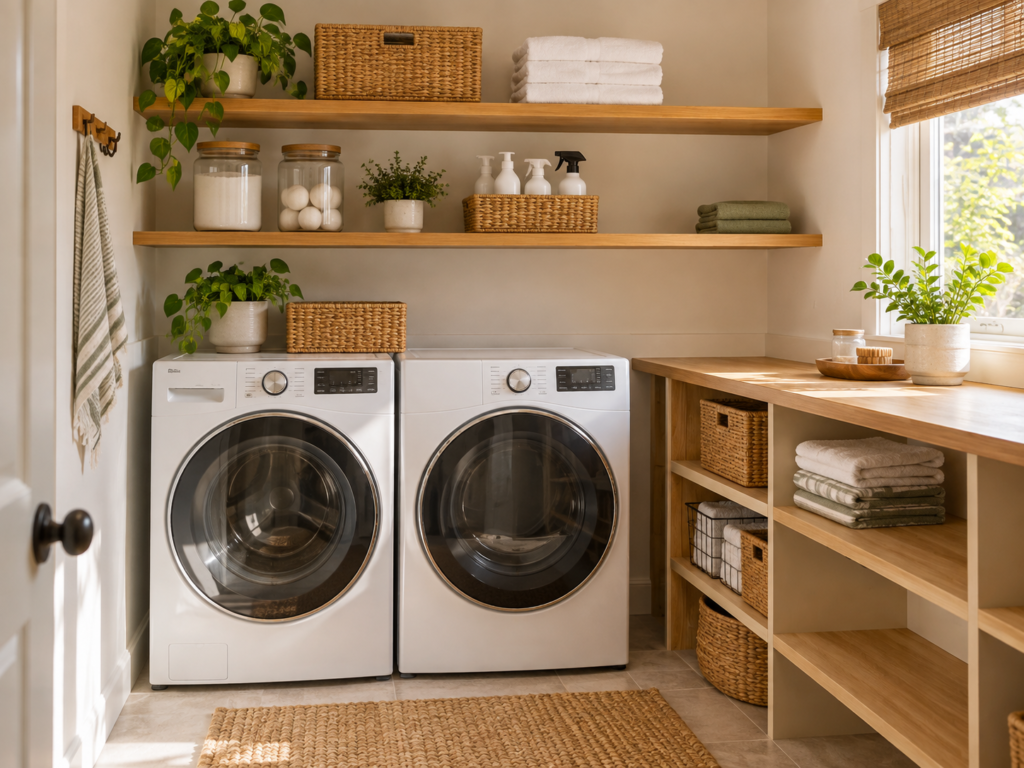
Good laundry room shelving can make a tiny laundry area feel dramatically more functional without taking up more floor space.
The trick is not simply adding shelves wherever there is an empty wall.
In a small laundry room, shelf depth, washer and dryer clearance, reach height, door swing, detergent storage, and the type of machines you have all matter.
A shelf that works perfectly above a front-load washer may be a terrible fit above a top-loader. A deep shelf can add capacity while also making the room feel cramped. And a high shelf is only useful if you can actually reach what you put on it.
Here are practical laundry room shelving ideas for small spaces that add storage without making the room harder to use.
Start With the Space Around Your Washer and Dryer
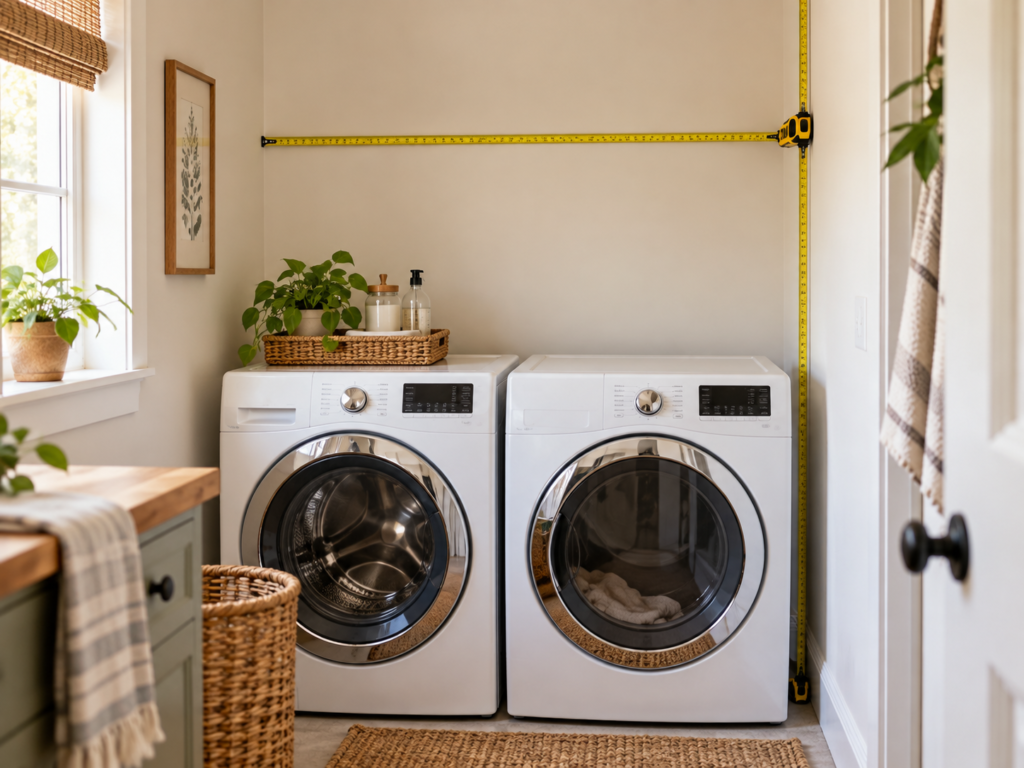
Before adding shelving, measure the laundry area carefully.
Record:
- Width above the machines
- Distance from the top of the machines to the ceiling
- Depth of the washer and dryer
- Available wall depth
- Door and cabinet clearance
- Side gaps beside the machines
- Location of outlets, hoses, vents, and hookups
- How far a top-loading washer lid opens
If you are buying shelving or organizers, our guide to measuring for storage organizers can help you avoid buying something that technically fits but blocks access.
1. Add Shelves Above the Washer and Dryer
The wall above the machines is usually the most obvious place to add laundry room shelving.
This area works well for:
- Detergent
- Dryer sheets
- Stain removers
- Cleaning cloths
- Extra paper products
- Small baskets
- Laundry tools
The shelf should be deep enough to hold what you need without projecting so far that it feels like it is hanging over the machines.
In a tight room, shallower shelves often feel more comfortable than deep shelving.
Keep the things you use most on the lowest shelf and less-frequent supplies higher up.
Over-washer laundry shelf → Buy on Amazon
2. Check Top-Load Washer Clearance First
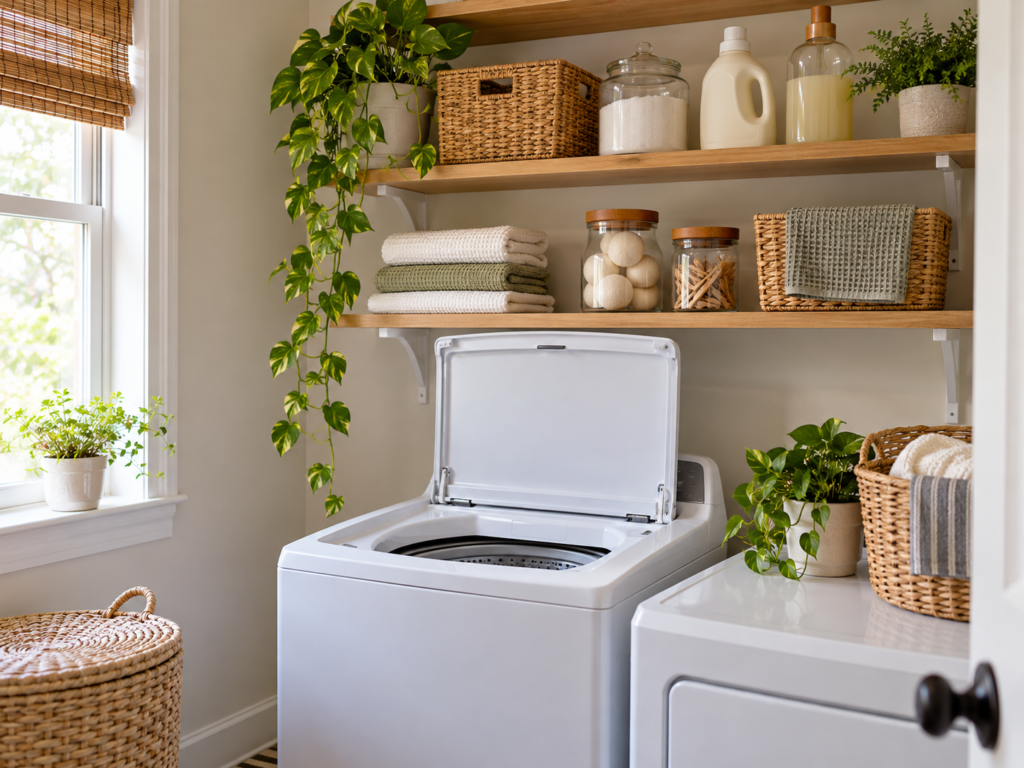
Top-loading washers need more vertical clearance than front-load machines.
Before installing shelving above one, open the lid fully and measure from the highest point of the lid to the wall area where the shelf would go.
Leave enough room so the lid can open comfortably without hitting the shelf.
Also make sure you can still reach into the washer easily.
A shelf that sits too low may technically clear the lid but still make loading and unloading awkward.
3. Use Two Shallow Shelves Instead of One Deep Shelf
One deep shelf may hold more, but it can also make the room feel crowded.
Two shallower shelves can sometimes work better.
This gives you separate zones for:
- Daily-use laundry supplies
- Backup products
- Cleaning supplies
- Small baskets
Shallow shelving also makes it easier to see what is stored instead of losing items behind the front row.
This is especially helpful in narrow laundry closets and passage-style laundry rooms.
4. Use Floating Shelves for a Lighter Look
Floating shelves can add useful storage without making the laundry area feel heavy.
They work well for:
- Detergent bottles
- Small baskets
- Folded cleaning cloths
- Dryer balls
- Stain products
- Decorative containers
Keep the styling practical.
A small laundry room does not need shelves filled with décor while the detergent is still sitting on top of the dryer.
Use most of the shelf for storage and leave only a little breathing room.
Floating laundry shelves → Buy on Amazon
5. Add a Narrow Side-Wall Shelf
If the wall above the machines is already occupied, look at the side walls.
A narrow shelf can work well for:
- Small bottles
- Spray cleaners
- Laundry accessories
- Dryer sheets
- Clothespins
- Lint tools
Even a relatively shallow shelf can be useful because many laundry products do not require much depth.
This works especially well beside front-load machines where the side wall stays accessible.
6. Use the Full Wall Height
Small laundry rooms often have usable wall space far above eye level.
Use the upper section for items you do not need often:
- Bulk detergent refills
- Extra paper goods
- Seasonal cleaning supplies
- Spare towels
- Backup laundry products
Keep everyday products lower.
This is the same principle behind our vertical storage ideas for small spaces: the higher the storage, the less frequently you should need the item.
Do not store heavy items where they are difficult to lift safely.
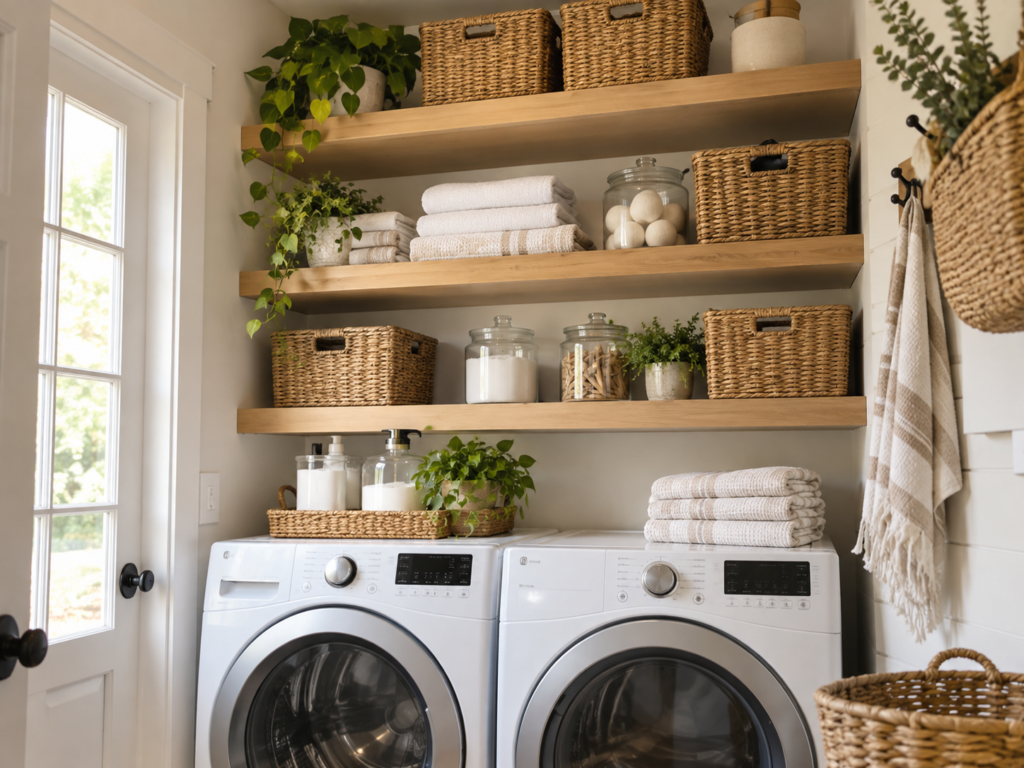
7. Use Baskets to Keep Open Shelves From Looking Messy
Open shelving can quickly become visually chaotic.
Baskets help contain smaller categories such as:
- Stain treatment
- Cleaning cloths
- Dryer accessories
- Lost socks
- Ironing supplies
- Backup products
Use one basket per category rather than one giant miscellaneous basket.
You should be able to look at the shelf and understand what belongs where.
Handled baskets are especially useful on higher shelves because they are easier to pull forward.
Laundry shelf baskets → Buy on Amazon
8. Create a Dedicated Stain-Treatment Shelf
Stain-removal products tend to spread across the laundry room.
Give them a specific zone.
Keep together:
- Stain spray
- Stain sticks
- Small brushes
- Oxygen cleaner
- Cloths
- Pre-treatment products
A small basket or shallow tray can keep liquids contained.
If you have children or pets, store chemicals according to the product’s safety instructions and keep them out of reach where appropriate.
9. Create a Small Lint and Dryer-Supply Zone
Dryer supplies need very little space.
A small shelf or basket can hold:
- Dryer sheets
- Dryer balls
- Lint brushes
- Small cleaning tools
- Extra lint-bin bags
Keeping these near the dryer makes more sense than mixing them with detergent on the opposite side of the room.
Small laundry shelving works best when storage is based on where each item is used.
10. Add a Narrow Shelf Tower Beside the Machines
If you have a narrow vertical gap beside the washer or dryer, a slim shelving unit can turn it into useful storage.
Depending on the available width, it can hold:
- Detergent
- Cleaning products
- Paper goods
- Small baskets
- Laundry accessories
Measure carefully.
Do not assume a narrow shelving tower will fit simply because the gap looks large enough.
Account for:
- Baseboards
- Hoses
- Machine vibration
- Door swing
- Dryer venting
- Access to hookups
A few inches of clearance may be more useful than forcing a shelf into every gap.
Narrow laundry shelf tower → Buy on Amazon
11. Use Open Shelves Above a Utility Sink
If your laundry room includes a utility sink, the wall above it can provide useful storage.
This works well for:
- Cleaning supplies
- Brushes
- Gloves
- Cloths
- Laundry treatment products
Avoid installing shelving so low that it interferes with using the sink.
Also choose materials that can handle occasional moisture and splashes.
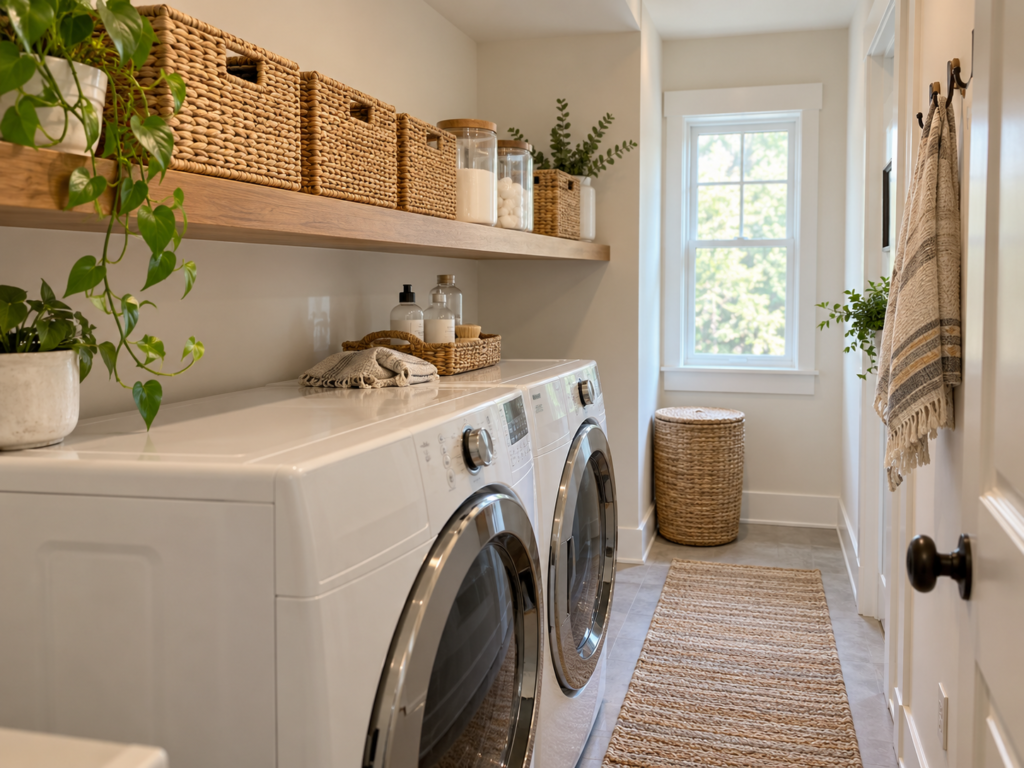
12. Use One Long Shelf Across the Room
In a narrow laundry room, one continuous wall shelf can sometimes work better than several small units.
A long shelf can create a consistent storage zone for:
- Matching baskets
- Backup supplies
- Folded towels
- Paper goods
This can be especially effective above side-by-side front-load machines.
But do not make the shelf deeper than necessary.
In a narrow room, every inch that projects into the walkway matters.
13. Use Adjustable Shelving if Your Storage Changes
Laundry products come in different heights and sizes.
Adjustable shelves let you change the spacing when your storage needs change.
This can be useful for:
- Tall detergent bottles
- Short baskets
- Paper goods
- Cleaning supplies
- Bulk refills
Fixed shelves can work well, but adjustable shelving gives you more flexibility in a small room where wasted vertical space matters.
14. Keep Shelf Depth Proportional to the Room
A deep shelf may provide more storage, but it can also make a small laundry room feel tighter.
Before choosing shelf depth, think about:
- The depth of the products
- The width of the walkway
- Head clearance
- Door swing
- Whether you need to reach behind the front row
Use the shallowest shelf that comfortably holds the intended items.
That often produces better storage than maximizing shelf depth.
15. Leave Space Around Machine Controls
If your washer or dryer controls are located on the top rear of the machine, shelves can interfere with access.
Make sure you can still:
- See the controls
- Reach buttons and knobs
- Open detergent compartments
- Access the top surface when needed
This matters particularly when shelves are installed directly above machines.
Storage should not make the appliances harder to operate.
16. Use Shelf Brackets That Fit the Load
Laundry shelves may end up holding heavier items than expected.
Detergent containers, bulk supplies, and full baskets can add significant weight.
Use shelving and hardware designed for the intended load.
Mount wall shelving securely according to the manufacturer’s instructions and the type of wall you have.
Do not assume decorative floating shelves can safely hold heavy laundry products.
Heavy-duty shelf brackets → Buy on Amazon
17. Keep Heavy Items Lower
Store heavier items on lower shelves whenever possible.
Good lower-shelf items include:
- Large detergent bottles
- Bulk refills
- Heavy cleaning supplies
Use higher shelves for lighter items such as:
- Paper goods
- Empty baskets
- Cleaning cloths
- Lightweight backup products
This makes the shelving safer and easier to use.
18. Use a Shelf for Folding Supplies
If you fold clothes in the laundry room, dedicate a small shelf or basket to the tools you use there.
This may include:
- Lint rollers
- Mesh laundry bags
- Clothespins
- Folding aids
- Small repair items
Keeping these together prevents them from disappearing into random drawers or baskets.
19. Consider Renter-Friendly Shelving
If you cannot permanently mount shelves, consider temporary or freestanding options.
Depending on the room, you might use:
- Freestanding over-washer shelving
- Tension-based shelving
- Narrow shelf towers
- Rolling carts
- Removable organizers
Check stability carefully.
A tall freestanding unit should not wobble around vibrating appliances.
If needed, choose a system that can be safely secured according to the manufacturer’s instructions.
20. Do Not Block Laundry Hookups
Shelves should never make routine maintenance unnecessarily difficult.
Keep access to:
- Water shutoff valves
- Washer hoses
- Dryer vent connections
- Electrical outlets
- Gas connections where applicable
- Drain access
Permanent shelving should not trap appliances or make it impossible to reach important connections.
Movable storage is often better near utility areas.
21. Leave Some Open Shelf Space
Every shelf does not need to be filled completely.
A little empty room makes it easier to:
- Put products back
- Pull baskets out
- See what you have
- Add a new product temporarily
- Clean the shelf
Packed shelves may look efficient but often become frustrating in daily use.
A good small laundry room should feel organized, not stuffed.
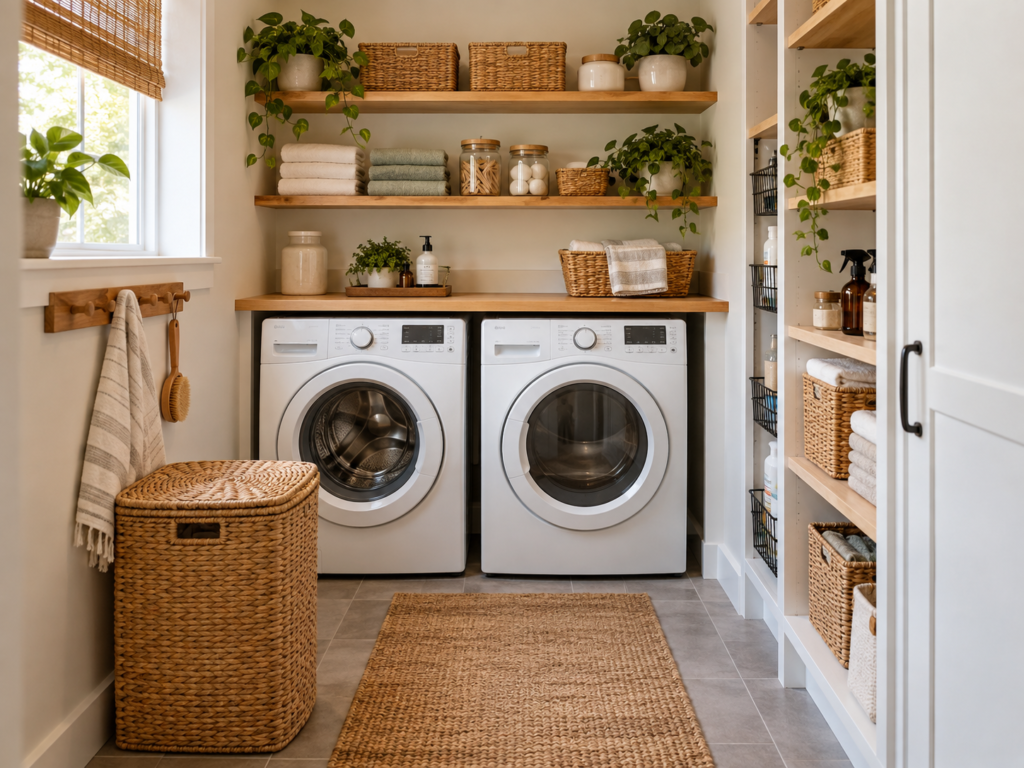
How Deep Should Laundry Room Shelves Be?
There is no single perfect shelf depth.
Choose the depth based on:
- The products you store
- Available wall space
- Walkway width
- Machine clearance
- How easily you can reach the back
Shallower shelves are often better in narrow laundry rooms because they provide useful storage without making the room feel crowded.
How High Should Shelves Be Above a Washer and Dryer?
The right height depends on the machines.
For front-load machines, shelving can often sit lower because the doors open from the front.
For top-load machines, you need enough vertical room for the washer lid to open completely.
Always measure your actual appliances before installing shelving.
Do not rely on a generic height recommendation.
Are Open Shelves or Cabinets Better in a Small Laundry Room?
Open shelves are usually easier to access and can make a small room feel less enclosed.
Cabinets hide visual clutter and protect items from dust.
If your main problem is wall storage above the machines, open shelving may be the simpler solution.
If you already have cabinets and want to use them more efficiently, that is a different problem—which is why cabinet interiors deserve their own storage strategy.
What Should You Store on Laundry Room Shelves?
Good shelf categories include:
- Detergent
- Stain treatment
- Dryer supplies
- Cleaning cloths
- Paper products
- Laundry bags
- Small cleaning supplies
- Backup products
Keep heavy products low and lightweight or rarely used items higher.
Can You Add Shelves to a Laundry Closet?
Yes, but laundry closets require careful measurements.
Check:
- Door clearance
- Machine depth
- Washer lid clearance
- Ventilation
- Hookup access
- Shelf depth
A laundry closet usually benefits from shallow, vertical storage rather than deep shelves that crowd the machines.
For more overall ideas, see our small laundry room organization ideas.
Small Laundry Room Shelving Should Make the Room Easier to Use
The best laundry room shelving does more than create extra storage.
It puts detergent where you use it.
It keeps stain treatment together.
It uses the wall above the machines without blocking them.
It moves backup supplies higher and keeps heavy products lower.
And it makes a small room feel more controlled instead of more crowded.
Start with the machines, measure the available wall space, and build the shelving around how the laundry room actually functions.
In a small space, a few well-placed shelves usually work better than trying to cover every wall with storage.