
When a small apartment feels short on storage, the instinct is usually to buy another cabinet, shelf, dresser, or cart.
Sometimes that helps.
But sometimes the new furniture solves one storage problem while creating another: less walking room, more visual clutter, blocked outlets, tighter door clearance, and a room that feels even smaller.
Before adding anything else, look at the storage potential you already have.
The best storage solutions for small apartments often come from using walls, doors, existing furniture cavities, under-bed space, cabinet interiors, and awkward gaps more intentionally.
Here’s how to create more storage in a small apartment without adding more furniture.
Start by Identifying What Your Apartment Is Missing
Apartments usually don’t feel short on storage in a general sense.
They’re short on specific types of storage.
You may be missing:
- coat storage
- pantry storage
- linen storage
- shoe storage
- cleaning-supply storage
- seasonal storage
- bulky-item storage
That distinction matters.
If the real problem is shoes by the door, buying a general shelving unit may not help much.
If the problem is nowhere to store bedding, a narrow entryway cabinet won’t solve it.
Start by naming the category that’s overflowing.
Then look for unused space that matches that category.
1. Use the Space Above Furniture You Already Own
One of the easiest ways to create storage without adding furniture is to use the wall above furniture that’s already there.
Look above:
- desks
- dressers
- toilets
- beds
- sofas
- kitchen counters
- entryway cabinets
Floating shelves or wall-mounted storage can share the same footprint as the furniture below.
This works especially well when the lower furniture is already necessary.
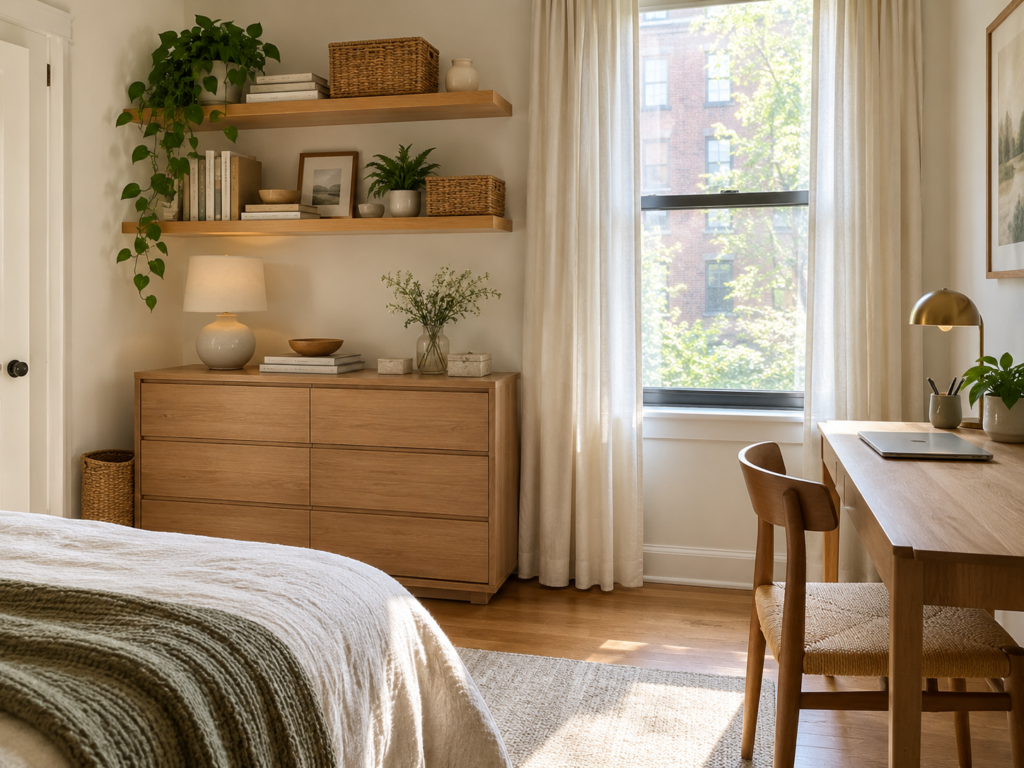
If you’re looking for more ways to use wall height, see our 15 Vertical Storage Ideas for Small Spaces That Free Up Floor Space.
Floating wall shelves → Buy on Amazon
2. Use the Space Under the Bed
Under-bed storage is valuable because the bed already occupies the floor.
You’re not adding another footprint.
Use the space underneath for:
- seasonal clothing
- extra bedding
- shoes
- bags
- holiday items
- infrequently used accessories
Before buying bins, measure from the floor to the lowest obstruction, not just the outside frame.
Center supports, slats, and hardware can reduce the usable height.
Our Storage Bin Size Guide can help you choose containers based on the actual geometry of the space.
Low-profile under-bed storage bins → Buy on Amazon
3. Use the Space Under the Sofa
Some sofas have enough clearance underneath for low storage containers.
This can work for:
- blankets
- games
- seasonal decor
- flat craft supplies
- extra linens
The trick is accessibility.
If the bins are so deep under the sofa that you have to move furniture every time you need them, use the space for low-frequency items only.
Also check whether the sofa frame or support rails reduce clearance in the middle.
4. Use the Back of Doors
Doors are often overlooked because they move.
But the back of a door can provide useful storage without adding any furniture at all.
Use over-door organizers for:
- shoes
- toiletries
- cleaning supplies
- pantry items
- accessories
- hats and gloves
- small household supplies
Closet doors are especially useful because the storage disappears when the door closes.
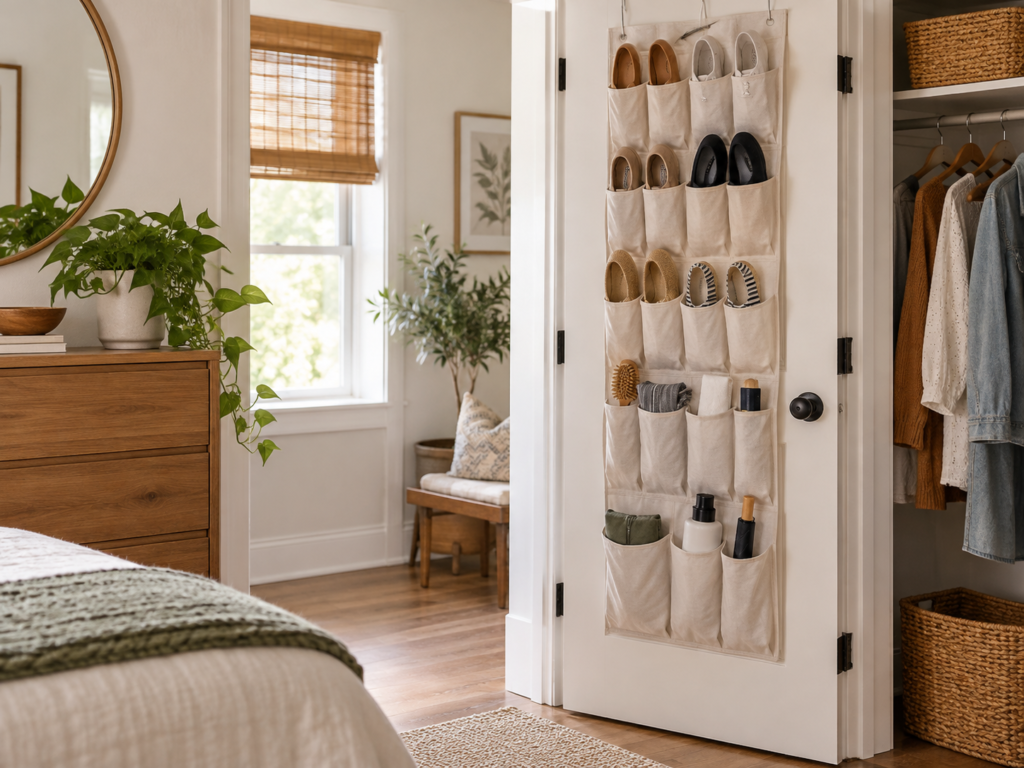
Over-the-door organizer → Buy on Amazon
5. Use the Inside of Cabinet Doors
Cabinet doors can hold smaller categories that otherwise take up shelf or drawer space.
Depending on the room, you might store:
- measuring spoons
- wraps and bags
- cleaning brushes
- hair tools
- toiletries
- dishwashing supplies
- small kitchen tools
Before mounting anything, close the cabinet and check where shelves, hinges, plumbing, and stored items sit.
A door-mounted organizer can fit the door perfectly and still stop it from closing.
This is especially important under sinks.
6. Add a Second Level Inside Cabinets
Cabinets often waste vertical space between shelves.
Shelf risers can create a second level for smaller items without changing the cabinet itself.
Adjustable cabinet shelf risers → Buy on Amazon
They work well for:
- dishes
- mugs
- pantry foods
- toiletries
- small appliances
- cleaning supplies
Use risers only where the shelf height allows both levels to remain easy to access.
If the lower level becomes impossible to reach, the extra capacity isn’t helping.
7. Use Wall Hooks Instead of a Coat Rack
A standing coat rack uses floor space.
Wall hooks don’t.
Use them for:
- jackets
- bags
- hats
- backpacks
- dog leashes
- scarves
This works particularly well in entryways, bedrooms, and bathrooms.
Keep the number of hooks proportional to the space.
A wall covered with hanging items can feel just as cluttered as furniture.
8. Turn Awkward Gaps Into Storage
Small apartments often have gaps beside furniture or appliances that are too narrow for normal furniture but too large to ignore.
Look beside:
- refrigerators
- dressers
- sofas
- vanities
- desks
- kitchen cabinets
These spaces can sometimes hold:
- narrow bins
- folding items
- brooms
- trays
- slim organizers
Don’t automatically fill every gap.
Use it only if the storage solves a real problem.
Our 12 Storage Ideas for Awkward Spaces You’re Probably Wasting has more examples of turning overlooked areas into usable storage.
9. Use the Area Above Doorways
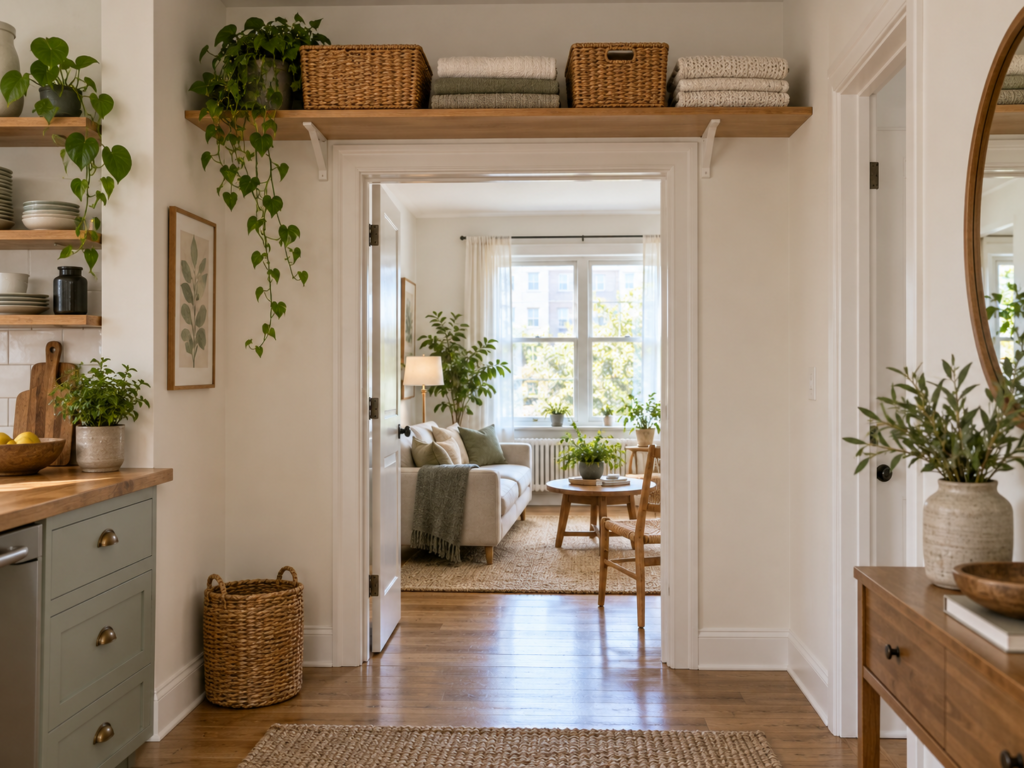
The wall above a doorway can hold lightweight, infrequently used items.
A shelf there can work for:
- extra linens
- seasonal accessories
- decorative storage boxes
- backup supplies
This is secondary storage.
Don’t put something up there if you need it every day.
And avoid heavy items overhead.
10. Store Long Items Vertically
Long household items often take up less usable space when stored upright.
Examples include:
- brooms
- mops
- ironing boards
- folding chairs
- yoga mats
- wrapping paper
Wall-mounted holders and hooks can keep them from becoming a pile.
This is particularly useful in utility closets and laundry areas.
Wall-mounted utility organizer → Buy on Amazon
11. Reclaim the Top Shelf of Closets
Closet upper shelves often become messy because they’re used as dumping zones.
Instead, reserve the highest shelf for categories that don’t need frequent access.
Good candidates include:
- seasonal clothing
- extra bedding
- travel bags
- holiday items
- backup toiletries
Use a few appropriately sized containers rather than one giant mixed pile.
Keep frequently used items lower.
12. Use Existing Furniture Cavities Better
Look at furniture you already own.
You may have unused space:
- beneath benches
- under desks
- inside nightstands
- beneath console tables
- under open shelving
- behind cabinet doors
Low baskets or bins can turn those cavities into useful storage.
But don’t fill every empty gap just because it exists.
Some open space helps small rooms feel less crowded.
13. Reduce the Size of Oversized Storage Containers
Sometimes the problem isn’t the amount of stuff.
It’s that the containers are too large.
A deep bin holding small items wastes space.
A round basket on a rectangular shelf wastes corners.
Oversized bins also encourage categories to grow until the container is full.
Choose storage based on:
- shelf width
- usable depth
- available height
- item size
- frequency of access
This is exactly why our How to Measure for Storage Organizers Before You Buy guide focuses on usable dimensions instead of advertised dimensions.
14. Nest and Stack Items More Intentionally
Some categories can take up much less room when they’re stored by shape.
Examples include:
- nesting mixing bowls
- stacking food containers
- nesting baskets
- stacking trays
- storing pans vertically
- folding soft bags flat
Before buying storage, ask whether the items themselves can occupy less space.
Reducing category footprint can create more room without adding a single organizer.
15. Move Seasonal Items Out of Prime Storage
The easiest storage in your apartment should hold what you use now.
Off-season items should move to:
- under-bed storage
- top closet shelves
- deep cabinet zones
- secondary storage
This keeps everyday areas from filling with things you won’t touch for months.
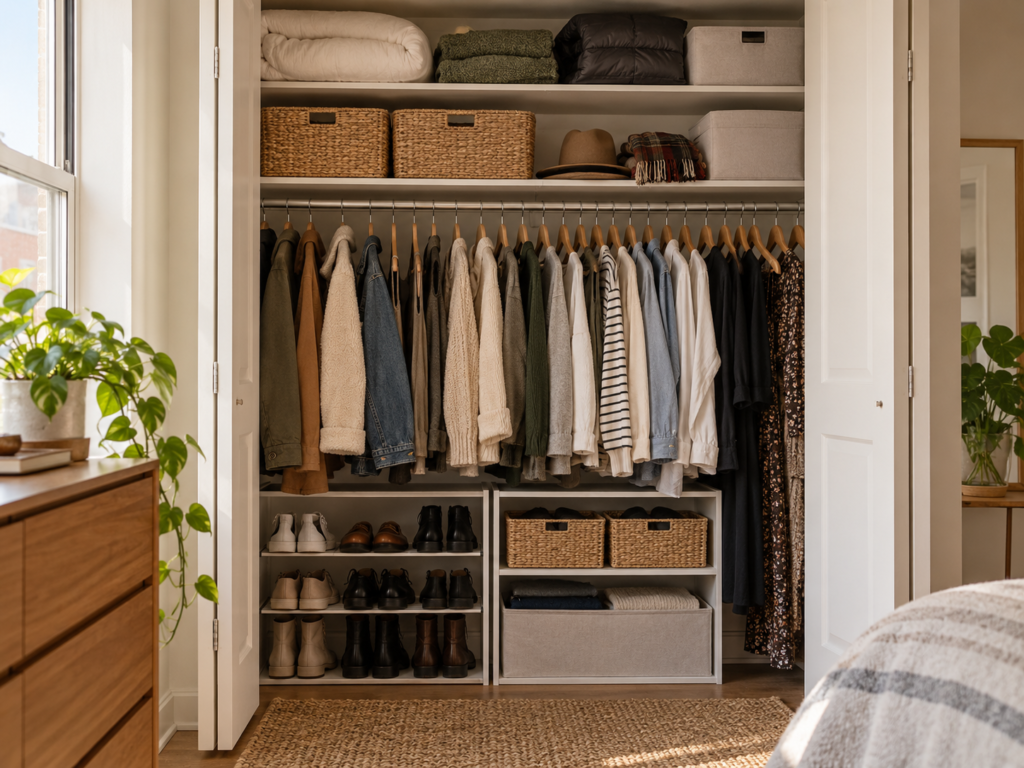
16. Use Visible Storage Only for Categories That Stay Tidy
Open shelves are useful.
But not every category belongs on display.
Good visible-storage categories include:
- books
- folded linens
- baskets
- dishes
- plants
Messier categories are often better behind doors or inside bins.
If something contains lots of small mismatched items, closed storage usually makes the room feel calmer.
17. Consolidate Duplicate Storage Categories
Small apartments often have the same category spread across several places.
You might have:
- cleaning supplies in three rooms
- linens in multiple closets
- cables in several drawers
- tools scattered around the apartment
Consolidating those categories can free up fragmented storage.
Instead of four half-full locations, you may end up with one full location and three newly available spaces.
18. Use Storage Zones Based on Activity
In multifunction rooms, organize storage around what happens there.
For example:
Work zone
Laptop, chargers, papers, office supplies.
Living zone
Remotes, games, blankets.
Dining zone
Table linens and serving pieces.
Workout zone
Bands, mats, small equipment.
Keeping each category near where it’s used reduces clutter and makes storage easier to maintain.
19. Remove Items That Are Occupying Expensive Space
Small apartments make every shelf more valuable.
Be especially critical of:
- empty product boxes
- broken electronics
- duplicate kitchen tools
- furniture you don’t use
- old hobby supplies
- clothing that no longer fits
- seasonal decor you no longer like
Storage systems can’t indefinitely compensate for too much inventory.
Sometimes the best way to create storage is to create less demand for it.
20. Don’t Buy More Furniture Until You’ve Tested the Existing Space
Before ordering another shelving unit or cabinet, test the alternatives.
Ask:
- Can this category go under the bed?
- Can it use wall space?
- Can it go behind a door?
- Can it use a cabinet interior?
- Can seasonal items move higher?
- Can the container be smaller?
- Can the category be consolidated?
Only when those options fail should more furniture become the next step.
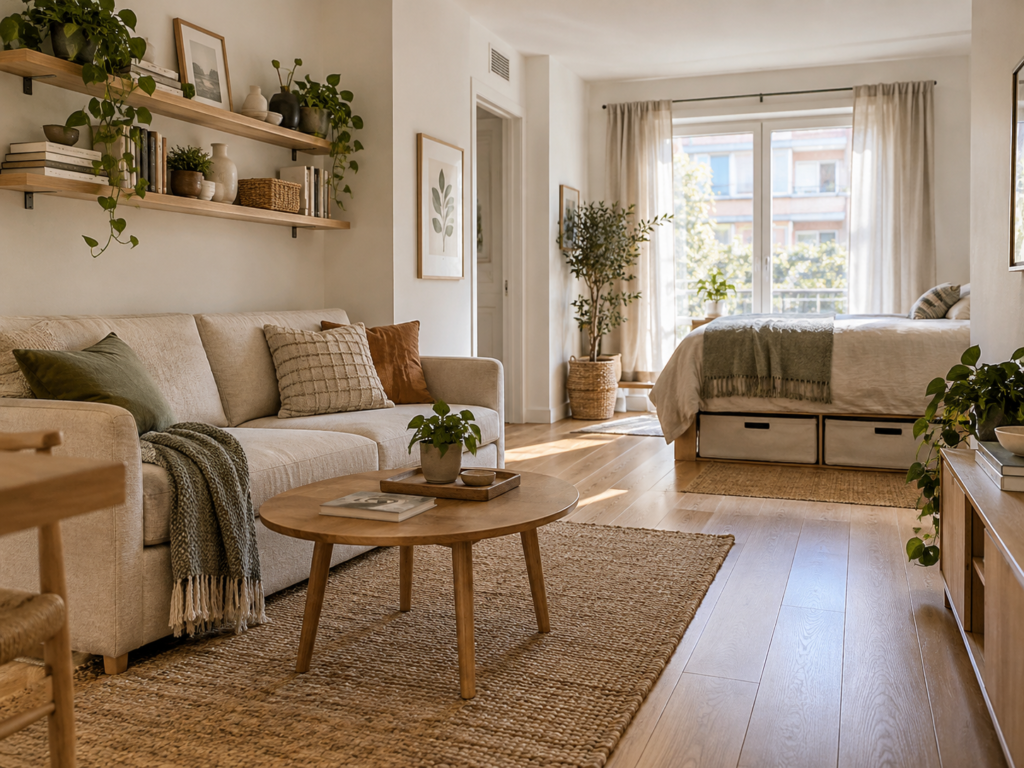
A Simple System for Finding Hidden Storage
Walk through the apartment and look at each room in this order.
1. Walls
Is there unused space above existing furniture?
2. Doors
Can the back or inside surface hold something?
3. Under furniture
Is there usable space under the bed, sofa, or bench?
4. Cabinets
Are shelf height or door interiors being wasted?
5. Closets
Are upper shelves and floor areas functioning well?
6. Gaps
Are there narrow or awkward spaces that match a specific category?
7. Containers
Are oversized bins wasting usable volume?
This gives you a better picture of the apartment’s true storage capacity before you buy anything else.
When Adding Furniture Actually Does Make Sense
Sometimes you really do need more furniture.
A new storage piece may make sense when:
- you’ve already used available vertical space
- the category has no logical existing home
- the room still has comfortable circulation
- the piece replaces another function too
- the storage gain is substantial relative to its footprint
If you do add furniture, multifunction pieces are usually the strongest small-space choice.
A storage bench, bed with drawers, or lift-top table can provide capacity without adding a completely separate function.
Frequently Asked Questions
How can I create more storage in a small apartment?
Start with wall space, doors, under-bed areas, closet shelves, cabinet interiors, and existing furniture cavities before adding new furniture.
How do I add storage without taking up floor space?
Use wall-mounted shelves, hooks, over-door organizers, cabinet-door storage, and high shelving where appropriate.
What is the best hidden storage in an apartment?
Under-bed storage, storage inside existing furniture, cabinet interiors, closet upper shelves, and door storage are all useful because they add capacity without significantly changing the room footprint.
Should I use every empty space for storage?
No. Some open space helps a small apartment feel calmer and easier to move through. Prioritize unused areas that solve a real storage problem rather than filling every gap.
How do I know if I need more furniture?
If you’ve already used reasonable wall, door, closet, cabinet, and under-furniture storage and still lack a home for essential items, then another storage piece may be justified.
What should I store in hard-to-reach places?
Use difficult-to-access areas for lightweight, seasonal, or rarely used items rather than everyday essentials.
Make Existing Space Work Before Adding More
A small apartment can feel short on storage even when useful capacity is hiding in plain sight.
The wall above a dresser, the area under the bed, the back of a closet door, the inside of a cabinet, and the upper shelf you rarely use can all hold something without taking another inch of floor space.
Start with the storage you already have.
Improve how it’s used.
Reduce oversized containers.
Move seasonal items out of prime areas.
And only then decide whether another piece of furniture is really necessary.
For more apartment-specific ideas, see our 17 Storage Ideas for Small Apartments That Make Every Inch Work Harder.