
These storage ideas for awkward spaces can help you make better use of narrow gaps, high walls, doors, corners, and other overlooked areas in a small home.
Some of the most useful storage space in a small home doesn’t look like storage space at all.
It’s the eight-inch gap beside the refrigerator.
The blank wall above a doorway.
The awkward corner where normal furniture doesn’t fit.
The side of a kitchen cabinet.
The empty space beneath a bed or sofa.
When storage is limited, these strange little areas start to matter.
But there’s an important distinction between using overlooked space and simply filling every empty surface with stuff.
Good small-space storage should make an awkward area more functional without blocking movement, making things harder to reach, or creating visual clutter.
Here are 12 awkward spaces around the home that may be more useful than they look—and practical ways to turn them into storage.
Before You Fill an Awkward Space, Measure the Usable Space
Awkward spaces are exactly where measurements matter most.
A normal bookshelf placed against an open wall has some margin for error.
A rolling cart squeezed between a refrigerator and cabinet doesn’t.
Before buying an organizer, measure:
- Width
- Depth
- Height
- Floor clearance
- Baseboards
- Trim
- Door swing
- Drawer clearance
- Nearby outlets
- Any pipes, vents or fixtures
Also ask whether the organizer needs room to move.
A rolling cart needs enough clearance to roll out.
A drawer needs room to open.
A basket needs enough space above it to lift out.
A cabinet door needs room to swing.
Something can technically fit the dimensions of a space and still be completely impractical to use.
That’s especially important with the first storage idea.
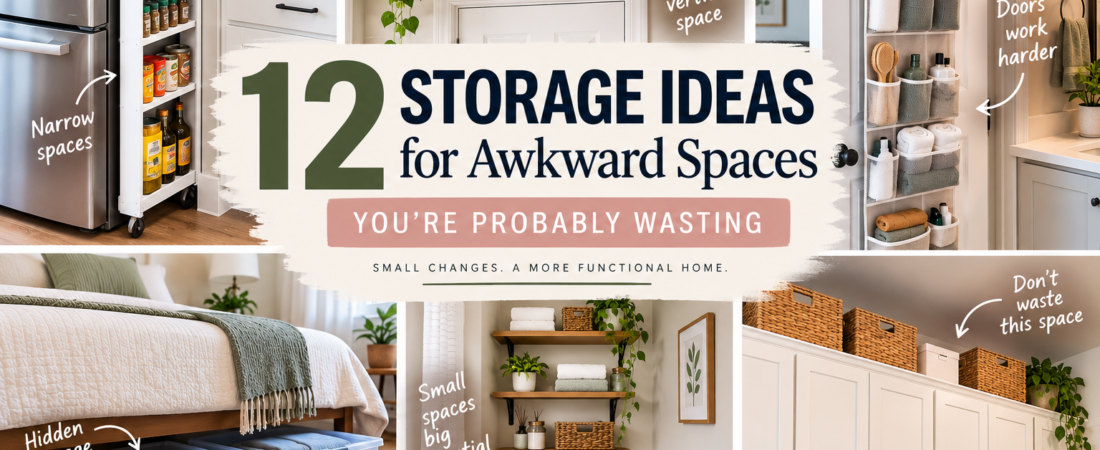
1. Use the Narrow Gap Beside the Refrigerator
Many kitchens have a narrow gap between the refrigerator and the wall or cabinetry.
It might only be six or eight inches wide, which makes it seem useless.
But a slim rolling cart can turn that gap into storage for things such as:
- Canned goods
- Spices
- Bottled drinks
- Foil and food-storage bags
- Small pantry staples
- Cleaning supplies
The key is choosing a cart that is narrower than the smallest point of the opening.
Measure near the floor as well as higher up. Baseboards and cabinet trim can reduce the usable width.
Also check refrigerator ventilation requirements before filling space immediately beside the appliance. Your refrigerator’s installation instructions should tell you how much clearance it requires.
Slim rolling storage cart → Buy on Amazon
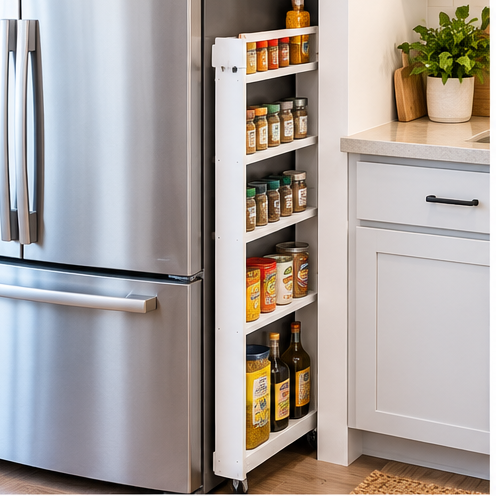
2. Add Storage Above Interior Doors
Look at the wall above a bedroom, bathroom, laundry room or closet door.
There’s often a large rectangle of completely unused wall space.
A shallow shelf installed above the door can hold lightweight, infrequently used items such as:
- Extra towels
- Toilet paper
- Small baskets
- Seasonal accessories
- Guest supplies
- Lightweight linens
This isn’t a good location for things you need every day.
That’s okay.
Storage doesn’t all need to be equally convenient.
Harder-to-reach spaces are often perfect for low-frequency items, leaving easier storage available for everyday belongings.
Keep heavy items out of high overhead storage, particularly anything you would have to pull toward yourself while standing on a stool.
3. Use the Side of a Kitchen Cabinet
The exposed end of a kitchen cabinet is often just a blank vertical surface.
Depending on the location, it can become useful storage.
You might add:
- Hooks for oven mitts
- A paper towel holder
- A narrow spice rack
- A magnetic organizer
- A small rail with hooks
- Storage for cutting boards
The important part is keeping the storage shallow.
A bulky organizer attached to the end of a cabinet can protrude into a walkway and create a new problem.
This works particularly well on the side of an upper cabinet where you’re adding storage without consuming counter space.
For more ways to improve cabinet capacity itself, see our 15 Kitchen Cabinet Organization Ideas That Make Every Shelf Work Harder.
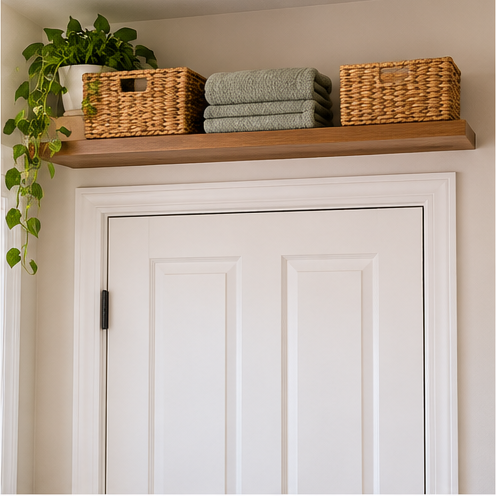
4. Turn the Back of a Door Into Storage
Doors are essentially large vertical surfaces that disappear when they’re open.
That makes them useful storage territory.
Depending on the room, the back of a door can hold:
Bedroom: shoes, accessories, bags or hats
Bathroom: towels, toiletries or robes
Pantry: snacks, spices or small packages
Laundry room: cleaning supplies
Closet: belts, scarves or shoes
But don’t automatically buy the largest over-the-door organizer you can find.
Measure the clearance between the open door and the wall.
Also check whether the organizer’s hooks allow the door to close properly.
A deep organizer stuffed with bulky items can prevent the door from opening completely or cause it to bang into the wall.
Over-the-door storage organizer → Buy on Amazon
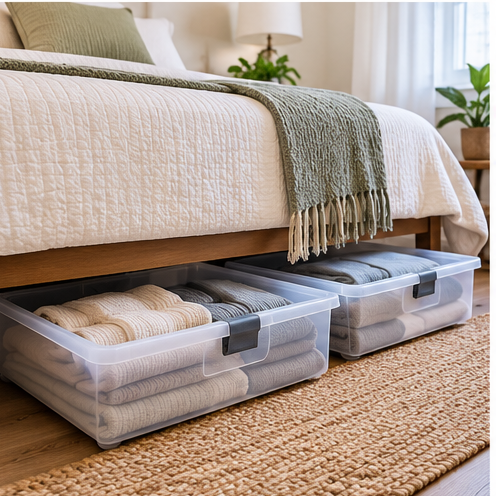
5. Use the Space Under the Bed
Under-bed storage isn’t revolutionary.
But it’s one of the largest overlooked storage areas in many small bedrooms.
A queen mattress covers more than 30 square feet of floor area. Depending on the bed frame, at least some of that footprint may be usable for storage.
Good candidates include:
- Seasonal clothing
- Extra bedding
- Shoes
- Gift wrap
- Rarely used accessories
- Spare towels
Measure the lowest clearance point beneath the bed before buying containers.
Bed-frame supports can hang lower than the outer rails.
Low-profile bins with handles or wheels are usually easier to retrieve than heavy boxes that have to be dragged across the floor.
Under-bed storage bins → Buy on Amazon
If your closet is also overflowing, our How to Organize a Small Closet With Too Many Clothes guide covers how to decide what deserves closet space and what should move to secondary storage.
6. Use the Gap Beside a Washer or Dryer
Laundry areas often have strange leftover gaps because appliances don’t perfectly fill the available opening.
A narrow rolling cart can sometimes fit between:
- Washer and dryer
- Appliance and wall
- Appliance and cabinet
Use it for:
- Detergent
- Stain remover
- Dryer sheets
- Cleaning cloths
- Laundry bags
- Small household supplies
Measure carefully before buying.
Appliances may vibrate or shift slightly during operation, so don’t wedge an organizer tightly against them.
Also keep access to hoses, plugs, drains and shutoff valves in mind.
Storage isn’t useful if you have to dismantle the entire setup when something needs servicing.
7. Add Shelves to an Awkward Corner
Corners can be frustrating because standard rectangular furniture doesn’t always use them efficiently.
A small corner shelf can create storage without requiring a wide section of wall.
Depending on the room, use it for:
- Toiletries
- Books
- Small baskets
- Kitchen supplies
- Plants
- Decorative storage containers
Floating corner shelves can preserve floor space.
A narrow freestanding corner unit may provide more capacity.
Choose based on what you’re actually storing.
And pay attention to depth.
A corner shelf that sticks too far into a narrow room can interfere with movement even if it technically fits.
Compact corner storage shelf → Buy on Amazon
8. Use the Space Beneath Short Hanging Clothes
Closets often contain a strange block of empty space beneath shirts, jackets and folded pants.
That’s valuable storage.
Depending on the available height, you can add:
- Drawers
- Shoe shelves
- Baskets
- Stackable bins
- A second hanging rod
Measure the longest garments in that section before adding anything underneath.
You don’t want shirts draping over the top of a drawer unit every time you close the closet.
This is a good example of why usable dimensions matter more than empty-space dimensions.
The space may be 40 inches tall when empty but only 22 inches usable once clothing is hanging above it.
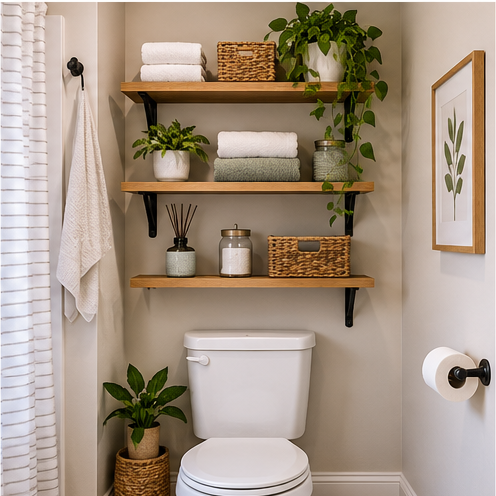
9. Use the Wall Above the Toilet
In a small bathroom, the toilet occupies floor space while leaving a large amount of wall space above it.
That wall can hold:
- Floating shelves
- A shallow cabinet
- Baskets
- Towels
- Toilet paper
- Backup toiletries
You can also use a freestanding over-the-toilet unit if wall mounting isn’t practical.
Bathroom storage shelves → Buy on Amazon
Measure tank height, toilet width and the distance to nearby fixtures before choosing anything.
Most importantly, preserve access to the toilet tank.
If you’re dealing with a bathroom that has almost no cabinetry at all, our 15 Small Bathroom Storage Ideas for Bathrooms With No Storage covers additional ways to create storage from scratch.
10. Use the Space Under a Sofa
Beds aren’t the only furniture with hidden space underneath.
Some sofas and chairs have enough clearance for low-profile storage.
This can work for:
- Board games
- Extra blankets
- Seasonal décor
- Toys
- Craft supplies
- Rarely used household items
Measure carefully because sofa clearance is often lower than expected.
Also consider visibility.
If the bins are clearly visible from across the room, choose containers that don’t make the living room look like a storage unit.
In very low-clearance situations, shallow zippered storage bags may work better than rigid bins.
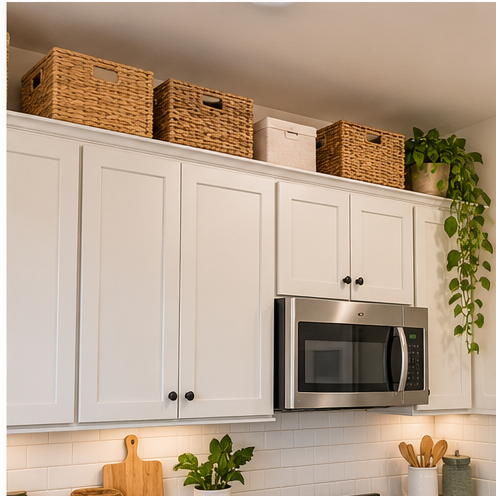
11. Add Storage Above Existing Cabinets
If your kitchen cabinets stop well below the ceiling, the area above them may provide useful storage.
But this space works best for things you rarely need.
Good candidates include:
- Large serving pieces
- Seasonal kitchen items
- Lightweight baskets
- Extra paper goods
- Rarely used appliances
Avoid turning the tops of cabinets into a random collection of visible clutter.
Group smaller items inside baskets or containers so the area reads as intentional storage.
And remember that grease and dust can accumulate above kitchen cabinets.
Closed or easily washable storage is often more practical than open baskets filled with loose items.
12. Use Narrow Wall Space Behind or Beside Furniture
Sometimes a wall isn’t wide enough for furniture but is still wide enough for storage.
Think about:
- The strip beside a dresser
- The wall behind a bedroom door
- A narrow section beside the refrigerator
- The side of an entryway
- The space between a window and corner
Hooks, rails and very shallow shelves can turn these areas into useful storage.
Use them for:
- Bags
- Hats
- Keys
- Jewelry
- Scarves
- Small baskets
- Frequently used accessories
The goal is not to fill every narrow wall.
Use the space when it solves a real storage problem.
A blank wall is not automatically wasted space.
Sometimes leaving it blank makes a small room feel larger.
Awkward Spaces That Usually Aren’t Worth Using
Once you start spotting hidden storage opportunities, it’s easy to go too far.
Some empty spaces should remain empty.
Be cautious about storing things:
- Directly in front of HVAC vents
- Against appliances requiring ventilation
- Where they block electrical panels
- Around water heaters or mechanical equipment
- Where they interfere with plumbing access
- In required walkways
- Behind doors that need to open fully
- Where storage creates a tripping hazard
Also be careful with extremely high storage.
The fact that you can install a shelf near the ceiling doesn’t mean you’ll ever want to retrieve what’s on it.
Good storage should improve the room.
It shouldn’t require gymnastics.
How to Decide Whether an Awkward Space Is Worth Using
Before buying an organizer, ask four questions.
What will I store here?
If you can’t name the items, don’t buy the organizer yet.
How often do I need them?
Frequently used items need accessible storage.
Seasonal and backup items can tolerate inconvenient locations.
Can I retrieve them easily?
Think beyond whether the organizer fits.
Can you open it, pull it out, lift the basket or reach the shelf?
Does using this space make the room worse?
This is the question people forget.
A narrow cabinet might add storage but make the hallway feel cramped.
An over-door organizer might hold 30 products but prevent the door from opening fully.
A shelf might create capacity but make the bathroom feel visually crowded.
The best storage solution improves both capacity and function.
Match the Storage Solution to the Shape of the Space – Storage Ideas for Awkward Spaces
Awkward spaces become easier to solve when you stop trying to force standard furniture into them.
Narrow gap:
Use sliding or rolling storage.
High wall:
Use lightweight, low-frequency storage.
Door:
Use shallow hanging storage.
Corner:
Use a corner-specific shelf or organizer.
Space beneath furniture:
Use low-profile containers.
Cabinet side:
Use hooks, rails or shallow organizers.
Unused vertical space:
Add another storage level.
The shape of the problem should influence the shape of the solution.
That’s a principle that applies throughout a small home.
For a broader room-by-room look at overlooked storage opportunities, see our 25 Storage Ideas for Small Homes That Make Every Inch Count.
Don’t Buy an Organizer Just Because It Fits
This is worth repeating.
Fits and works are not the same thing.
Suppose you have an eight-inch gap beside your refrigerator.
You find a cart that’s 7.8 inches wide.
Technically, it fits.
But if the floor isn’t perfectly level, the refrigerator protrudes slightly, or the cart needs space for your fingers to grip it, that 0.2-inch clearance may be miserable.
The same thing happens with drawers beneath hanging clothes, baskets on high shelves and storage behind doors.
Leave room for the organizer to function.
A slightly smaller organizer you can use comfortably is usually better than one that fills every millimeter of available space.
Frequently Asked Questions
What are the best places to add storage in a small home?
Look for underused vertical and secondary spaces first, including walls above doors, the backs of doors, areas beneath beds, narrow gaps beside furniture and appliances, cabinet sides and unused closet areas.
How do you use narrow gaps for storage?
Slim rolling carts and narrow pull-out organizers work well when the gap is wide enough for the organizer to move freely. Measure at several heights because baseboards, trim and surrounding furniture can change the usable width.
Is storage above doors practical?
Yes, particularly for lightweight items you don’t use frequently. Because the shelf is difficult to reach, it generally works better for backup or seasonal storage than everyday items.
How do you add storage without making a small room look cluttered?
Favor shallow and vertical storage, group small items inside containers, preserve walkways and leave some walls and surfaces empty. Hidden or visually contained storage can also reduce the feeling of clutter.
Should every unused space become storage?
No. Empty space contributes to comfortable movement and makes small rooms feel less crowded. Use awkward areas when they solve an actual storage problem, not simply because they’re empty.
Make the Weird Spaces Earn Their Keep
Small homes rarely have unlimited closets, cabinets and drawers.
That means the spaces between traditional storage areas can become surprisingly valuable.
A six-inch gap may hold laundry supplies.
The wall above a door may hold extra towels.
The underside of a bed may replace half a dresser.
A cabinet side may get everyday items off the counter.
But don’t measure success by how completely you’ve filled your home.
The point isn’t to eliminate every empty inch.
It’s to recognize the awkward spaces that can solve a real storage problem—and use them without sacrificing access, movement or breathing room.
[INSERT IMAGE: Finished realistic small apartment interior demonstrating several subtle hidden storage solutions—under-bed bins, shallow wall shelving, door hooks and narrow-gap storage—while still looking open, calm and uncluttered]