
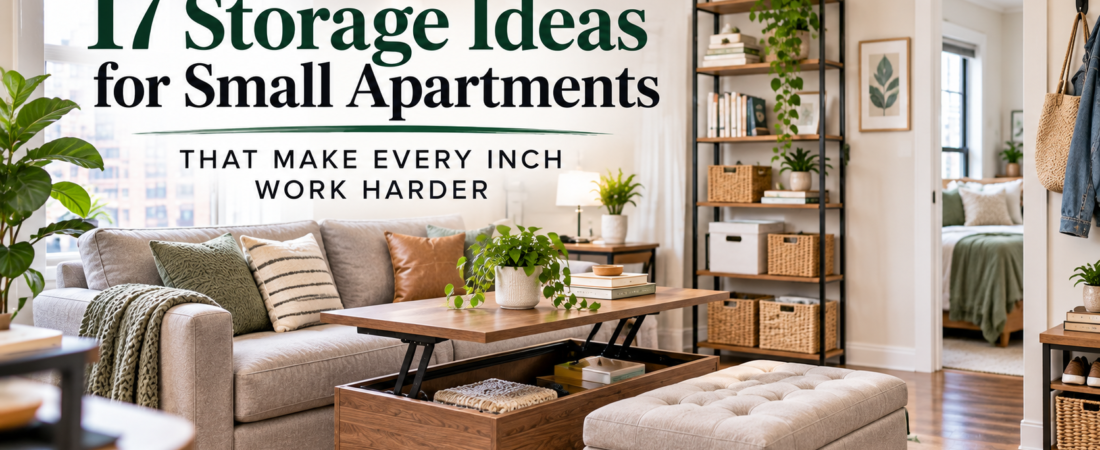
Finding good storage ideas for small apartments isn’t just about squeezing more bins into every corner.
Apartments come with their own set of problems: limited closets, little or no utility storage, shared rooms that have to do several jobs, rental restrictions, and nowhere to move bulky items when they’re not being used.
That means the best storage solutions need to do more than hold stuff.
They should use space you already have, keep everyday items accessible, avoid making the apartment feel visually crowded, and — if you’re renting — ideally work without permanent construction.
Here are 17 practical ways to create more storage in a small apartment without making it feel even smaller.
1. Use Furniture That Stores Something
In a small apartment, furniture should earn the space it occupies.
A coffee table, bench, bed or ottoman that also stores something is usually more useful than a piece that serves only one purpose.
Good examples include:
- storage ottomans
- lift-top coffee tables
- storage benches
- beds with drawers
- nightstands with enclosed storage
- side tables with shelves or cabinets
This works especially well for items you want nearby but don’t necessarily want visible, such as blankets, games, electronics, shoes or seasonal accessories.
The important thing is not to buy extra storage furniture just because it has compartments.
If you’re already replacing a piece you need, choosing one with built-in storage makes sense.
Adding another bulky piece solely for storage may defeat the purpose.
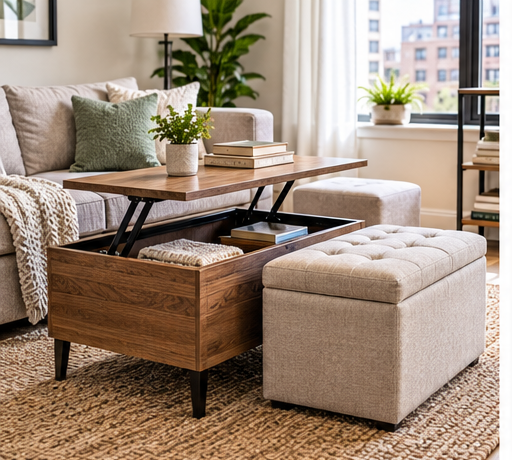
For more ways to hide storage inside ordinary furniture, see our 15 Hidden Storage Ideas for Small Homes.
Storage ottoman or lift-top coffee table → Buy on Amazon
2. Use the Space Under Your Bed
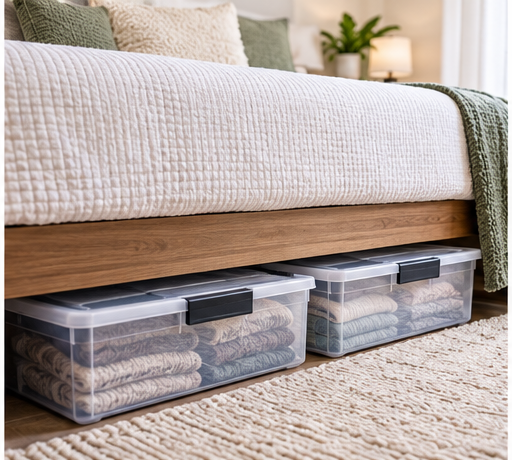
Under-bed space is one of the most valuable storage areas in an apartment because it adds capacity without adding another visible piece of furniture.
Use it for:
- seasonal clothing
- extra bedding
- shoes
- bags
- rarely used accessories
- holiday items
Low-profile bins work well if the clearance is limited.
If you have more room, rolling containers can make deep under-bed space easier to access.
Measure from the floor to the lowest obstruction under the bed, not just the outer bed frame.
Center supports and hardware often reduce the usable height.
Our Storage Bin Size Guide can help you choose containers that actually fit the space instead of wasting depth or height.
Low-profile under-bed storage bins → Buy on Amazon
3. Go Up the Wall Instead of Out Into the Room
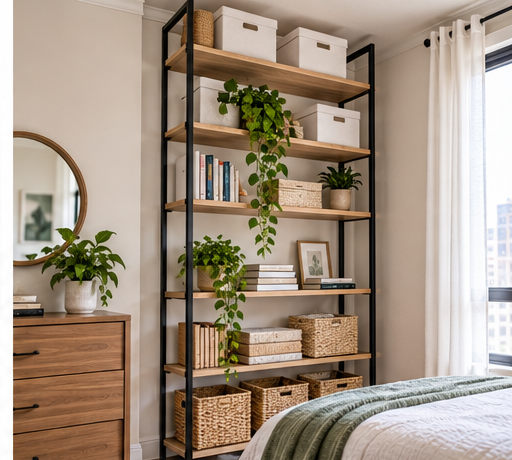
When floor space is limited, vertical storage becomes much more valuable.
Floating shelves, wall-mounted rails, pegboards and narrow shelving units can add storage without consuming much usable floor area.
Good places to look include:
- above a desk
- above a toilet
- above a dresser
- above a sofa
- beside a doorway
- above a coat rack
- over a kitchen cart
The goal isn’t to cover every wall with shelves.
Use vertical storage where it solves an actual problem, then leave some visual breathing room so the apartment doesn’t feel boxed in.
4. Take Storage All the Way to the Ceiling
Apartment storage often stops several feet below the ceiling.
That upper space can work well for things you don’t need every day.
Consider using:
- upper closet shelves
- tall bookcases
- cabinet-top baskets
- stacked storage boxes
- high wall shelves
Keep lightweight, rarely used items higher up.
Heavy or frequently accessed items should stay lower.
And don’t store anything overhead that would be unsafe to retrieve.
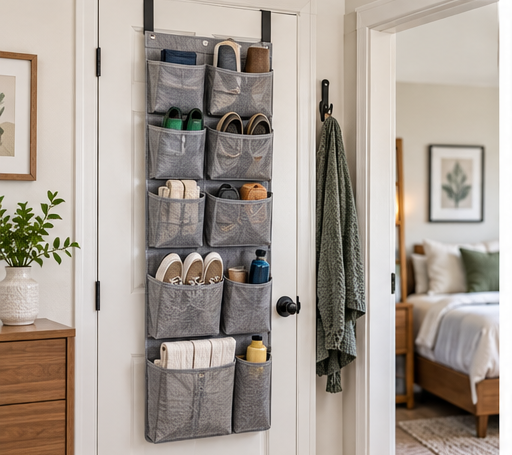
5. Use the Back of Doors
Doors can provide useful storage without adding another piece of furniture.
Depending on the room, you might use an over-door organizer for:
- shoes
- cleaning supplies
- pantry items
- accessories
- toiletries
- bags
- scarves
Closet doors are especially useful because the storage disappears from view when the door is closed.
Before buying an over-door organizer, check the clearance above the door.
Some apartment doors fit tightly enough that thick hooks prevent them from closing properly.
Also make sure the organizer won’t hit shelves, walls or fixtures when the door opens.
Over-the-door organizer → Buy on Amazon
6. Turn Narrow Gaps Into Storage
Small apartments often have awkward gaps that are too narrow for ordinary furniture but still large enough to be useful.
Look beside:
- refrigerators
- washers
- vanities
- dressers
- sofas
- kitchen cabinets
- desks
A slim rolling cart or narrow shelving unit can turn one of those gaps into storage for pantry items, cleaning products, bathroom supplies or craft materials.
Depth matters just as much as width.
A cart that fits between two objects may still stick too far into the room.
Our 12 Storage Ideas for Awkward Spaces You’re Probably Wasting has more ways to reclaim areas that standard furniture ignores.
Slim rolling storage cart → Buy on Amazon
7. Use Open Shelving as Both Storage and Decor
In apartments with limited cabinets, some storage is inevitably going to remain visible.
Instead of fighting that completely, make visible storage intentional.
Open shelving can hold items that are both useful and presentable, such as:
- books
- dishes
- baskets
- plants
- folded linens
- attractive containers
Use matching or coordinated storage containers sparingly.
The goal is not to make every shelf look staged.
It’s to keep everyday items contained enough that the room still feels calm.
8. Create Storage Zones in Multifunction Rooms
A small apartment living room might also function as an office, dining room, workout area and guest space.
When multiple activities share one room, storage works better when each activity has its own zone.
For example:
Work zone: Laptop, chargers, notebooks and office supplies.
Living zone: Remotes, blankets and entertainment items.
Dining zone: Placemats, serving pieces and table linens.
Workout zone: Bands, small weights and yoga accessories.
Keep each category close to where it’s actually used.
This prevents one giant miscellaneous storage area from becoming a dumping ground.
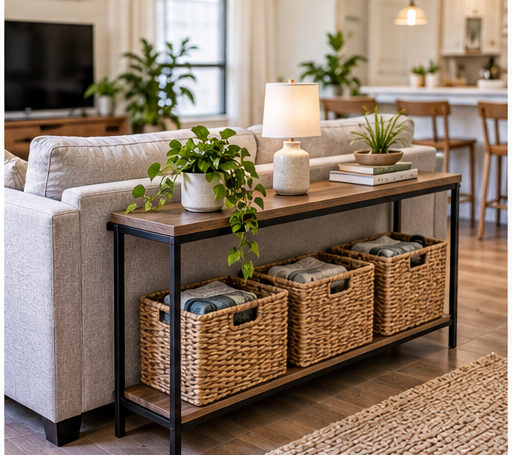
9. Add Storage Behind the Sofa
If the sofa sits several inches away from the wall, that gap may be usable.
Depending on the layout, a narrow console table can provide:
- a surface for lamps or charging
- shelves underneath
- room for baskets
- concealed cable management
In some layouts, very low storage boxes can also fit beneath or behind the sofa.
Just avoid creating storage that makes the sofa project so far into the room that circulation suffers.
Measure the remaining walkway before adding anything.
Narrow storage console table → Buy on Amazon
10. Use the Space Above Doorways
The wall area above a doorway is often overlooked because it isn’t naturally within eye level.
A high shelf above a door can work for lightweight, infrequently used items such as:
- extra linens
- decorative storage boxes
- seasonal accessories
- small collections
This is best for categories you don’t need often.
Daily-use storage should stay within comfortable reach.
If you’re renting, permanent shelving may not be allowed, so check your lease before drilling.
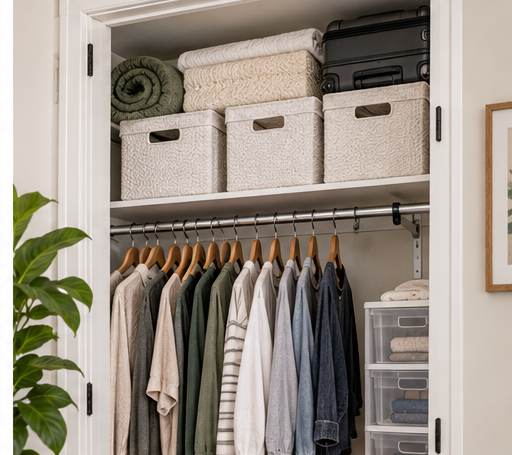
11. Make Closet Floors Work Harder
Closet floors often become piles instead of organized storage.
Use low shelving, shoe racks, bins or drawers to divide the space into usable levels.
Before adding anything, decide what actually belongs on the closet floor.
Good candidates include:
- shoes
- bags
- folded clothing
- seasonal bins
Poor candidates are random items with no assigned home.
If your closet is already overflowing with clothing, our 17 Small Closet Organization Ideas That Make the Most of Limited Space can help you increase capacity without turning the closet into an obstacle course.
12. Use Baskets Under Open Furniture
Furniture with open space underneath can often hold low baskets or bins.
Look under:
- console tables
- benches
- desks
- nightstands
- open shelving units
This is especially useful for categories that would otherwise sit loose on the floor.
Choose containers that fit the available height without scraping the furniture every time you pull them out.
Avoid filling every open cavity in the apartment, though.
Leaving some negative space makes small rooms feel larger.
13. Store Bulky Items Vertically
Bulky items create problems in apartments because there’s usually no garage, basement or utility room available.
Whenever possible, store long or flat items vertically.
Examples include:
- ironing boards
- folding chairs
- brooms
- mops
- yoga mats
- baking sheets
- cutting boards
- folding tables
Wall hooks, narrow racks and vertical dividers can reduce the amount of floor or shelf space these items consume.
Make sure anything mounted to the wall is properly supported.
Renters should use non-permanent solutions where appropriate and stay within the weight limits of removable mounting products.
14. Keep Seasonal Items Out of Prime Storage
The easiest-to-reach storage in your apartment should hold the things you use most often.
Winter accessories don’t need the best shelf in July.
Likewise, beach gear doesn’t need prime closet space in January.
Rotate seasonal categories into:
- under-bed bins
- upper shelves
- deep closet zones
- labeled storage boxes
This keeps limited everyday storage from being consumed by things you won’t touch for months.
15. Use the Inside of Cabinet Doors
Cabinet interiors are especially useful when kitchen and bathroom storage is limited.
The inside of a cabinet door can hold:
- cleaning tools
- small baskets
- measuring spoons
- wraps or bags
- hair tools
- toiletries
Before mounting anything, close the door and check where interior shelves, hinges and stored objects sit.
An organizer can fit perfectly on the door and still prevent it from closing because it collides with the cabinet contents.
This is particularly important under sinks, where plumbing already reduces usable space.
16. Reduce the Footprint of Your Storage Containers
Sometimes the problem isn’t the amount of stuff.
It’s the containers being used to store it.
A large round basket on a rectangular shelf wastes corner space.
A deep bin holding tiny items may create a pile you can’t see through.
And oversized containers often encourage categories to grow until the container is full.
Choose storage based on:
- the dimensions of the available space
- the dimensions of what you’re storing
- how often you need access
- whether visibility matters
- whether the container needs to stack
Before buying organizers for shelves, closets or cabinets, our How to Measure for Storage Organizers Before You Buy guide can help you avoid products that technically fit but don’t function.
17. Don’t Add Furniture Until You’ve Used the Space You Already Have
One of the easiest small-apartment mistakes is responding to a storage problem by buying another cabinet, shelf or dresser.
Before adding furniture, check whether you can use:
- wall height
- doors
- existing furniture cavities
- under-bed space
- closet floors
- cabinet interiors
- awkward gaps
- upper shelves
Every additional piece of furniture consumes floor space.
In a small apartment, that means less walking room, less flexibility and more visual weight.
Only add a new storage unit when it solves a problem that your existing space genuinely can’t handle.
Renter-Friendly Storage Ideas That Don’t Require Major Changes
Renters have an extra challenge: many storage upgrades need to be removable.
Good renter-friendly options include:
- freestanding shelving
- rolling carts
- under-bed containers
- storage ottomans
- over-door organizers
- tension-mounted systems
- removable hooks
- stackable organizers
- furniture with built-in storage
For anything adhesive or removable, check the manufacturer’s surface recommendations and weight limits.
And don’t assume a product is damage-free just because it’s marketed as removable.
Paint condition, humidity and wall texture can all affect how easily adhesive products come off.
How to Make Visible Storage Look Less Cluttered
Apartments often force storage into living areas where it can be seen.
You don’t need to hide everything, but some consistency helps.
Try to:
- group similar items together
- keep loose small objects inside containers
- leave some open shelf space
- avoid stacking unrelated categories together
- keep your most visually chaotic storage behind doors when possible
Closed storage is particularly useful for categories made up of lots of small mismatched items.
Open storage works better for larger, simpler categories that are easy to keep orderly.
What Should You Store Outside the Apartment?
If you have no garage or basement, it’s tempting to keep every possession inside the apartment.
But sometimes the real solution is reducing what you’re storing.
Be especially critical of:
- furniture you’re not using
- duplicate kitchen equipment
- old electronics
- excess seasonal decor
- unused hobby supplies
- empty boxes
- clothing you haven’t worn in years
Storage systems can’t compensate indefinitely for more belongings than the apartment can reasonably hold.
Before buying another organizer, ask whether the item actually deserves space in the apartment.
For even more on this check out How to Create More Storage in a Small Apartment Without Adding More Furniture
Frequently Asked Questions
How can I get more storage in a small apartment?
Start by using under-bed space, walls, doors, closet floors, cabinet interiors and storage built into furniture. These areas add capacity without automatically adding another large piece of furniture.
What is the best storage for a small apartment?
The best solution depends on the constraint. Under-bed bins work well for seasonal items, vertical shelving works when floor space is limited, and multifunction furniture works when you already need the furniture itself.
How do you organize a small apartment with no storage?
Create storage zones based on what each room needs to hold, then look for unused vertical space, under-furniture areas, doors, cabinet interiors and narrow gaps. Keep frequently used items accessible and move seasonal items into less convenient storage.
How do renters add storage without drilling?
Use freestanding shelving, over-door organizers, rolling carts, under-bed storage, storage furniture and removable mounting systems where appropriate. Always check product weight limits and your lease requirements.
How do you store bulky items in an apartment?
Use vertical storage when possible and keep bulky seasonal items out of prime-access areas. Folding chairs, ironing boards, yoga mats and similar items can often be stored upright rather than spread across shelves or floors.
Can you have too much storage furniture in a small apartment?
Yes. Storage furniture still consumes floor space. If adding another cabinet makes the room harder to walk through or visually crowded, it may create a new problem while solving the original one.
Make the Apartment Work Harder Before Adding More Stuff -Storage Ideas for Small Apartments
Good small-apartment storage isn’t about filling every available inch.
It’s about deciding which inches are actually useful.
Use hidden cavities before adding furniture. Use walls before consuming more floor space. Keep seasonal items away from prime storage. Choose containers that fit the actual dimensions of shelves and closets instead of forcing the space to fit the organizer.
And when a piece of furniture already needs to be there, make it do more than one job.
That approach creates storage without making the apartment feel like a storage unit.
For more whole-home ideas, see our 25 Storage Ideas for Small Homes That Make Every Inch Count.