
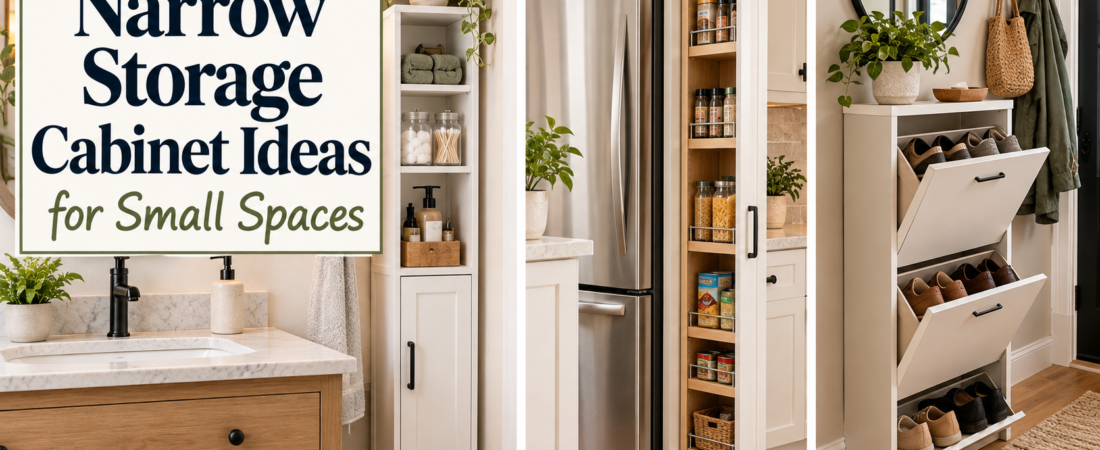
A narrow strip of unused floor space can be more valuable than it looks.
In small homes and apartments, the problem is often not a total lack of space. It is that the available space is too narrow for standard furniture, cabinets, or shelving.
That is where a narrow storage cabinet can make a big difference.
A slim cabinet can fit beside a vanity, between appliances, next to a door, in a hallway, or against a shallow wall without taking over the room.
The key is choosing a cabinet that fits the actual width, depth, and clearance of the space while still being useful for the things you need to store.
These narrow storage cabinet ideas will help you make better use of awkward gaps throughout your home.
Measure the Gap Before Choosing a Cabinet
Before shopping for a narrow cabinet, measure more than just the width.
You should check:
- Available width
- Cabinet depth
- Total height
- Baseboard projection
- Door swing
- Drawer clearance
- Nearby outlets
- Floor vents
- Trim
- Traffic path
A cabinet that fits between two walls may still fail if the door cannot open fully or if it blocks an outlet.
If you want a more detailed measuring process, see my guide to measuring for storage organizers.
Leave yourself a little extra clearance instead of choosing something that fits with no margin at all.
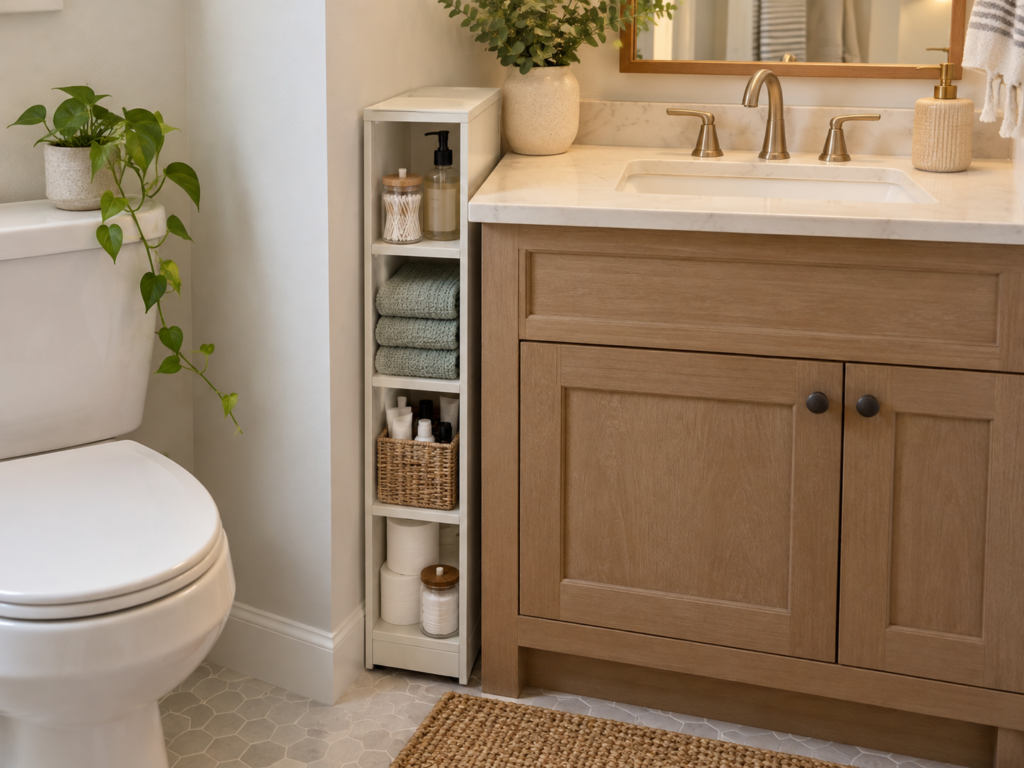
1. Use a Tall Narrow Cabinet in a Small Bathroom
Bathrooms are one of the best places for slim storage because the room often has narrow gaps beside the vanity or toilet.
A tall narrow cabinet can hold:
- Toilet paper
- Towels
- Toiletries
- Cleaning supplies
- Hair products
- Extra soap
Look for a cabinet that uses height instead of width.
Closed doors can help reduce visual clutter in a small bathroom.
Narrow bathroom storage cabinet → Buy on Amazon
2. Fit a Slim Cabinet Beside the Vanity
A few inches beside a bathroom vanity may be enough for a narrow cabinet.
This works especially well when you need storage for smaller categories such as:
- Hair tools
- Toiletries
- Skincare
- Cleaning products
- Backup supplies
A narrow pull-out or tower-style cabinet can turn a gap that would otherwise collect dust into useful storage.
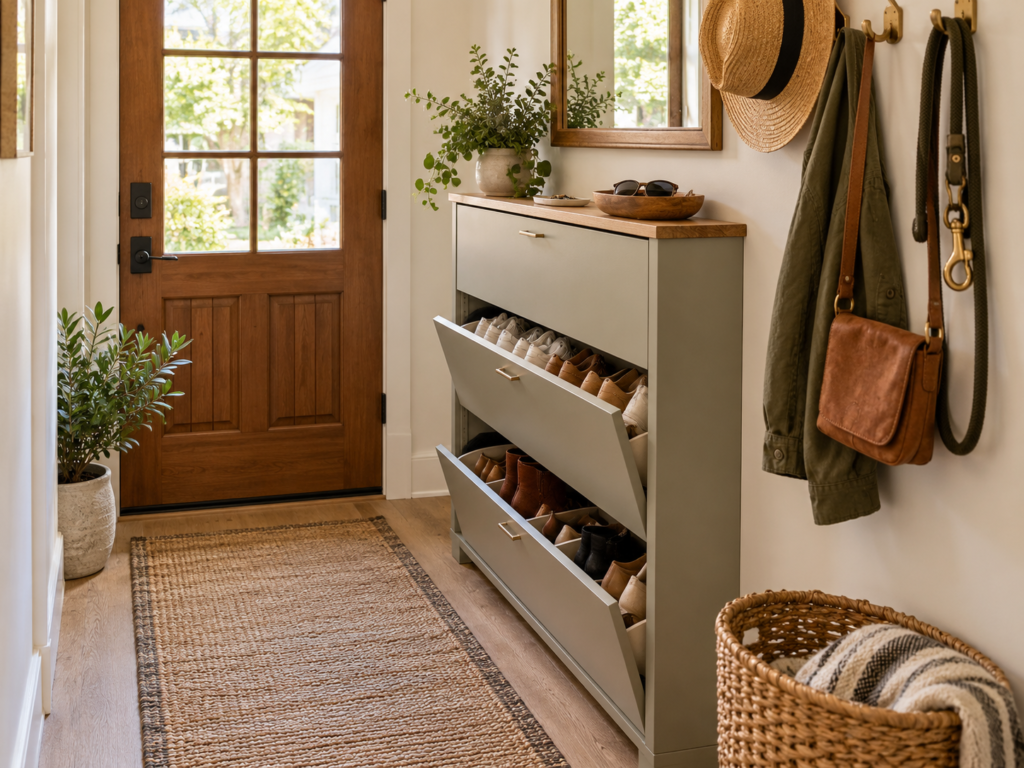
3. Use a Narrow Entryway Cabinet for Shoes and Accessories
Small entryways rarely have room for deep furniture.
A shallow narrow cabinet can provide storage for:
- Shoes
- Hats
- Gloves
- Dog leashes
- Sunglasses
- Small bags
Look for cabinets with doors or tilt-out compartments if you want the entry to look less cluttered.
A narrow cabinet can also create a landing spot without blocking the walkway.
For more entryway ideas, see my small entryway organization guide.
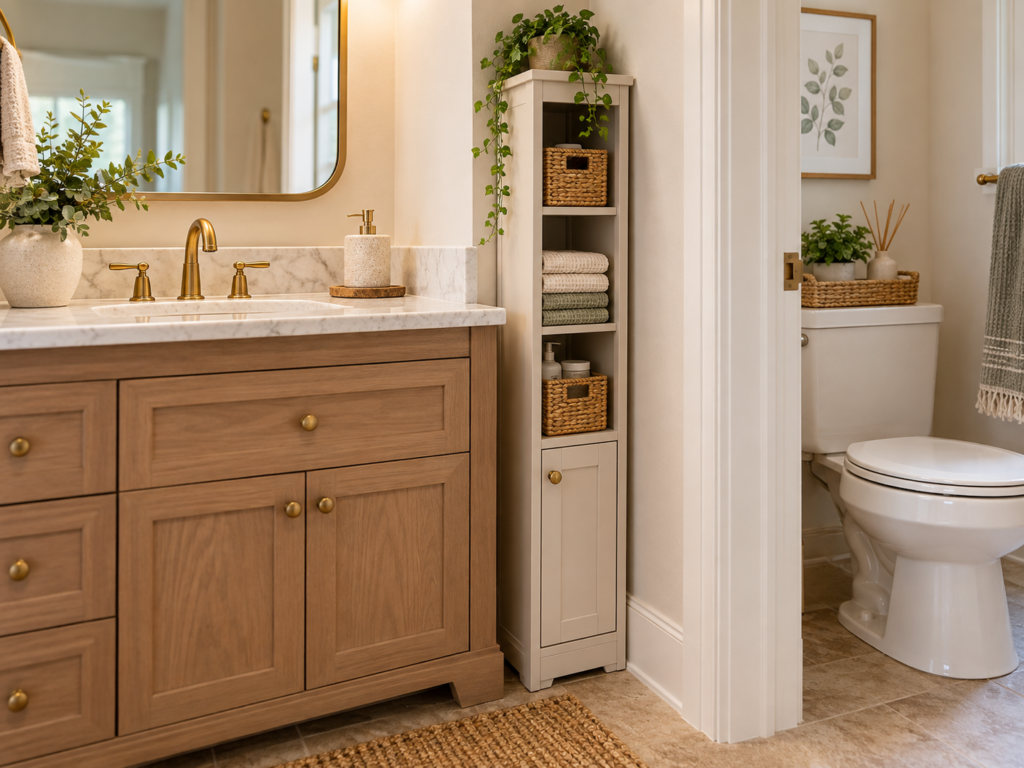
4. Try a Tall Shallow Cabinet in a Hallway
Hallways can sometimes support storage if the cabinet is shallow enough.
A tall slim cabinet can hold:
- Linens
- Cleaning supplies
- Office items
- Games
- Household extras
The main concern is walkway clearance.
Avoid placing a cabinet where it makes a narrow hallway feel tighter or creates a bump hazard.
A shallow design is usually more useful than a deep one in a passageway.
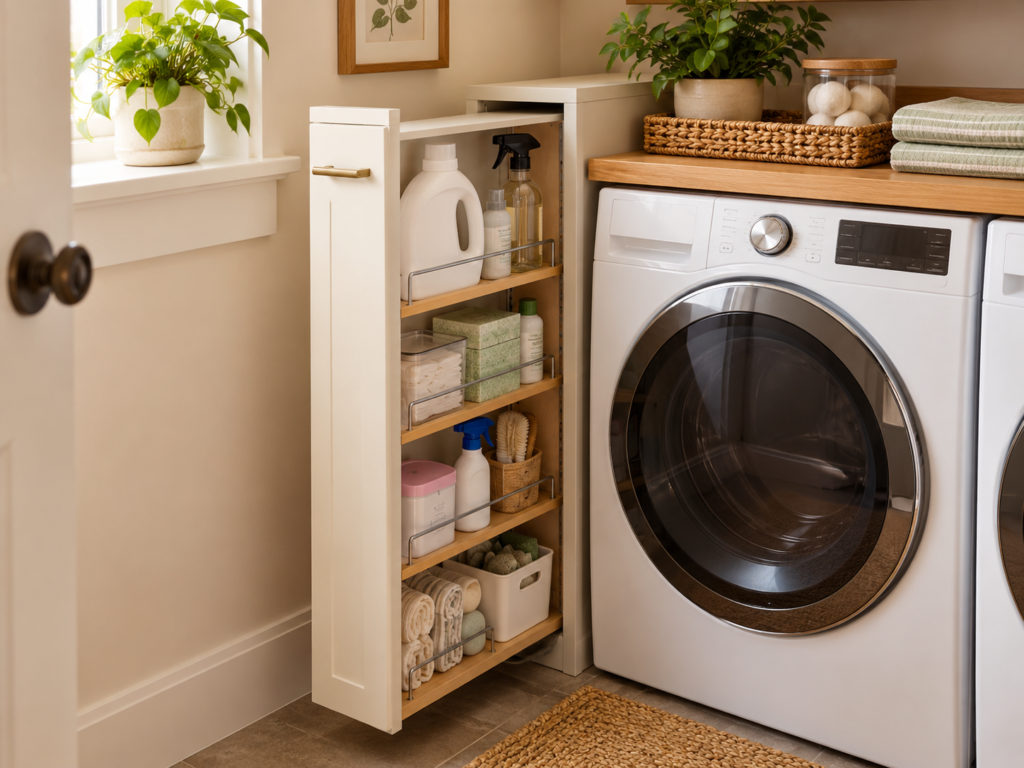
5. Use a Narrow Cabinet Beside the Washer or Dryer
Laundry rooms often have skinny gaps between appliances and walls.
A narrow storage cabinet can hold:
- Detergent
- Dryer sheets
- Stain remover
- Cleaning cloths
- Laundry bags
- Ironing supplies
If the gap is extremely narrow, a rolling cart may work better than a cabinet.
But if you want concealed storage and the width allows it, a slim cabinet can make the room feel more finished.
6. Add a Narrow Pantry Cabinet to the Kitchen
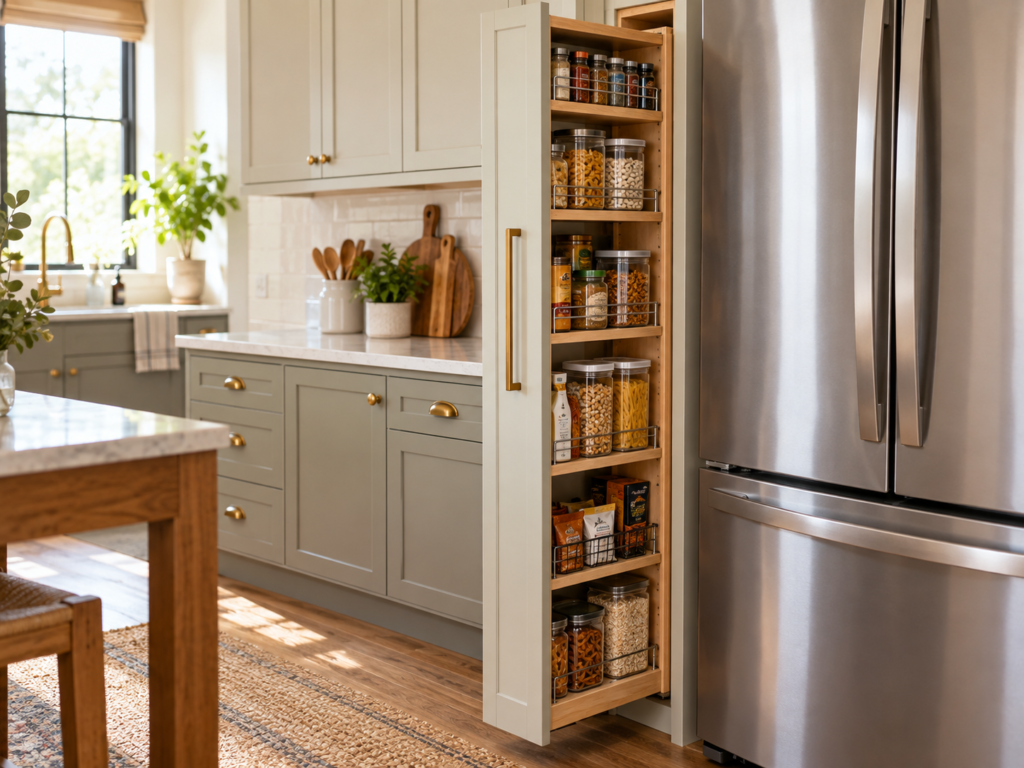
A small kitchen may have an unused gap beside the refrigerator, cabinets, or a wall.
A narrow pantry cabinet can hold:
- Canned goods
- Dry ingredients
- Snacks
- Baking supplies
- Spices
- Small appliances
Tall shelves can create a surprising amount of storage without using much floor space.
Make sure the cabinet is stable and does not interfere with appliance doors.
Narrow pantry cabinet → Buy on Amazon
7. Use a Slim Cabinet for Cleaning Supplies
Cleaning supplies often need their own zone but do not require a full-size closet.
A narrow cabinet can hold:
- Spray bottles
- Sponges
- Cleaning cloths
- Gloves
- Small brushes
- Extra trash bags
Choose adjustable shelves if possible so you can accommodate bottles of different heights.
Keep heavier items lower for stability.
8. Use a Tilt Out Cabinet in a Tight Space
Tilt-out cabinets are useful when a standard swinging door would require too much clearance.
They are commonly used for:
- Shoes
- Laundry
- Trash
- Recycling
- Small household items
Because the front tilts outward instead of swinging sideways, the cabinet can work in narrow areas.
Narrow tilt-out storage cabinet → Buy on Amazon
9. Choose Closed Storage for Visually Busy Rooms
A narrow cabinet with doors can make a small room feel calmer.
Closed storage works well for:
- Toiletries
- Cleaning products
- Pantry overflow
- Office supplies
- Laundry supplies
It keeps mismatched packaging and small items out of sight.
This can be especially helpful if the cabinet is located in a visible area such as an entryway or open kitchen.
10. Choose Open Storage When You Need Fast Access
Open narrow shelving or cabinet units can work better when you need to reach items often.
Good uses include:
- Towels
- Baskets
- Books
- Everyday kitchen items
- Frequently used toiletries
Open storage should stay relatively simple.
If every shelf is packed tightly, a narrow cabinet can start to feel more cluttered than helpful.
11. Use Baskets Inside a Narrow Cabinet
Small cabinets can become difficult to use when items are stacked loosely.
Baskets or bins can create categories such as:
- Hair products
- Cleaning supplies
- Snacks
- Medicine
- Laundry items
Use baskets that are easy to remove so you can reach the back of deeper shelves.
You do not need matching containers everywhere.
Choose sizes based on what the cabinet actually needs to hold.
12. Use the Bottom for Heavy Items
Tall narrow cabinets can become top-heavy.
Store heavier items near the bottom, such as:
- Large cleaning bottles
- Bulk supplies
- Small appliances
- Extra toiletries
Use upper shelves for lighter items.
This improves stability and makes the cabinet safer to use.
13. Anchor Tall Narrow Cabinets When Needed
Tall slim cabinets can be more prone to tipping than wider furniture.
If the manufacturer recommends anchoring, follow those instructions.
This is especially important when:
- Children are present
- Drawers pull outward
- Doors are heavy
- The cabinet is very tall
- The floor is uneven
Tall narrow storage cabinet → Buy on Amazon
14. Check Baseboard Clearance
Baseboards can prevent a cabinet from sitting flush against the wall.
Before buying, measure:
- Baseboard height
- Baseboard thickness
- Cabinet leg position
Some cabinets have recessed backs or legs that clear baseboards.
Others may leave a visible gap.
This is a small detail that can make a big difference in how well the cabinet fits.
15. Watch for Floor Vents and Outlets
Do not place a cabinet directly over a floor vent unless the design allows airflow.
Also check nearby electrical outlets.
A cabinet that blocks an outlet may create unnecessary frustration later.
If you need access to the outlet, choose a shallower or narrower cabinet instead.
16. Consider a Cabinet With Adjustable Shelves
Adjustable shelves make a narrow cabinet much more flexible.
You can change the spacing for:
- Tall bottles
- Small baskets
- Towels
- Boxes
- Pantry items
Fixed shelves can waste vertical space if the spacing does not match what you want to store.
Adjustable shelves are especially useful in multipurpose storage cabinets.
17. Use a Furniture Style Cabinet in Living Areas
Not every narrow cabinet needs to look like utility storage.
In a living room, dining area, or entryway, a narrow cabinet can look more like furniture.
Look for:
- Wood finishes
- Cane fronts
- Simple panel doors
- Neutral hardware
- Closed lower storage
This can add practical storage without making the room look overly functional.
18. Use a Narrow Cabinet in a Small Apartment
Small apartments often have awkward strips of unused space between furniture, walls, or doors.
A narrow cabinet can help with:
- Pantry overflow
- Linens
- Cleaning supplies
- Office storage
- Shoes
- Extra toiletries
If your apartment has several awkward gaps, see my storage ideas for awkward spaces.
The goal is to use the gap without making the room harder to move through.
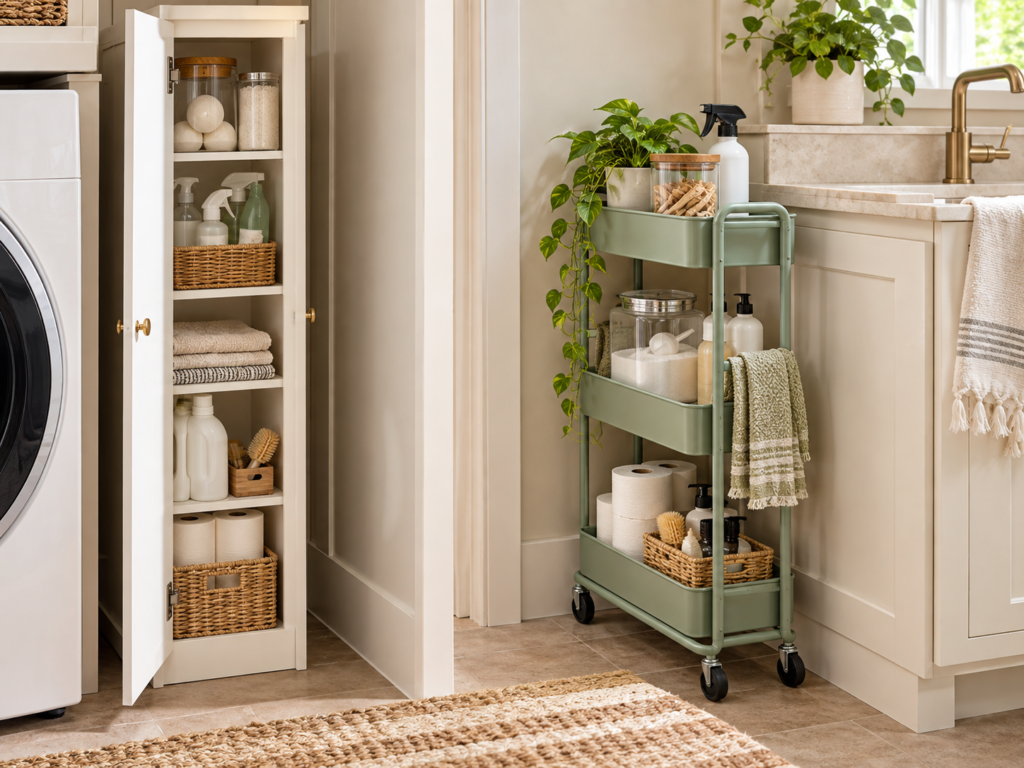
19. Know When a Rolling Cart Is Better
A cabinet is not always the best choice.
A narrow rolling cart may work better when:
- The gap is extremely tight
- You need frequent access
- You need to move the storage
- The area has awkward plumbing
- The space changes often
Cabinets are better when you want concealed, stable storage.
Slim rolling storage cart → Buy on Amazon
Carts are better when flexibility matters more.
20. Avoid Buying a Cabinet Just Because It Fits
A narrow cabinet should solve a specific storage problem.
Before buying one, ask:
- What will go inside?
- How often will I access it?
- Will the doors or drawers open easily?
- Will it block anything?
- Will it make the room feel tighter?
A cabinet that fills a gap but does not improve function is not really useful storage.
Where Do Narrow Storage Cabinets Work Best?
The most useful locations include:
Bathrooms
For toiletries, towels, and cleaning supplies.
Entryways
For shoes, accessories, and small bags.
Laundry Rooms
For detergent, cleaning supplies, and household extras.
Kitchens
For pantry goods and overflow storage.
Hallways
For linens and household items.
Small Apartments
For awkward gaps that would otherwise go unused.
How Narrow Can a Storage Cabinet Be?
Some narrow cabinets are only a few inches wide, while others are closer to standard furniture dimensions.
The right width depends on what you plan to store.
Very narrow cabinets work best for:
- Bottles
- Cans
- Small toiletries
- Cleaning supplies
Slightly wider slim cabinets are better for:
- Towels
- Baskets
- Shoes
- Pantry items
Measure the objects you actually want to store before choosing the cabinet.
Should a Narrow Cabinet Be Tall or Short?
Tall cabinets use vertical space efficiently.
They work best when:
- Floor space is limited
- You need more storage capacity
- The cabinet can be anchored safely
Short cabinets work better when:
- You want a surface on top
- The room already feels visually crowded
- There is wall art or a window above the space
Choose the height based on both storage needs and how the room feels.
Open or Closed Narrow Storage Cabinet?
Neither is automatically better.
Closed Cabinets
Best for:
- Visual clutter
- Toiletries
- Cleaning products
- Pantry overflow
- Mixed categories
Open Cabinets
Best for:
- Towels
- Baskets
- Books
- Decorative storage
- Frequently used items
A combination can work especially well.
Make Skinny Gaps Actually Useful
Narrow gaps are easy to ignore because standard furniture rarely fits them.
But the right narrow storage cabinet can turn that awkward strip of floor space into useful storage for toiletries, pantry goods, laundry supplies, shoes, linens, or household extras.
Measure carefully, pay attention to door swing and depth, and choose a cabinet based on what you actually need to store.
The best narrow cabinet does not just fit the space.
It makes the space work better.