
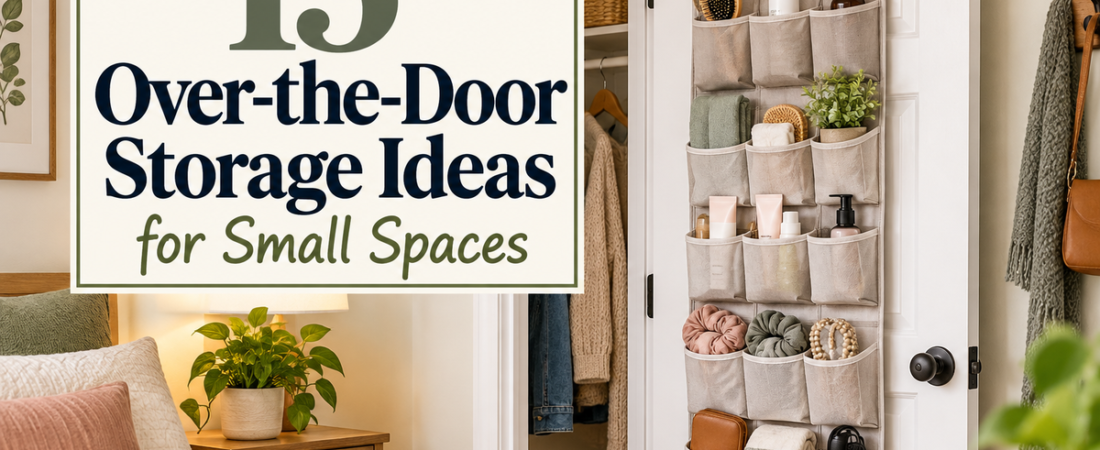
When floor space is limited, doors can become surprisingly useful storage space.
An over the door storage organizer lets you add storage without giving up shelves, drawers, cabinets, or valuable square footage. That makes door storage especially useful in small bedrooms, bathrooms, pantries, laundry rooms, entryways, and apartments.
The key is choosing the right type of organizer for the door, the items you need to store, and the amount of clearance you actually have.
These 15 over-the-door storage ideas can help you turn unused vertical space into practical everyday storage without making the room feel crowded.
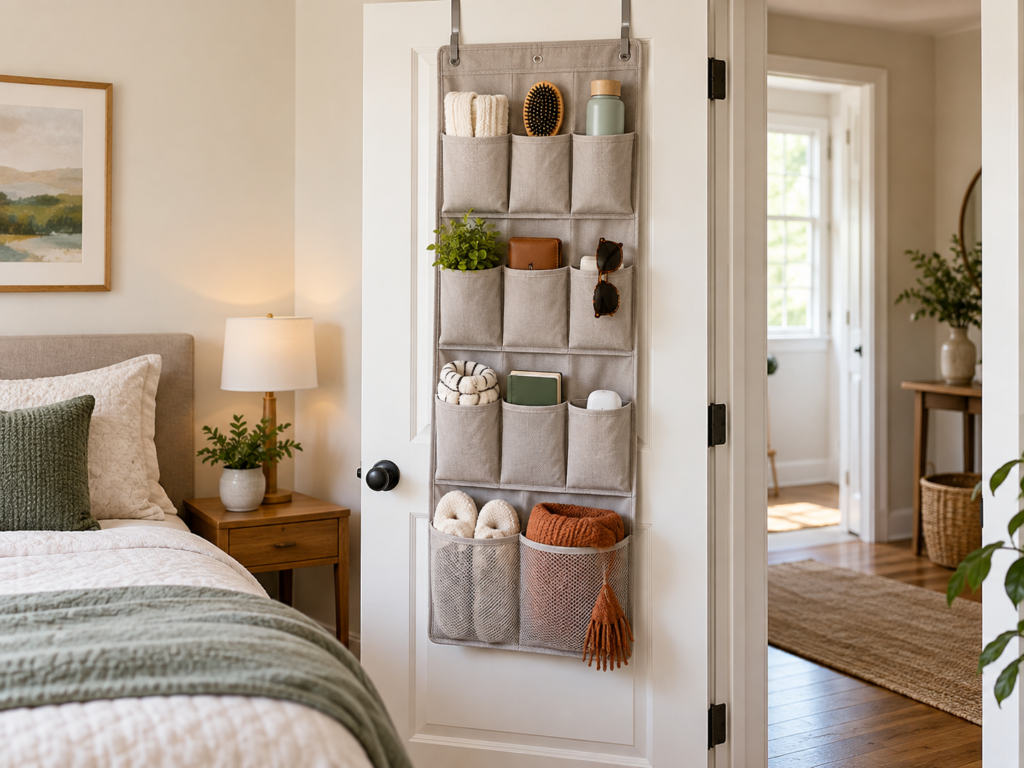
Before You Add Storage to a Door, Check the Fit
Not every over-the-door organizer works with every door.
Before buying anything, check:
- Door thickness
- Clearance above the door
- Clearance between the door and frame
- Door swing
- Hook thickness
- Organizer width
- Pocket or basket depth
- Weight rating
An organizer that technically fits over the top of the door can still cause problems if it prevents the door from closing properly.
Also make sure the organizer will not scrape walls, cabinets, trim, or nearby furniture when the door opens.
If you want a broader guide to using unused wall and door height, see my vertical storage ideas for small spaces.
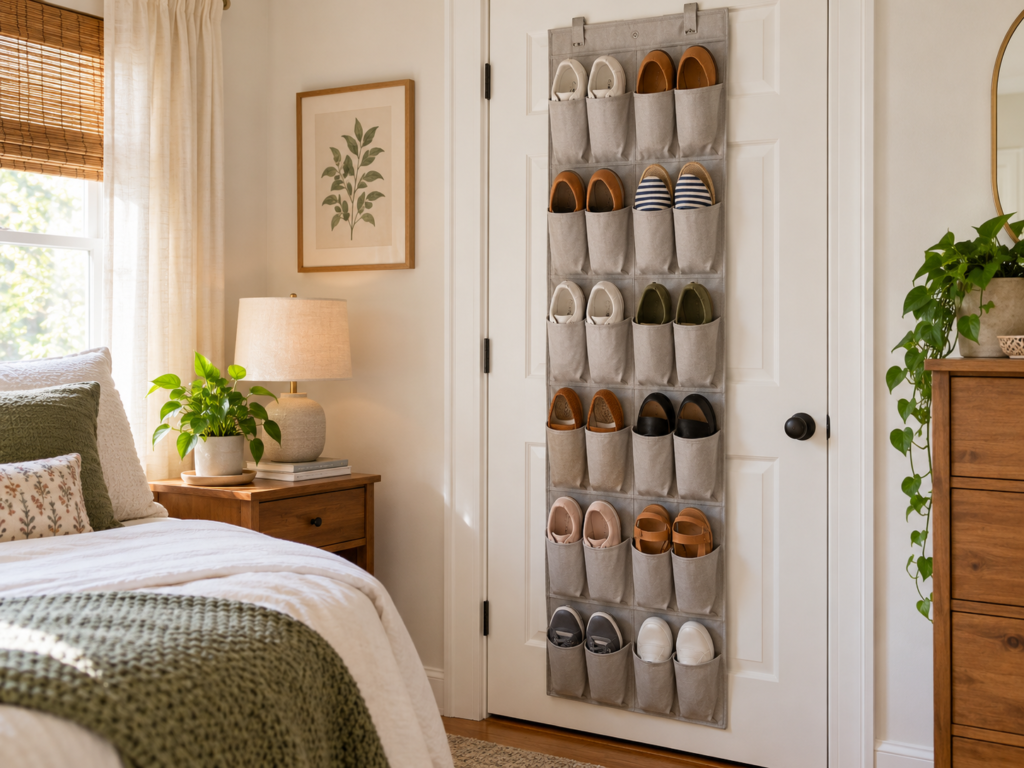
1. Use an Over-the-Door Shoe Organizer in a Small Bedroom
Shoe organizers are one of the most common uses for door storage because they create a lot of individual compartments without taking up floor space.
They work especially well for:
- Flats
- Sandals
- Slippers
- Lightweight sneakers
- Kids’ shoes
A clear-pocket organizer makes it easy to see each pair, while fabric pockets create a softer look.
If your closet floor is already crowded, this can free up space for bins, baskets, or hanging clothes.
Over-the-door shoe organizer → Buy on Amazon
2. Store Accessories Behind a Bedroom Door
Over-the-door organizers are not just for shoes.
They also work well for small accessories that tend to get lost in drawers or piled on furniture.
Try using pockets or hooks for:
- Scarves
- Belts
- Hats
- Small handbags
- Hair accessories
- Sunglasses
- Jewelry pouches
This keeps lightweight items visible and accessible without using dresser space.
If your bedroom is especially short on storage, see my small closet organization ideas.
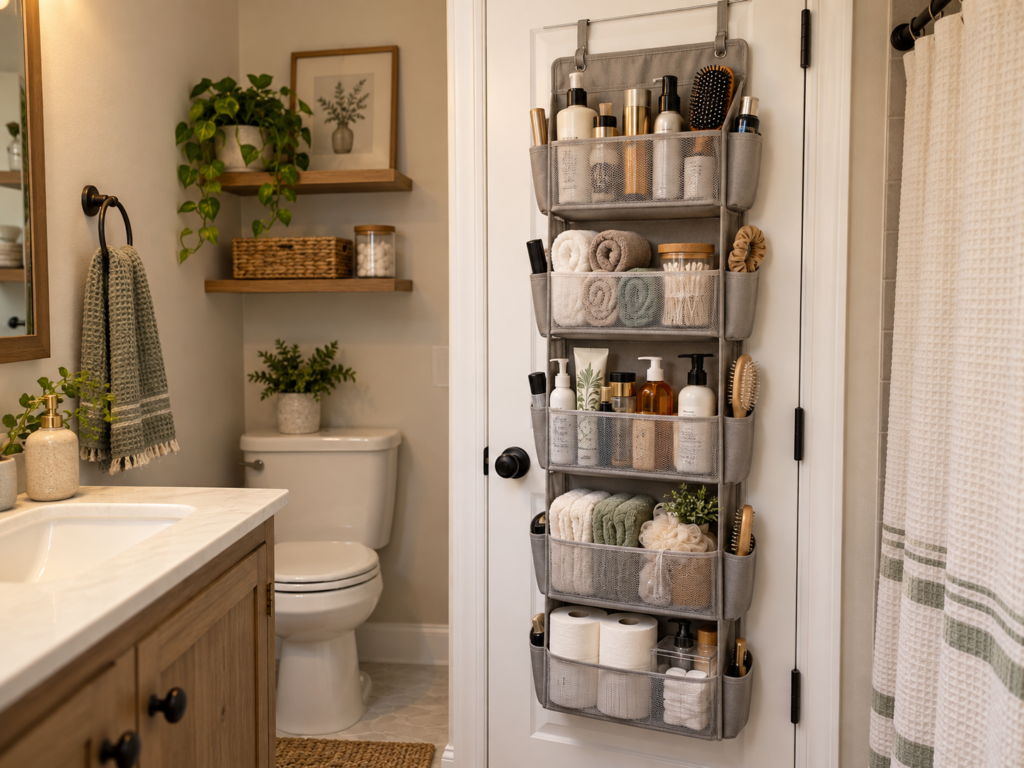
3. Use Door Storage for Bathroom Toiletries
A bathroom door can add useful storage when the vanity is tiny or there is no built-in cabinet space.
Use an over-door organizer for:
- Lotion
- Hair products
- Skincare
- Backup toiletries
- Brushes
- Washcloths
Choose pockets or baskets that are deep enough to keep bottles upright.
In a small bathroom, this can be much more practical than adding another freestanding shelf.
4. Hang Towels on an Over-the-Door Rack
If wall space is limited, an over-the-door towel rack can create an easy place for:
- Bath towels
- Hand towels
- Robes
Look for hooks or bars that leave enough space between towels so they can dry.
Avoid overcrowding the rack. Too many damp towels packed together can stay wet longer.
Over-the-door towel rack → Buy on Amazon
5. Add Pantry Storage to the Back of a Door
The back of a pantry door can hold a surprising amount of lightweight food storage.
Good options include:
- Snack packets
- Seasoning envelopes
- Granola bars
- Small baking supplies
- Foil and wraps
- Drink mixes
A metal basket-style organizer works better than fabric pockets for heavier pantry items because it provides more structure.
Over-the-door pantry rack → Buy on Amazon
Just be careful not to overload the door.
If your pantry needs more help overall, see my small pantry organization ideas.
6. Use an Over-Door Rack for Cleaning Supplies
In a laundry room, utility closet, or pantry, door storage can keep lightweight cleaning supplies easy to reach.
Useful items include:
- Microfiber cloths
- Scrub brushes
- Dusters
- Sponges
- Gloves
- Small spray bottles
Keep heavier bottles on lower shelves or in cabinets rather than loading too much weight high on the door.
If the organizer swings when the door opens, choose one with stabilizing straps or lower anchors.
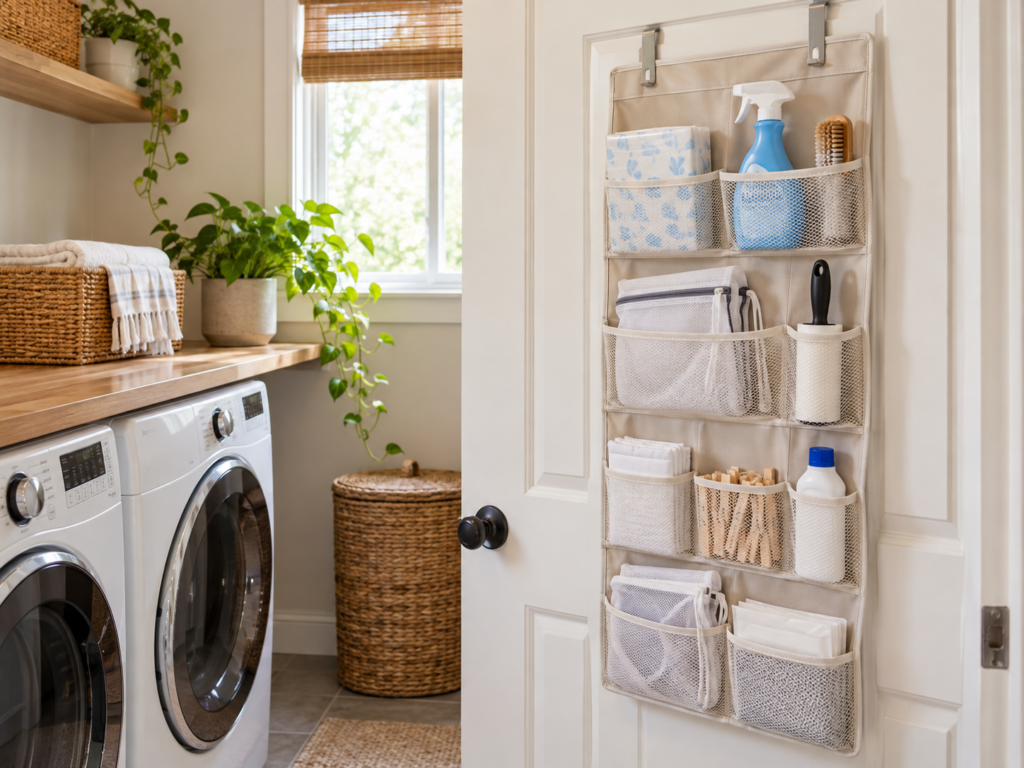
7. Store Laundry Supplies Behind the Door
A laundry room door can hold the smaller items that tend to clutter shelves.
Use baskets or pockets for:
- Dryer sheets
- Stain sticks
- Mesh laundry bags
- Clothespins
- Lint rollers
- Small detergent pods
- Ironing accessories
This works especially well when your laundry room has only one shallow shelf or cabinet.
8. Create Craft Storage With Clear Pockets
Clear over-the-door pocket organizers can be excellent for craft supplies because they let you see small items at a glance.
Use the pockets for:
- Ribbon
- Yarn
- Glue
- Scissors
- Paintbrushes
- Markers
- Small fabric pieces
- Sewing supplies
This can be especially useful in a bedroom, office, or multipurpose room where you do not have space for a dedicated craft cabinet.
Keep sharp tools in secure pockets and out of reach of children.
Clear-pocket over-the-door organizer → Buy on Amazon
9. Use Door Storage for Kids’ Small Items
In a child’s bedroom or play area, over-the-door storage can help corral small categories.
Try using pockets for:
- Small toys
- Art supplies
- Socks
- Hair accessories
- Stuffed animals
- School supplies
Clear pockets can help kids see where things belong.
The system works best when categories are simple rather than overly specific.
10. Add Entryway Storage to a Closet Door
If your entryway has a coat closet, the inside of the door can become a useful drop zone.
Store items such as:
- Hats
- Gloves
- Scarves
- Reusable bags
- Umbrellas
- Dog leashes
- Sunglasses
This keeps smaller accessories from disappearing into baskets or cluttering a console table.
For more ways to make a tight entry work better, see my entryway organization ideas for small spaces.
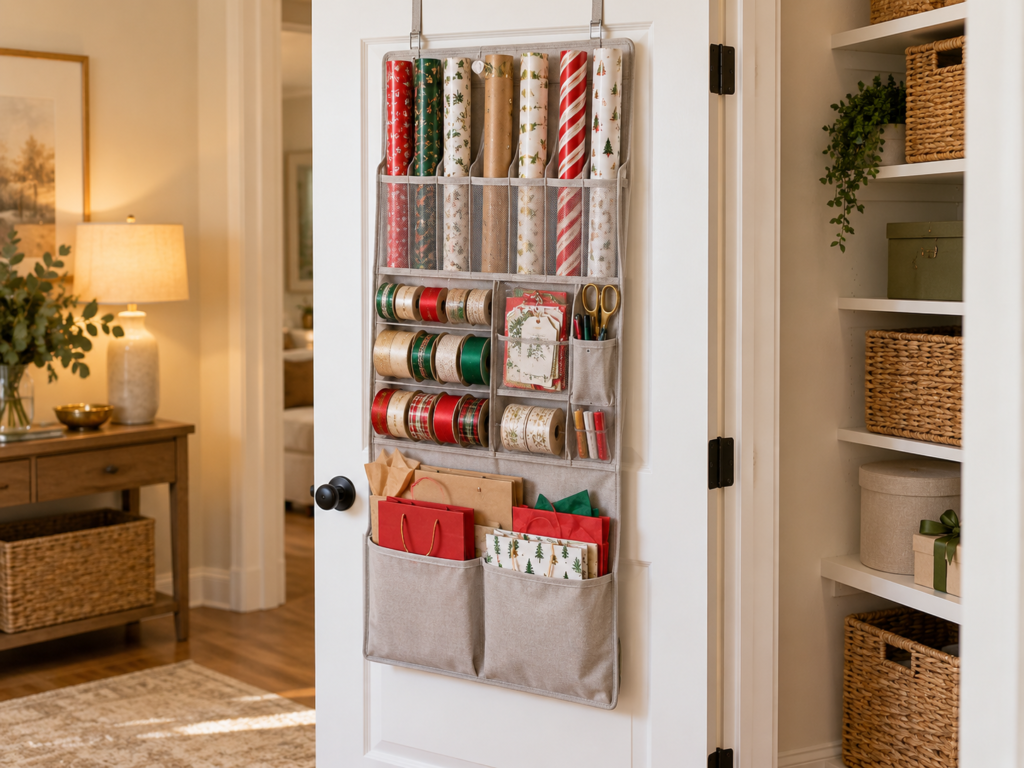
11. Store Gift Wrap Behind a Door
Gift wrap is awkward to store because the rolls are tall and narrow.
An over-door gift wrap organizer can hold:
- Wrapping paper
- Gift bags
- Tissue paper
- Ribbon
- Tape
- Tags
- Scissors
This works especially well on the back of a closet or office door.
Keeping all wrapping supplies together makes them easier to use and prevents loose rolls from falling over in closets.
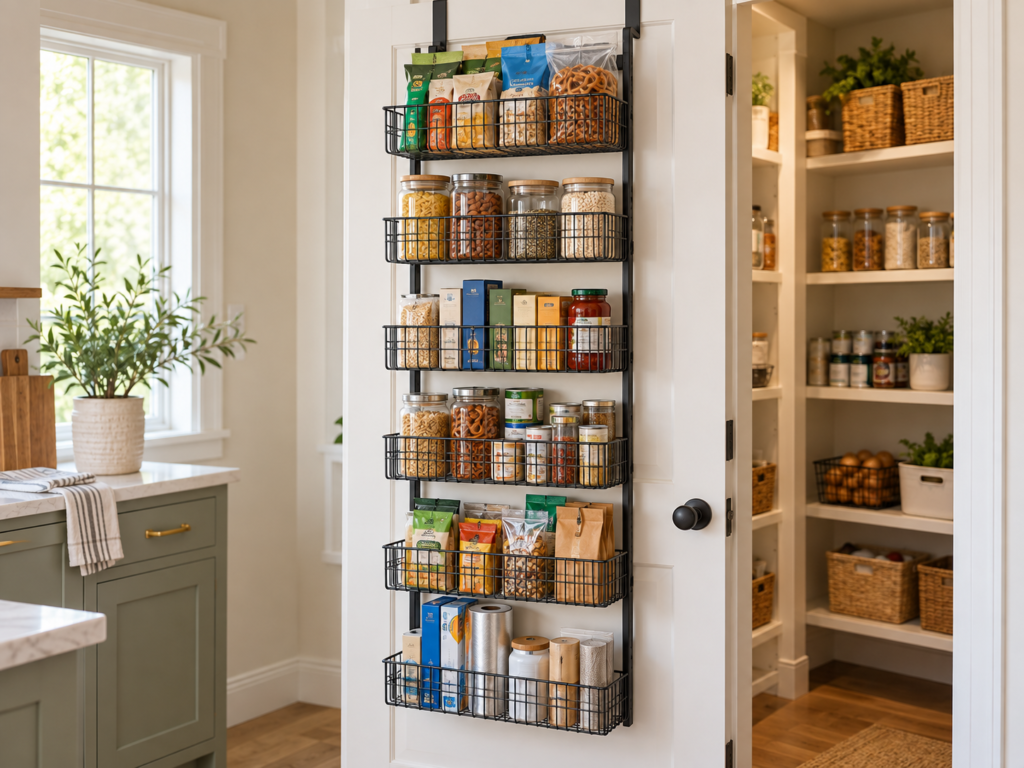
12. Use a Metal Basket Organizer for Heavier Items
Fabric pocket organizers are useful, but metal basket systems can handle more structured storage.
They are a better fit for:
- Pantry goods
- Toiletries
- Cleaning supplies
- Canned or boxed items
- Laundry supplies
Look for a system with multiple basket depths if you need to store both small and tall items.
Over-the-door metal basket organizer → Buy on Amazon
13. Choose Shallow Storage for Tight Door Clearance
One of the biggest mistakes with over-the-door storage is choosing an organizer that sticks out too far.
Deep baskets may hit:
- Walls
- Shelving
- Bathroom fixtures
- Closet contents
- Nearby furniture
If your space is tight, choose shallow pockets, slim baskets, or flat hooks.
Door storage should add function without making the door awkward to open.
14. Protect the Door From Scratches and Damage
Hooks and metal frames can scratch paint or leave marks on the top of a door.
Look for organizers with:
- Padded hooks
- Rubber-coated contact points
- Protective sleeves
- Soft backing
You can also add small felt pads where the organizer touches the door.
If you are renting, this matters even more because you want storage that can be removed without leaving damage.
15. Keep the Organizer From Becoming a Catch-All
Over-the-door storage works best when it has a defined purpose.
Choose one or two categories for each organizer.
For example:
- Shoes
- Bathroom toiletries
- Pantry snacks
- Laundry supplies
- Entryway accessories
Avoid filling every pocket with unrelated items just because there is space available.
The goal is to make things easier to find, not to create another hidden clutter zone.
What Type of Over-the-Door Organizer Is Best?
The best style depends on what you need to store.
Clear Pocket Organizer
Best for:
- Shoes
- Accessories
- Craft supplies
- Kids’ items
- Toiletries
Fabric Pocket Organizer
Best for:
- Clothing accessories
- Lightweight bedroom storage
- Soft items
Metal Basket Organizer
Best for:
- Pantry items
- Cleaning supplies
- Laundry supplies
- Toiletries
Hook Rack
Best for:
- Towels
- Robes
- Hats
- Bags
- Jackets
Specialty Organizer
Best for:
- Gift wrap
- Ironing supplies
- Shoes
- Jewelry
How Much Weight Can an Over-the-Door Organizer Hold?
That depends entirely on the organizer and the door.
Check the manufacturer’s weight rating before loading it.
A lightweight hollow-core interior door may not be the best place for a heavily loaded metal storage rack.
Spread weight evenly and keep heavier items toward the bottom when possible.
If the door begins to sag, drag, or become difficult to close, remove weight immediately.
Will an Over-the-Door Organizer Damage the Door?
It can if it does not fit correctly.
Problems usually come from:
- Hooks that are too thick
- Bare metal rubbing against paint
- Excessive weight
- Organizers swinging during use
- Door clearance that is too tight
Choose padded hardware and make sure the door can close normally before loading the organizer.
Are Over-the-Door Organizers Good for Small Spaces?
Yes—when they solve a specific storage problem.
They are particularly useful because they use space that is often ignored.
But they are not automatically the best solution for every room.
Sometimes a wall shelf, narrow cabinet, drawer organizer, or other vertical storage option will work better.
If the door storage interferes with movement or makes the room feel more cluttered, it is probably not the right solution.
Use the Door Without Overloading the Room
Over-the-door storage can be one of the easiest ways to add organization to a small space without taking up floor area.
The best systems fit the door properly, hold a clearly defined category, and stay shallow enough that the door still functions normally.
Use them for shoes, toiletries, pantry goods, laundry supplies, accessories, crafts, or entryway items—but avoid treating every empty pocket as an invitation to add more stuff.
A well-chosen over-the-door organizer can turn unused vertical space into genuinely useful storage while keeping the rest of the room easier to live in.