
Small homes force you to notice every wasted inch.
A narrow hallway, shallow closet, awkward cabinet, empty wall, or unused corner can make the difference between a home that feels calm and one that feels constantly crowded.
The good news is that you usually don’t need more square footage.
You need better storage.
The best storage ideas for small homes make use of vertical space, hidden areas, furniture with more than one purpose, and overlooked spots that are already part of the room.
The goal isn’t to cram more stuff into a small home.
It’s to make the things you actually use easier to store, find, and put away.
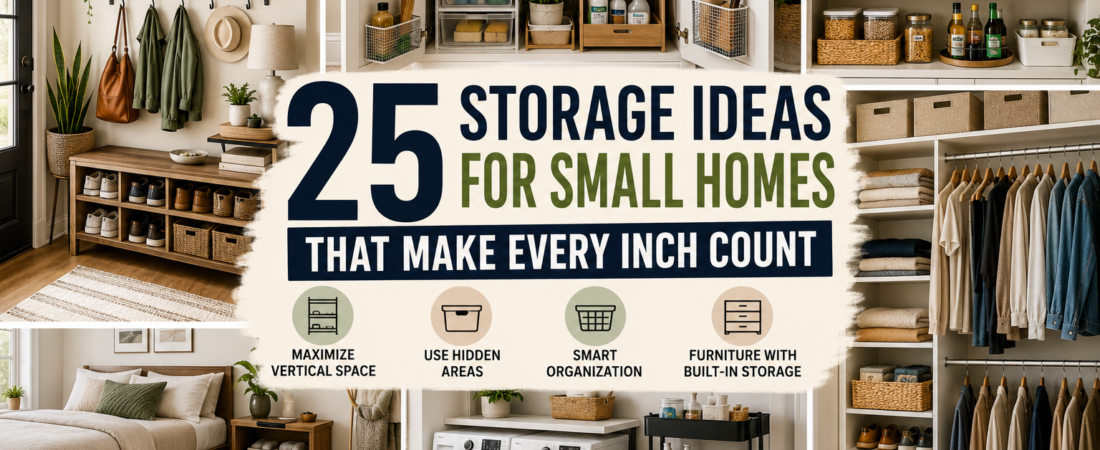
Here are 25 practical storage ideas for small homes that can help you make every inch count.
1. Use Vertical Space Before Adding More Furniture
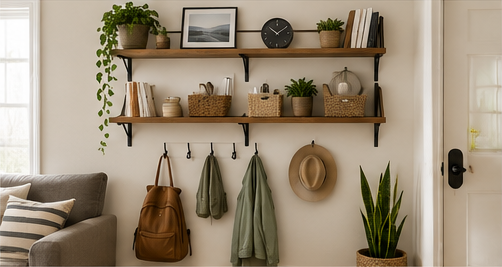
When floor space is limited, look up.
Walls can often provide storage without making a room feel tighter.
Depending on the room, that might mean:
- Floating shelves → View on Amazon
- Wall-mounted cabinets
- Hooks
- Pegboards
- Tall bookcases
- Over-door storage
The important thing is to use vertical space intentionally.
A wall covered from floor to ceiling with random storage can make a small room feel busier.
Use the height where it solves a real problem.
2. Choose Furniture With Built-In Storage
In a small home, furniture should earn its footprint.
Look for pieces that do more than one job.
Examples include:
- Storage ottomans → View on Amazon
- Beds with drawers
- Benches with cubbies
- Coffee tables with storage
- Nightstands with drawers
- Sofas with hidden compartments
A storage bench is more useful than a decorative bench if both occupy the same amount of space.
The idea isn’t to buy specialized furniture for every room.
It’s to avoid wasting large footprints on pieces that provide only one function.
3. Use the Space Under the Bed
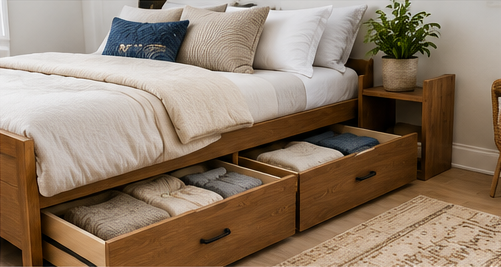
Under-bed space is valuable because it’s large, hidden, and often completely unused.
Use it for:
- Seasonal clothing
- Extra bedding
- Shoes
- Luggage
- Holiday items
- Less frequently used belongings
Low-profile bins or rolling containers can make things easier to access.
Keep the categories simple.
You don’t want to crawl under the bed and open six mystery containers every time you’re looking for one blanket.
4. Add Hooks Wherever Small Items Pile Up
Hooks are one of the cheapest storage solutions in a small home.
They can work in:
- Entryways
- Closets
- Bathrooms
- Kitchens
- Laundry rooms
- Bedrooms
- Garages
Use them for bags, towels, hats, robes, tools, cleaning supplies, or everyday accessories.
The key is putting the hook where the clutter already happens.
If bags always land beside the front door, that’s where the hook belongs.
For more ideas specifically for that area, see 17 Entryway Organization Ideas for Small Spaces That Stop Clutter at the Door.
5. Use the Back of Doors
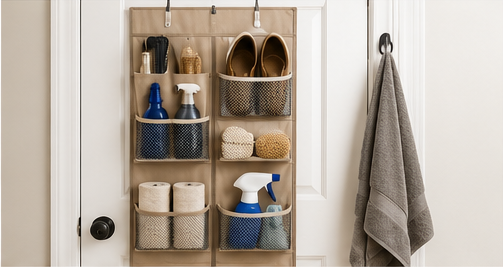
Doors are large vertical surfaces that often go unused.
Depending on the room, add:
- Hooks
- Hanging shoe organizers
- Slim baskets
- Towel racks
- Accessory organizers
- Cleaning-supply storage
Check out these: Over the Door Storage Organizers
This works especially well in bedrooms, bathrooms, closets, and utility spaces.
Just make sure the organizer doesn’t interfere with the door closing or damage nearby walls.
6. Add Shelf Risers Inside Cabinets
Many cabinets waste space vertically.
A stack of plates might occupy only half the available height while the space above sits empty.
Shelf risers create another level.
They’re useful for:
- Dishes
- Mugs
- Pantry food
- Toiletries
- Cleaning supplies
- Small containers
This is one of the simplest ways to make existing cabinets work harder.
If kitchen cabinets are one of your problem areas, see 15 Kitchen Cabinet Organization Ideas That Make Every Shelf Work Harder.
7. Use Pull-Out Organizers in Deep Storage
Deep cabinets and shelves can hold plenty of stuff.
The problem is reaching it.
Pull-out organizers bring the back of the cabinet toward you.
They work well for:
- Kitchen cabinets
- Under-sink storage
- Bathroom cabinets
- Pantry shelves
- Utility closets
You can use permanent sliding drawers or freestanding pull-out bins.
Accessibility matters just as much as capacity.
A cabinet isn’t really useful storage if half of its contents disappear into the back.
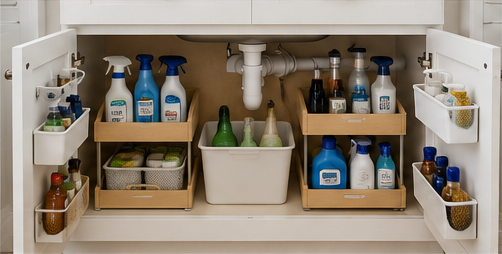
8. Make Under-Sink Space Work Harder
The cabinet beneath a sink is awkward because plumbing interrupts the space.
But it’s still valuable storage.
Use:
- Stackable drawers
- Pull-out organizers
- Door-mounted baskets
- Narrow bins
- Small shelves
- Hooks
- I use this under the sink organizer in my house → View on Amazon
Work around the plumbing rather than trying to force one large organizer into the cabinet.
For a full breakdown, see 15 Under-Sink Organization Ideas That Maximize Every Inch.
9. Use Baskets to Contain Loose Categories
Small homes feel cluttered quickly when lots of little things are visible.
Baskets can create boundaries.
Use them for:
- Toys
- Blankets
- Accessories
- Pet supplies
- Reusable bags
- Cleaning cloths
- Electronics
Open baskets work especially well for categories that need frequent access.
Avoid creating a system with too many tiny containers.
Simple storage is usually easier to maintain.
10. Use Narrow Furniture in Tight Areas
A piece of furniture doesn’t need to be deep to be useful.
Look for:
- Slim console tables
- Narrow shoe cabinets
- Shallow shelving
- Compact bookcases
- Rolling carts
These can work in hallways, entryways, kitchens, bathrooms, and beside appliances.
Measure the remaining walkway, not just whether the furniture fits against the wall.
A narrow space stops being functional if storage makes it difficult to pass through.
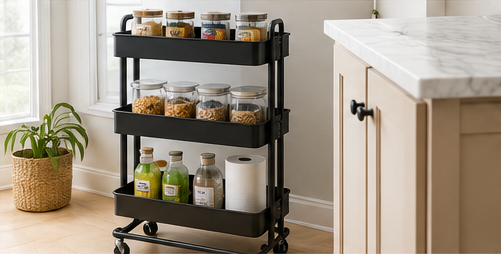
11. Use Rolling Carts for Flexible Storage
Rolling carts are useful because they don’t have to stay in one place.
Use one for:
- Kitchen supplies
- Craft materials
- Cleaning products
- Bathroom items
- Laundry supplies
- Office equipment
A cart can be pulled out when needed and moved away afterward.
This makes it useful in multipurpose rooms where the same floor space needs to serve different jobs.
12. Use Clear Containers When Visibility Matters
Clear containers help when you need to see what’s inside quickly.
They’re useful for:
- Pantry food
- Refrigerator items
- Closet accessories
- Craft supplies
- Small toys
- Household backstock
Opaque containers can look cleaner, but they usually need labels.
Choose based on how you use the space.
Visibility is particularly important for food storage.
Our guide to 11 Refrigerator Organization Ideas That Make Food Easier to Find includes more ways to keep food visible and accessible.
13. Store Flat Items Vertically
Many flat items are easier to access when stored upright.
Examples include:
- Baking sheets
- Cutting boards
- Serving trays
- File folders
- Craft paper
- Laptop accessories
Vertical dividers prevent everything from becoming one heavy stack.
This approach works especially well in narrow cabinets and shelves.
14. Use the Space Above Cabinets
Some kitchens, bathrooms, and storage areas have unused space above cabinets.
Depending on the layout, that area may be useful for:
- Decorative baskets
- Seasonal items
- Extra serving pieces
- Lightweight bins
- Rarely used supplies
Don’t overload high storage with heavy belongings.
And avoid turning it into an area where random clutter simply disappears from view.
High storage should have a specific purpose.
15. Create Zones Instead of Random Storage
A small home becomes easier to manage when related things live together.
Examples might include:
ENTRY ZONE
- Keys
- Shoes
- Bags
CLEANING ZONE
- Sprays
- Cloths
- Gloves
WORK ZONE
- Laptop
- Chargers
- Paperwork
PANTRY ZONE
- Food
- Snacks
- Baking supplies
You don’t need labels everywhere.
The important thing is that every category has a predictable home.
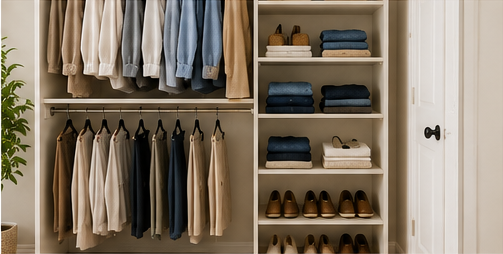
16. Make Closets Work Vertically
Closets often waste huge amounts of vertical space.
Consider:
- Double hanging rods
- Shelf dividers
- Hanging organizers
- Shoe racks
- Hooks
- Drawers beneath short clothing
A small closet can hold substantially more when the space above and below the hanging rod is used properly.
For more detailed ideas, see 17 Small Closet Organization Ideas That Make the Most of Limited Space.
17. Store Seasonal Items Outside Prime Storage
Prime storage should hold things you use regularly.
Seasonal items can move somewhere less convenient.
Examples include:
- Holiday decorations
- Winter clothing
- Summer gear
- Seasonal bedding
- Camping equipment
Possible storage locations include high shelves, under-bed bins, garage shelving, or other appropriate storage areas.
Rotating seasonal belongings reduces how much your everyday storage has to hold.
18. Use High Shelves for Low-Priority Items
High shelves are useful for items that don’t need frequent access.
Use them for:
- Travel bags
- Extra linens
- Seasonal accessories
- Keepsakes
- Backup supplies
Keep everyday items at eye or waist level.
Storage becomes frustrating when you need a step stool every morning just to reach something you use constantly.
19. Make Garage Walls Do the Work
If your small home includes a garage, don’t waste the walls.
Use them for:
- Tools
- Bikes
- Sports gear
- Lawn equipment
- Shelving
- Household overflow
Moving bulky items off the floor can make a garage dramatically more usable.
Our guide to 15 Garage Storage Ideas for Small Garages That Maximize Every Inch covers wall, overhead, tool, bike, and seasonal storage in more detail.
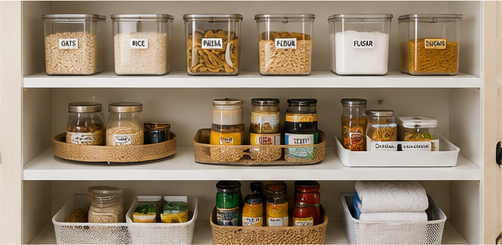
20. Use Multi-Level Storage in Pantries
Pantry shelves often waste vertical space just like cabinets.
Use:
- Shelf risers
- Stackable bins
- Turntables
- Tiered organizers
- Pull-out baskets
Keep frequently used food where it’s easiest to reach.
Backstock can go higher or farther back.
For a complete pantry setup, see 21 Small Pantry Organization Ideas That Actually Save Space.
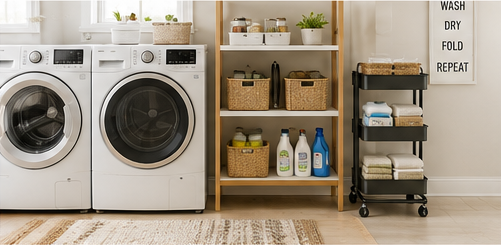
21. Give Laundry Supplies One Compact Zone
Laundry products often spread across shelves, counters, and floors.
Keep frequently used supplies together.
That might include:
- Detergent
- Stain remover
- Dryer sheets
- Dryer balls
- Laundry bags
Use a shelf, basket, tray, or compact cabinet.
If the laundry room is especially tight, vertical storage can help considerably.
See 17 Small Laundry Room Organization Ideas That Make the Most of Every Inch for more ideas.
22. Use Corners Intentionally
Corners often become dead space.
Depending on the room, you might use:
- Corner shelves
- A small turntable
- A compact cabinet
- Hooks
- Triangular shelving
But don’t add storage just because a corner is empty.
If the room already works well, leaving the corner open may make it feel larger.
Storage should solve a problem.
23. Keep Frequently Used Items Easiest to Reach
Not all storage locations have equal value.
The best spots should go to the things you use constantly.
For example:
Easy access
- Everyday dishes
- Work clothes
- Common cleaning supplies
- Frequently worn shoes
Less convenient storage
- Holiday dishes
- Seasonal clothing
- Keepsakes
- Backup supplies
Organizing based on frequency of use can make a home feel much more functional without adding any new storage.
24. Leave Some Empty Space
This may sound strange in an article about maximizing storage.
But one of the best things you can do in a small home is not fill every available inch.
Empty space gives you room for:
- New groceries
- Packages
- Guests’ belongings
- Temporary projects
- Future purchases
It also makes existing storage easier to use.
A shelf that’s 85% full is often more functional than one packed so tightly that nothing can be removed without disturbing everything else.
25. Organize Around Real Life
The most effective storage system is the one that matches your habits.
If shoes always come off by the door, store them there.
If you use the same five kitchen tools every day, keep them within easy reach.
If everyone drops mail on one specific surface, put the mail organizer there.
If towels end up beside the shower, that’s probably where the towel hook belongs.
Don’t force your household to follow an organization system that looks good but doesn’t match how people actually behave.
The easiest storage system is usually the one that lasts.
Storage Ideas for Small Homes: Make Existing Space Work Better
Living in a small home doesn’t mean every surface needs to become storage.
The goal is to find the areas that aren’t currently working very hard.
Look for:
- Empty vertical space
- Unused doors
- Deep cabinets
- Space beneath furniture
- High shelves
- Narrow gaps
- Underused closets
Then solve those areas one at a time.
You don’t need to reorganize the entire house in one weekend.
Start with the space causing the most frustration.
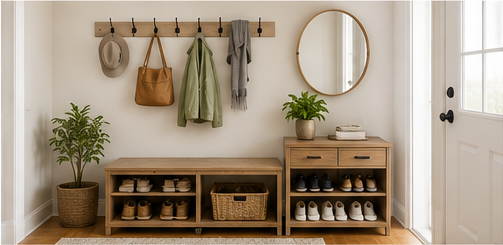
A cluttered entryway might need hooks and shoe storage.
A packed kitchen might need better cabinet organization.
A tiny closet might need another hanging rod.
A chaotic garage might need wall shelving.
One improvement often makes the next problem easier to see.
Quick Small-Home Storage Problem Solver
Problem: Not enough floor space
Try: Wall-mounted or vertical storage
Problem: Cabinets feel too small
Try: Shelf risers and pull-out organizers
Problem: Closets are overflowing
Try: Double rods and seasonal rotation
Problem: Shoes pile up near the door
Try: Narrow shoe storage
Problem: Small items disappear
Try: Clear bins or simple baskets
Problem: Furniture takes up too much room
Try: Pieces with built-in storage
Problem: Seasonal items occupy everyday storage
Try: High shelves, under-bed storage, or garage storage
Problem: Storage systems never stay organized
Try: Fewer categories and easier-to-access storage
Frequently Asked Questions About Storage in Small Homes
How do you create more storage in a small home?
Start by using existing vertical and hidden space.
Walls, doors, cabinet interiors, under-bed areas, high shelves, and the space beneath hanging clothes can provide useful storage without requiring more floor space.
What is the best storage furniture for small spaces?
Furniture that serves more than one purpose tends to work best.
Storage benches, ottomans, beds with drawers, coffee tables with storage, and narrow consoles can provide function without dedicating floor space to storage alone.
How do I make a small home look less cluttered?
Reduce the number of visible loose items, keep floors and walkways relatively clear, group belongings into broad categories, and avoid overfilling shelves.
Some open space usually makes a small home feel larger.
Should I use bins everywhere in a small home?
No.
Bins work well when they contain loose categories or make difficult storage easier to access.
Too many bins can waste space and create additional steps when putting things away.
Use them where they solve a specific problem.
What should I store in hard-to-reach places?
Hard-to-reach storage is best for lightweight items you don’t need frequently.
Examples include seasonal accessories, holiday items, extra bedding, travel gear, and backup household supplies.
Keep everyday items somewhere easier to reach.
How do I organize a small home without spending much money?
Declutter first.
Then make better use of what you already have.
Rearranging shelves, nesting containers, moving frequently used items closer, using existing baskets, and adding a few inexpensive hooks can make a substantial difference before you buy major organizers.
Make Every Inch Count Without Filling Every Inch
A small home doesn’t need to hold the maximum possible amount of stuff.
It needs to support everyday life.
Use the walls.
Use overlooked spaces.
Choose furniture that earns its footprint.
Keep frequently used belongings accessible.
Move seasonal items out of prime storage.
And leave enough breathing room that your home still feels comfortable.
The best small-space storage doesn’t make you notice how much stuff fits.
It makes the home feel easier to live in.