
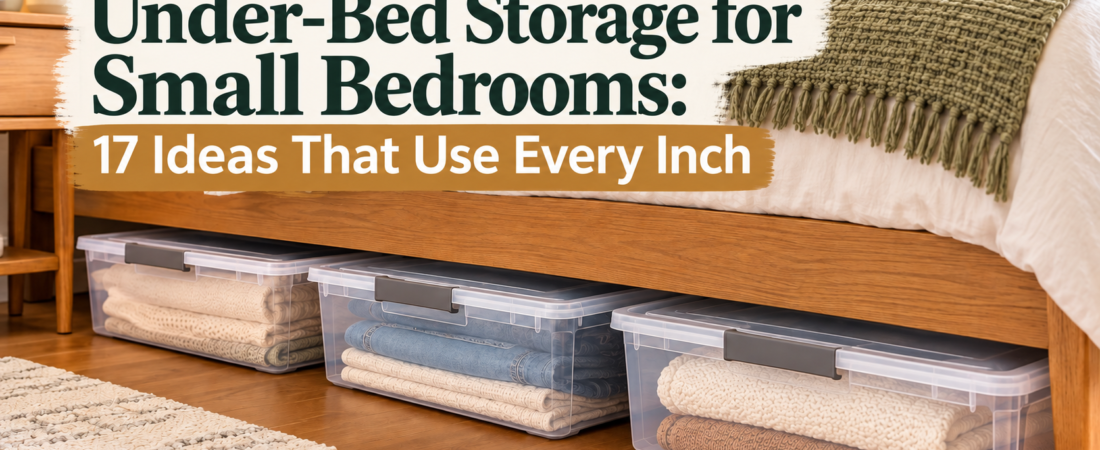
When your bedroom is short on closet space, the empty area beneath your bed can be some of the most valuable storage space in the entire room.
But there’s a big difference between using under bed storage for small bedrooms well and simply shoving things underneath until you forget they exist.
The best under-bed storage for small bedrooms is easy to access, properly sized for the available clearance, protected from dust, and reserved for things that actually make sense to keep there.
Whether you need room for seasonal clothes, extra bedding, shoes, linens, or rarely used accessories, these 17 under-bed storage ideas will help you use every inch without turning the space beneath your bed into a dumping ground.
Before You Buy Anything, Measure the Space Under Your Bed
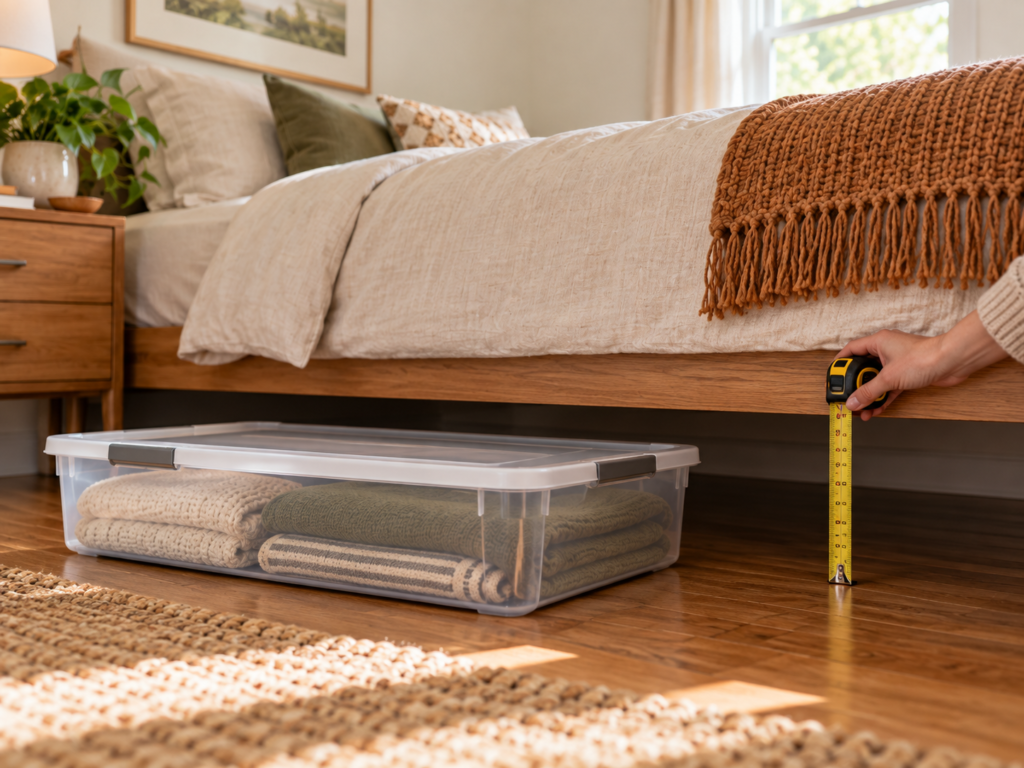
Before choosing bins, bags, drawers, or rolling containers, measure the space you actually have.
You need three measurements:
- Width
- Length
- Usable height
The most important measurement is the height from the floor to the lowest obstruction, not necessarily the bottom of the bed frame.
Support rails, center braces, bolts, slats, or upholstered bed frames can reduce your actual usable clearance.
If you’re unsure how to measure accurately, see my guide to measuring for storage organizers before you buy.
Leave yourself at least a little extra clearance so your storage containers can slide in and out without scraping against the frame.
1. Use Low-Profile Bins for Beds With Limited Clearance
You do not need a tall bed to make under-bed storage useful.
Low-profile storage bins are designed for beds with only a few inches of usable space underneath. They work especially well for flat or compressible items such as:
- T-shirts
- Workout clothes
- Scarves
- Lightweight linens
- Seasonal accessories
- Extra pillowcases
Look for containers that are wide and shallow rather than tall.
A container that fits beneath the bed but is difficult to pull out because it rubs against the frame will become frustrating quickly.
Low-profile under-bed storage bin → Buy on Amazon
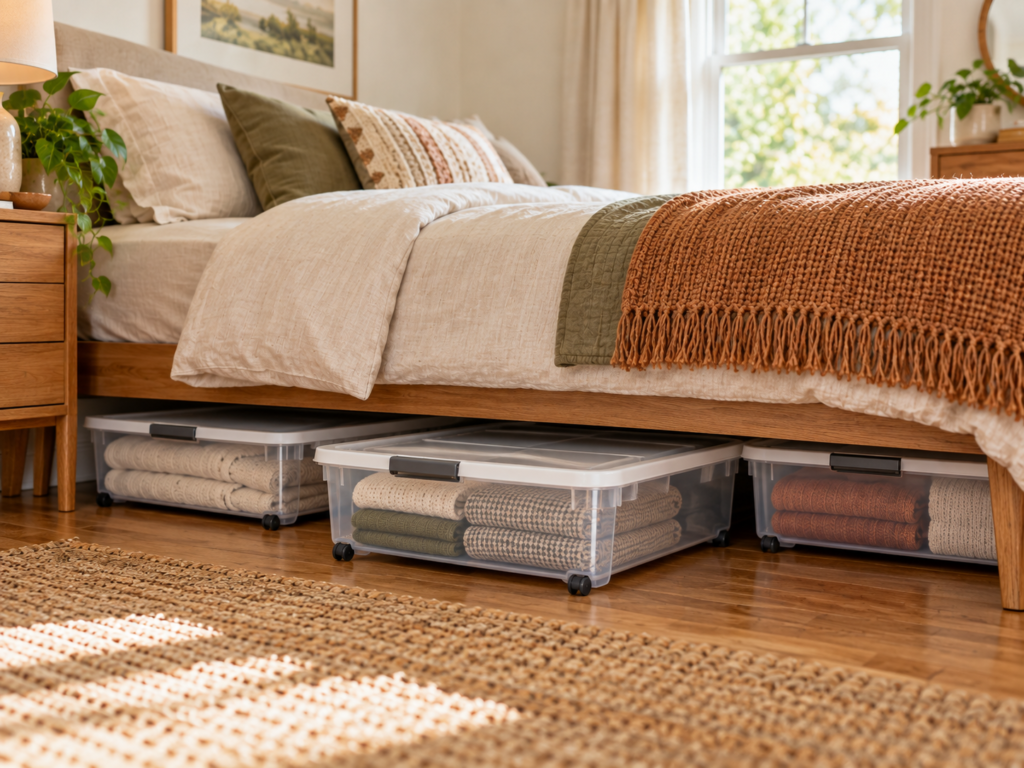
2. Choose Wheeled Storage for Items You Use Frequently
If you plan to access your under-bed storage regularly, wheels can make a huge difference.
Rolling bins work especially well for:
- Shoes
- Workout gear
- Extra clothing
- Kids’ items
- Craft supplies
- Frequently rotated seasonal items
Instead of dragging a full container across the floor, you can pull it out like a drawer.
Wheeled storage is particularly helpful beneath heavier beds where lifting the mattress or shifting the frame is unrealistic.
Just make sure the wheels do not add so much height that the container no longer fits beneath the bed.
Wheeled under-bed storage container → Buy on Amazon
3. Store Seasonal Clothing Under the Bed
Seasonal clothing is one of the best things to store beneath a bed because you do not need constant access to it.
During warmer months, use the space for:
- Sweaters
- Thermal layers
- Scarves
- Gloves
- Winter pajamas
During colder months, rotate in:
- Shorts
- Swimwear
- Lightweight tops
- Summer dresses
- Warm-weather accessories
Keep only the current season in your main closet or dresser.
This simple rotation can free a surprising amount of everyday storage space.
If your bedroom does not have a closet at all, you may also want these ideas:
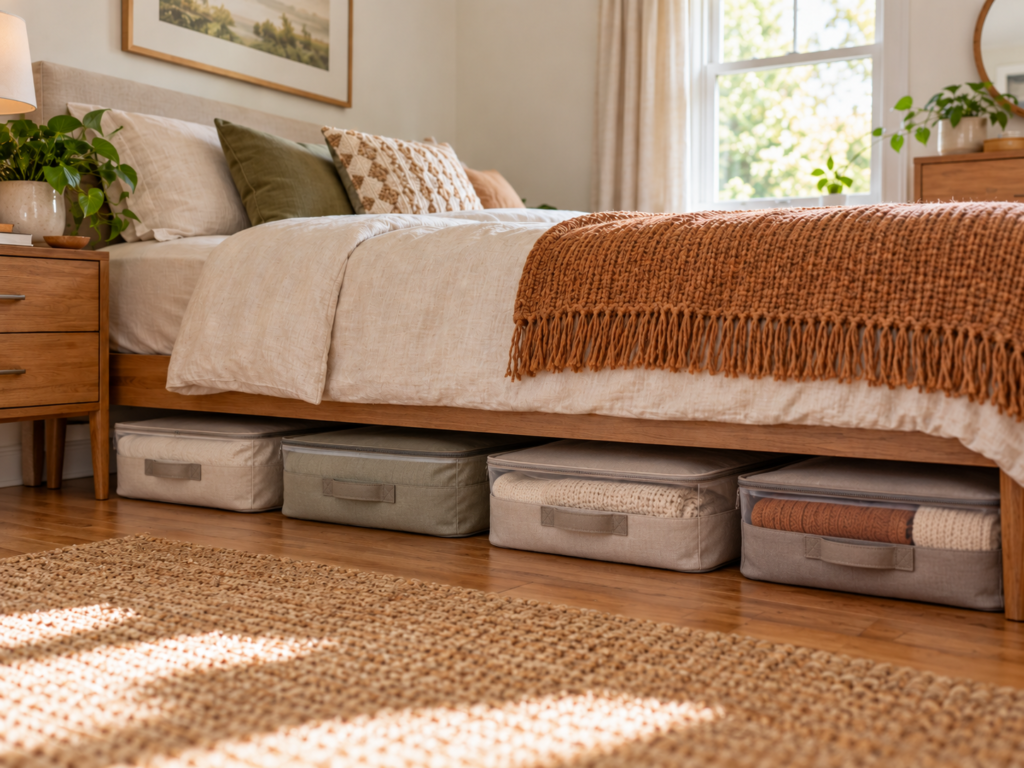
4. Use Soft-Sided Storage Bags for Clothing and Linens
Rigid plastic bins are useful, but they are not always the best fit beneath a low bed.
Soft-sided under-bed storage bags can compress slightly to fit around tight spaces and are particularly useful for:
- Sweaters
- Blankets
- Sheets
- Towels
- Off-season clothing
Choose bags with sturdy handles so you can pull them out without tearing the fabric.
A clear top or small label pocket also makes it easier to see what is inside.
Avoid overstuffing soft storage bags. Once they bulge upward, they may no longer slide easily beneath the bed.
Soft-sided under-bed clothing storage bags → Buy on Amazon
5. Store Extra Bedding Beneath the Bed It Belongs To
Extra bedding often takes up valuable closet space even though it is only used occasionally.
One simple system is to store each bedroom’s spare bedding underneath that specific bed.
Keep together:
- Sheet sets
- Pillowcases
- Mattress protectors
- Lightweight blankets
- Guest bedding
This prevents bedding from taking over your linen closet and makes replacement sheets easy to find.
For extra organization, store each sheet set inside one of its pillowcases before placing it in the bin.
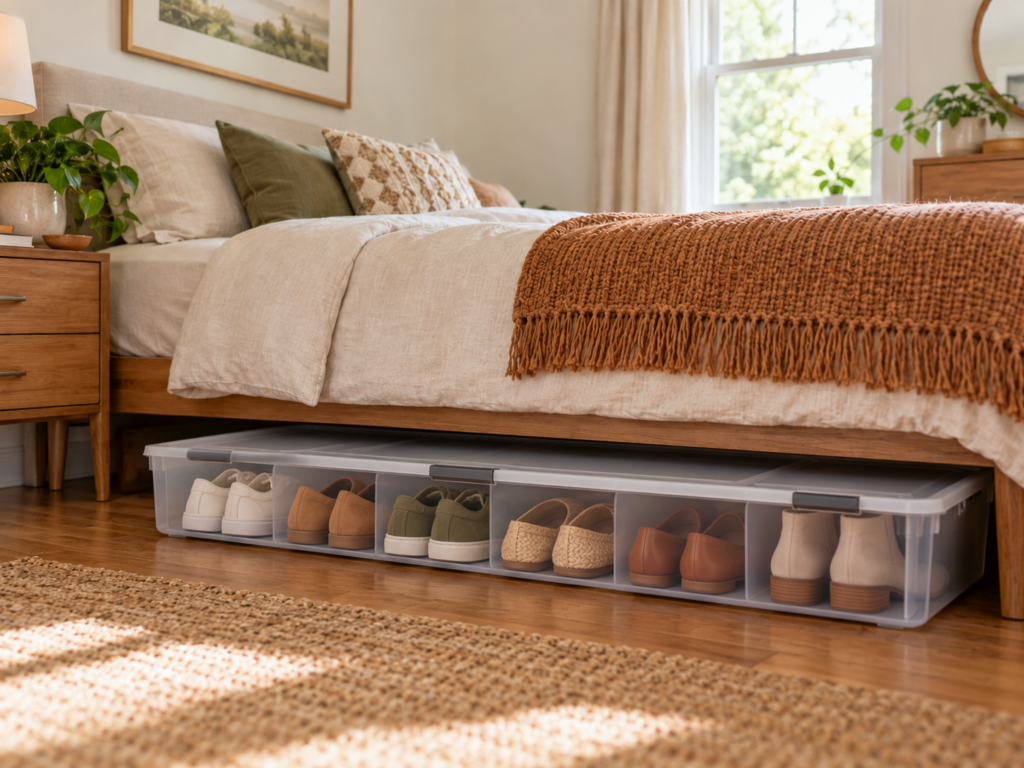
6. Create Divided Shoe Storage Under the Bed
Shoes can consume an enormous amount of closet floor space.
An under-bed shoe organizer with individual compartments lets you move less frequently worn footwear out of the closet while still keeping pairs together.
This works especially well for:
- Dress shoes
- Flats
- Sandals
- Seasonal shoes
- Occasional-use sneakers
If you wear certain shoes every day, keep those near the entryway or closet instead.
Under-bed shoe storage is best for footwear that needs to remain accessible but does not need prime storage space.
Divided under-bed shoe organizer → Buy on Amazon
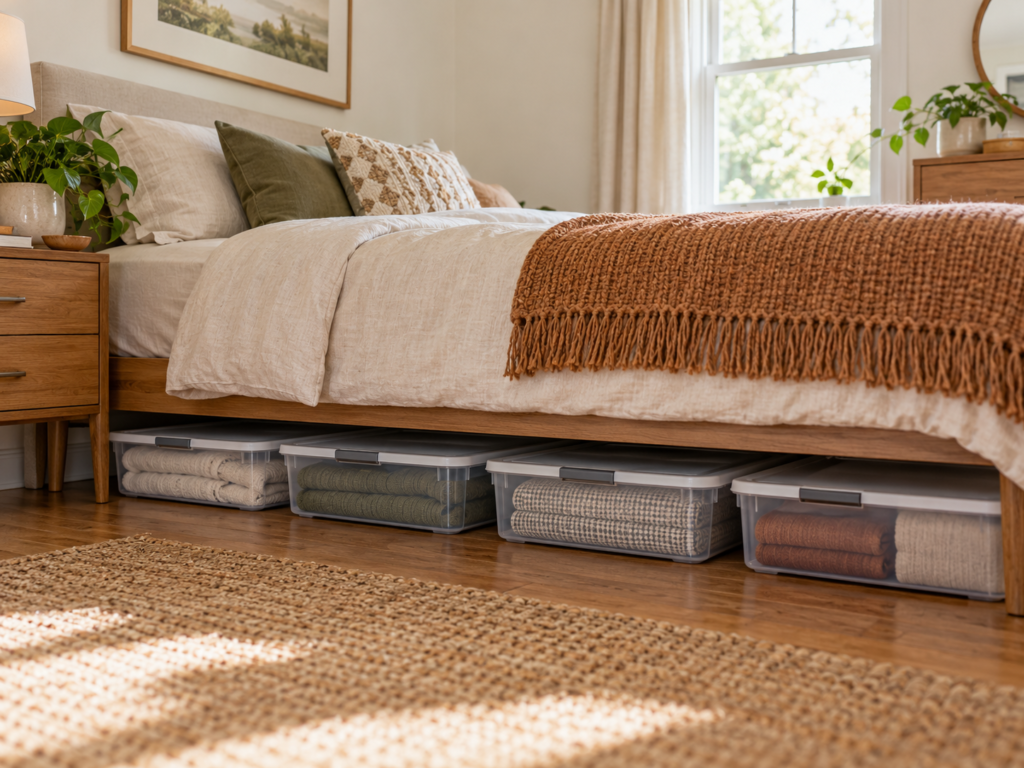
7. Use Clear Bins When Visibility Matters
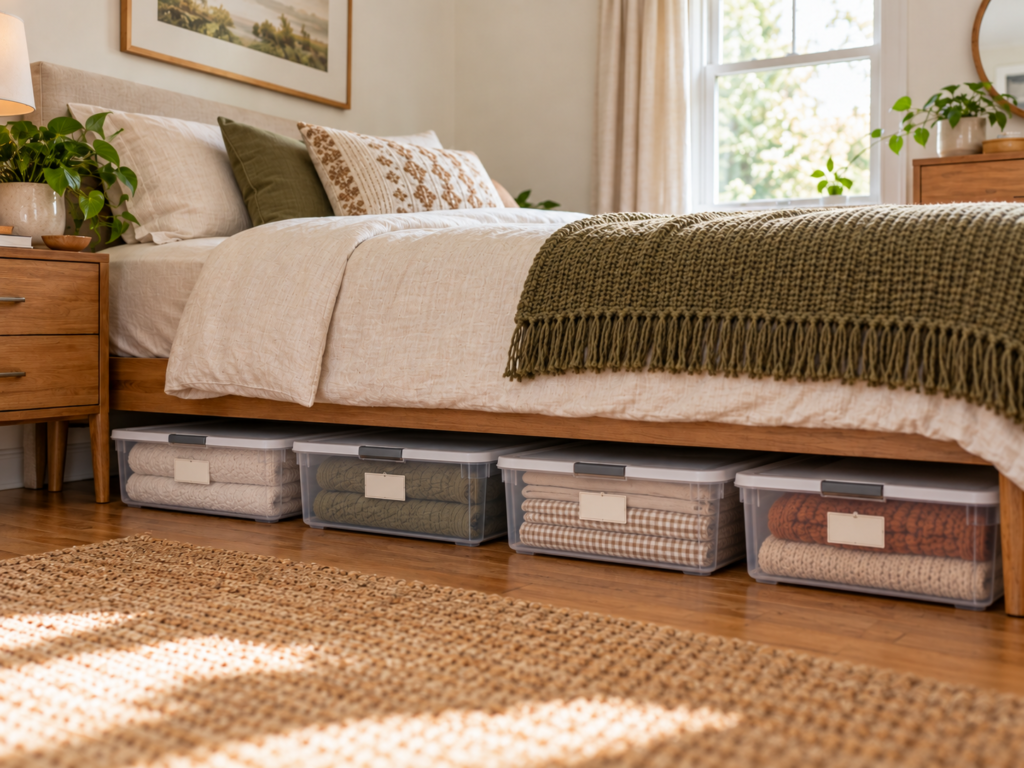
Clear storage bins are useful when you have several containers beneath the bed and need to identify their contents quickly.
They work particularly well for mixed categories such as:
- Accessories
- Craft supplies
- Kids’ items
- Shoes
- Seasonal clothing
Clear containers reduce the need to pull out multiple bins just to find one item.
The tradeoff is visual clutter.
If your bins are visible from the doorway or sides of the bed, opaque containers may create a cleaner appearance.
The best choice depends on whether easy identification or visual simplicity matters more in your room.
8. Use Opaque Bins for a Cleaner Look
Opaque storage bins hide the contents completely, which can make a small bedroom feel calmer.
They work well beneath platform beds or open-frame beds where the storage containers may remain partially visible.
Choose containers in a neutral tone that blends with your room rather than drawing attention to the storage itself.
Then add a small label so you still know what belongs inside.
This is especially helpful if you like the idea of hidden storage throughout your home:
9. Divide the Space by Frequency of Use
Not every part of the space beneath your bed is equally accessible.
Use that to your advantage.
Front or Side Areas
Store things you may need regularly:
- Shoes
- Workout clothing
- Extra linens
- Frequently used accessories
Center or Hard-to-Reach Areas
Store things you rarely need:
- Holiday clothing
- Sentimental items
- Extra blankets
- Off-season clothes
- Travel accessories
This keeps you from crawling halfway underneath the bed every time you need something.
10. Label Every Container
Even clear storage containers benefit from labels.
Labels help prevent the under-bed area from slowly turning into miscellaneous storage.
Useful labels might include:
- Winter Clothes
- Summer Clothes
- Extra Sheets
- Shoes
- Travel Gear
- Handbags
- Guest Bedding
Keep categories broad enough that the system is easy to maintain.
If every container contains five unrelated categories, the storage system will become frustrating again.
11. Store Rarely Used Accessories Under the Bed
Small accessories can take up a surprising amount of dresser and closet space.
Under-bed storage is a good place for items you want to keep but do not use every day, such as:
- Handbags
- Hats
- Belts
- Scarves
- Travel bags
- Formal accessories
Keep your everyday accessories in easier-to-reach storage.
The goal is to move lower-priority items out of valuable everyday storage zones.
12. Use the Space for Spare Towels or Linens
If your home has a small linen closet—or no linen closet at all—under-bed storage can provide overflow space.
Consider storing:
- Extra bath towels
- Guest towels
- Spare sheets
- Table linens
- Extra pillowcases
Keep the items protected from dust and moisture inside a closed container.
Avoid storing anything damp under the bed.
13. Protect Stored Items From Dust
Open baskets and uncovered trays may look convenient, but the area under a bed collects dust quickly.
For anything stored longer than a few days, use containers with:
- Lids
- Zippers
- Covered tops
- Closable drawers
This is especially important for clothing, linens, and shoes.
Vacuum or sweep underneath the bed occasionally as well. Storage does not eliminate the need to clean the space.
14. Watch for Moisture Before Storing Fabric
Under-bed storage should stay dry.
Never store damp:
- Towels
- Shoes
- Clothing
- Bedding
Moisture trapped inside a closed container can create odors or mildew.
If the bedroom itself tends to be humid, avoid tightly packing fabrics and make sure everything is completely dry before storing it.
Do not assume vacuum-sealed storage automatically solves moisture problems. Anything sealed inside should already be clean and dry.
15. Consider Bed Risers Only When They Make Sense
Bed risers can create additional clearance beneath some bed frames, potentially turning an unusable gap into meaningful storage space.
But they are not appropriate for every bed.
Before using risers, make sure they are compatible with your bed frame and that the bed remains stable.
Do not raise a bed solely to squeeze in oversized storage containers if doing so makes the bed feel unstable or awkward to use.
If you only need another inch or two, look first for a lower-profile container.
Heavy-duty bed risers → Buy on Amazon
16. Match Storage Bin Size to What You Actually Need to Store
Buying the largest bin that fits under the bed is not always the smartest choice.
Large containers can become heavy, difficult to move, and full of unrelated items.
Instead, choose container sizes based on the categories you plan to store.
For example:
- Small divided container for shoes
- Medium soft case for sweaters
- Wide shallow bin for bedding
- Narrow rolling bin for frequently used clothes
If you are unsure which container size makes sense, this room-by-room storage bin guide can help:
Smaller category-specific containers are often easier to maintain than one giant bin.
17. Keep Under-Bed Storage From Becoming a Dumping Ground
This may be the most important rule.
Under-bed storage works because it gives less frequently used belongings a defined place.
It stops working when every item without an obvious home gets shoved underneath.
Before placing something under your bed, ask:
- Do I actually want to keep this?
- Does it belong in the bedroom?
- Will I remember it is here?
- Is under the bed the best location for it?
- Can I assign it to a specific category?
If you cannot answer those questions, storing it beneath the bed may simply postpone the clutter problem.
What Should You Store Under the Bed?
Good under-bed storage candidates include:
- Seasonal clothing
- Extra bedding
- Shoes
- Spare linens
- Handbags
- Travel accessories
- Rarely used clothing
- Extra towels
- Special-occasion accessories
Less suitable items include:
- Things you need every day
- Damp clothing or towels
- Food
- Important paperwork
- Fragile valuables
- Items sensitive to moisture or temperature
- Random clutter without a defined category
How Many Under-Bed Storage Containers Should You Use?
There is no ideal number.
The goal is to use the available space without filling every square inch simply because you can.
Two or three well-organized containers can be more useful than six bins packed tightly together.
Leave enough room to remove containers easily and clean underneath the bed.
If the bins are packed so tightly that retrieving one requires moving everything else, the system is probably too complicated.
Best Type of Under-Bed Storage for Small Bedrooms
The best container depends on what you are storing.
Choose Wheeled Bins For:
Frequently used items and heavier loads.
Choose Soft-Sided Bags For:
Clothing, blankets, bedding, and lightweight textiles.
Choose Rigid Plastic Bins For:
Items needing stronger dust protection or structure.
Choose Divided Organizers For:
Shoes and smaller accessories.
Choose Low-Profile Containers For:
Beds with very little clearance.
If you want specific product options, see:
That guide focuses on choosing actual under-bed storage containers, while this article focuses on building a storage system that works.
Use Under-Bed Space Intentionally
In a small bedroom, unused space is valuable—but that does not mean every empty inch needs to be filled.
The best under-bed storage system gives lower-priority belongings a defined home while keeping your everyday storage areas easier to use.
Measure first, choose containers that fit the space, organize by category and frequency of use, and protect anything stored long term from dust and moisture.
Used intentionally, the area beneath your bed can become one of the most useful hidden storage zones in the room instead of the place where clutter disappears.