An awkward closet is frustrating because the space is there, but it doesn’t behave like a normal closet.
You may be dealing with a sloped ceiling, a deep corner, a shallow side wall, an off-center rod, exposed pipes, a low access panel, or a layout where standard organizers simply don’t fit.
The best way to organize an awkward closet is to stop forcing a normal closet system into an abnormal space.
Instead, divide the closet into usable zones based on depth, height, access, and obstruction.
That usually gives you more practical storage than trying to fill every inch.
Start by Finding the Real Problem
Before adding storage, identify what actually makes the closet awkward.
Common problems include:
- One side is much deeper than the other
- The ceiling slopes downward
- A corner is hard to reach
- The closet is unusually shallow
- The door opening is narrower than the interior
- Pipes, vents, or access panels interrupt the wall
- A hanging rod blocks shelving
- A shelf blocks usable hanging height
- One section is too low for normal clothing
- Standard organizers are too wide or too deep
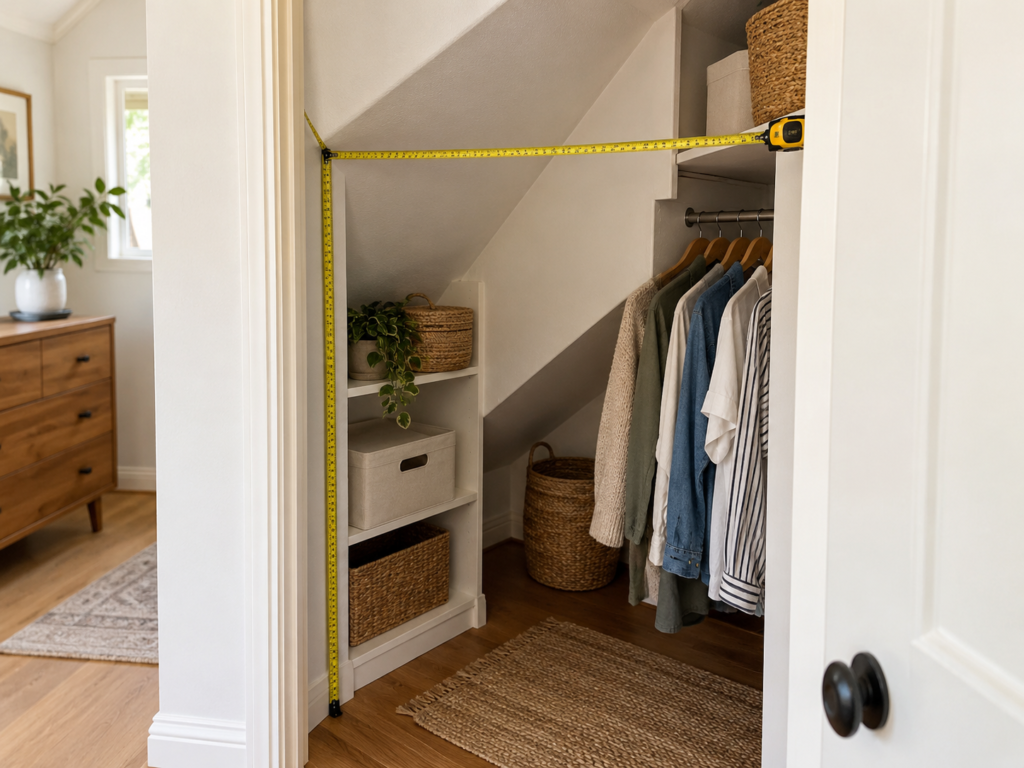
Measure the closet before deciding what belongs there.
Record:
- Interior width
- Interior depth
- Door opening width
- Ceiling height at different points
- Baseboard depth
- Shelf depth
- Rod height
- Distance around pipes or obstructions
- Any space that must remain accessible
Our guide to measuring for storage organizers is useful here because awkward closets often have several different usable dimensions instead of one simple rectangle.
1. Divide the Closet Into Shallow and Deep Zones
One of the easiest mistakes is treating the entire closet as if it has the same depth.
It often doesn’t.
A deep rear section may be useful for:
- Seasonal bins
- Luggage
- Bedding
- Bulky storage
A shallow side section may be better for:
- Shoes
- Accessories
- Handbags
- Folded clothing
- Hooks
- Narrow shelves
Matching storage depth to the actual area keeps you from blocking usable space with an organizer that sticks out too far.
If the closet has a narrow front section and deeper space farther back, keep frequently used items near the front and low-frequency storage deeper inside.
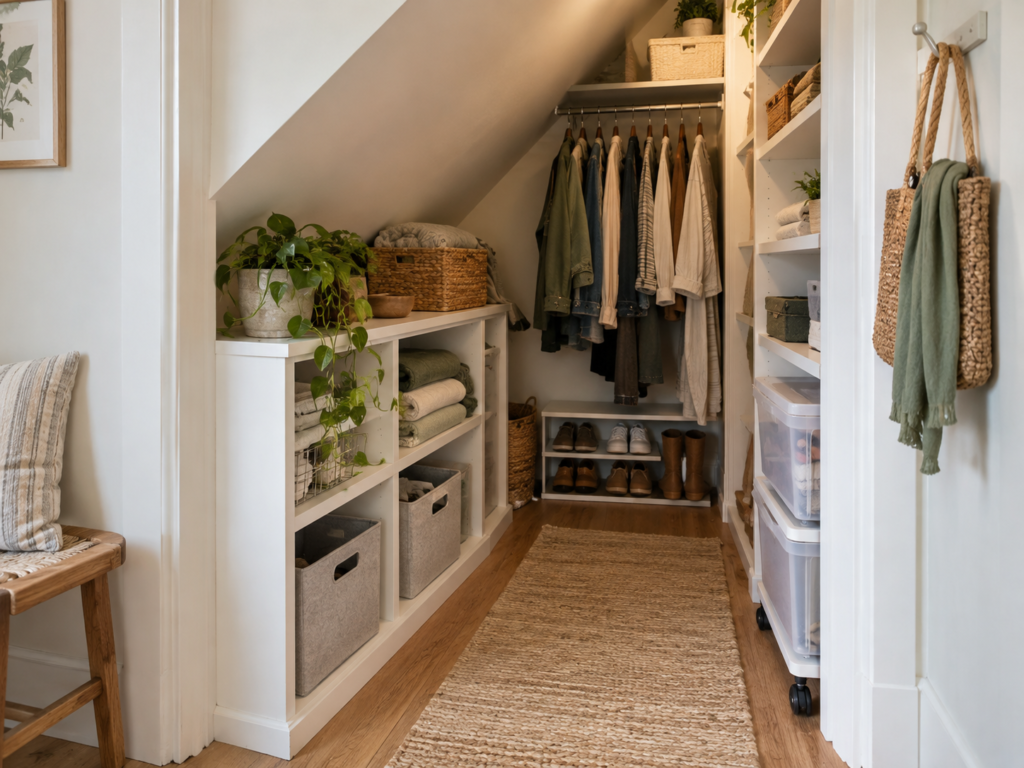
2. Use Sloped Ceilings for Low Storage
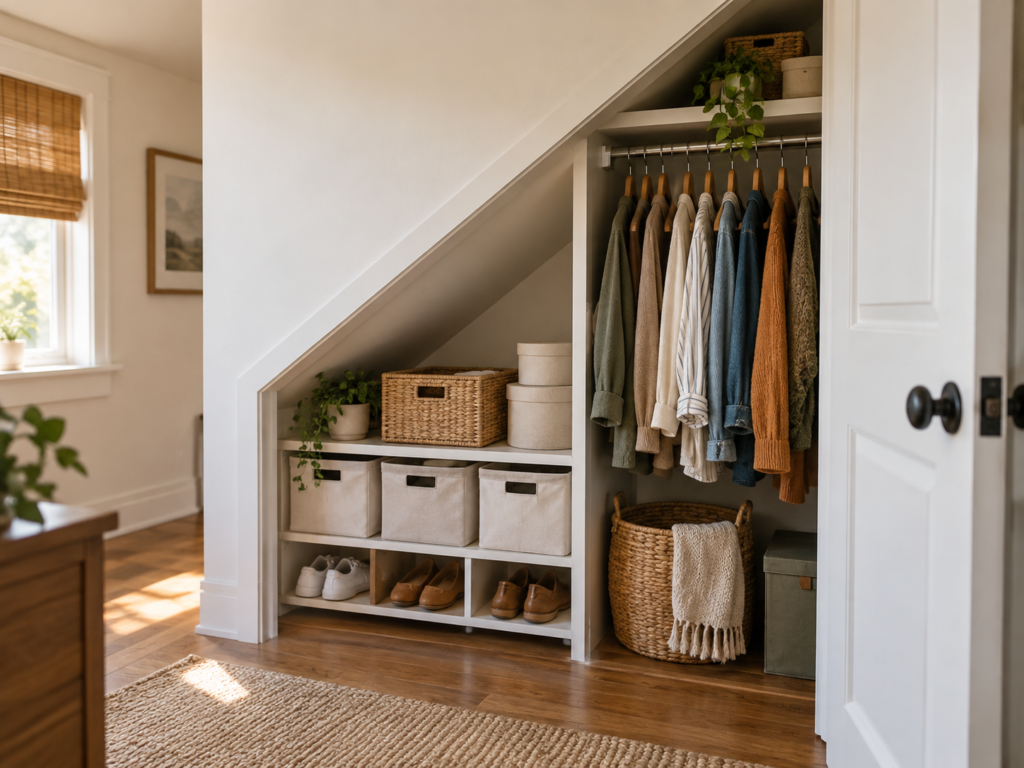
A sloped ceiling can make standard shelves and tall hanging systems impossible.
Instead of fighting the low area, assign it to things that don’t need full height.
Good uses include:
- Shoes
- Storage bins
- Folded clothing
- Handbags
- Short drawers
- Low baskets
Put hanging rods and taller storage in the highest section.
This creates a natural progression:
low storage under the slope → medium-height shelves → hanging storage in the tallest zone
Trying to hang clothes under a low slope usually wastes both height and access.
3. Turn Dead Corners Into Pull-Out Storage
Deep closet corners are often difficult because the space is technically usable but hard to reach.
Avoid stacking loose items deep into the corner.
Instead, use something you can pull forward.
Options include:
- Handled bins
- Rolling drawers
- Narrow baskets
- Pull-out fabric cubes
- Lightweight totes
This lets you use the full depth without losing items behind everything else.
The same principle works in other awkward parts of the home, which is why our storage ideas for awkward spaces focus heavily on access rather than just capacity.
4. Use Offset Shelving Instead of Full-Width Shelves
A shelf doesn’t have to run from one wall to the other.
In an irregular closet, shorter offset shelves can work better.
For example:
- A shallow shelf on one side
- A deeper shelf in the back
- A low shelf beneath short hanging clothes
- A narrow tower beside the door
This allows you to build storage around obstructions rather than covering them.
It’s particularly useful if a pipe, access panel, or sloped wall makes a full-width shelf impractical.
5. Use Narrow Rolling Drawers in Deep Side Gaps
Some awkward closets have a narrow side cavity that is too deep to use comfortably with fixed shelves.
A narrow rolling drawer unit can turn that space into accessible storage.
It works well for:
- Socks
- Accessories
- Workout clothes
- Underwear
- Small folded items
- Cleaning supplies
- Seasonal accessories
The advantage is access.
Instead of reaching into a dark side cavity, you can roll the entire unit forward.
Just make sure the wheels can clear baseboards and the closet threshold.
Narrow rolling drawer unit → Buy on Amazon
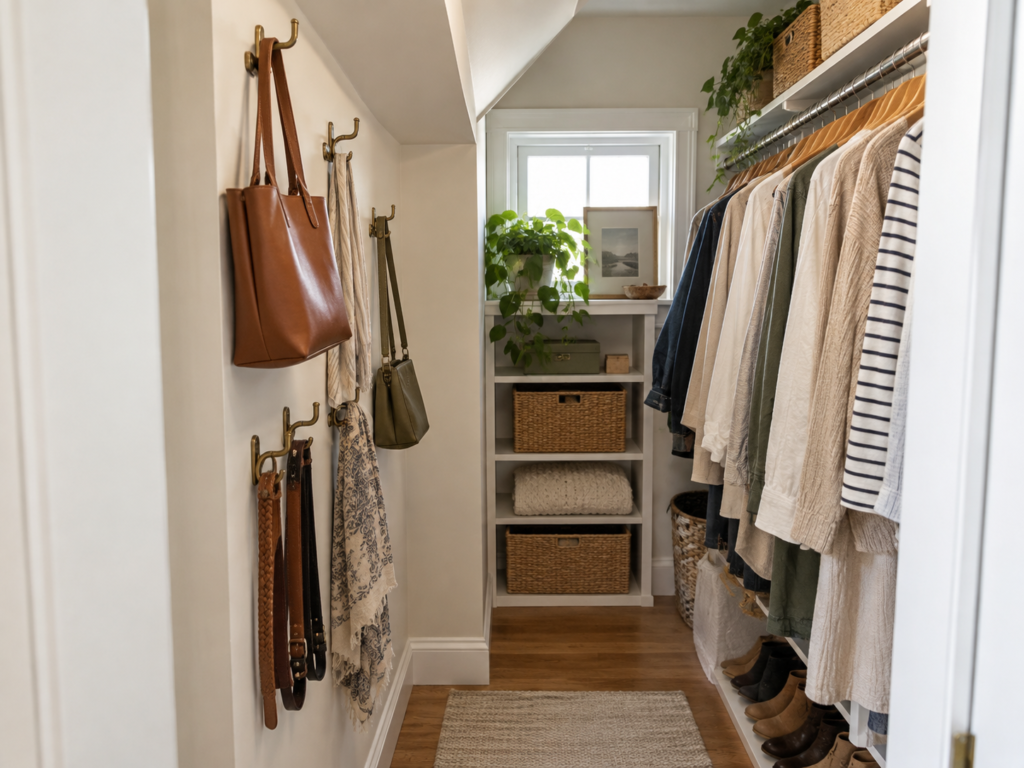
6. Use Hooks Where Shelves Won’t Fit
A narrow wall may be too shallow for a shelf but still useful for vertical storage.
Hooks can hold:
- Belts
- Bags
- Scarves
- Hats
- Robes
- Light jackets
- Reusable totes
Closet wall hooks → Buy on Amazon
This is especially helpful behind doors or along shallow side walls.
Choose hook depth carefully.
A hook that projects too far into the walkway can snag clothing or interfere with the door.
7. Keep Access Panels and Utilities Clear
Some awkward closets are awkward because they contain things that cannot be blocked.
Examples include:
- Electrical panels
- Plumbing access
- Shutoff valves
- HVAC controls
- Attic access
- Wall vents
Do not install permanent shelving directly in front of something that must remain accessible.
Instead, use movable storage such as:
- Rolling drawers
- Freestanding shelves
- Baskets
- Lightweight bins
You should be able to move the storage quickly without unloading the entire closet.
8. Use Adjustable Shelving Around Odd Geometry
Fixed shelving is less forgiving when walls, ceilings, or obstructions are irregular.
Adjustable shelves can be repositioned to fit:
- Different ceiling heights
- Changing storage needs
- Uneven vertical zones
- Tall baskets
- Short folded stacks
- Seasonal bins
A modular system is especially useful when you’re not sure which layout will work best.
Start with fewer shelves than you think you need.
Add or move shelves after you’ve used the closet for a while.
Adjustable closet shelving system → Buy on Amazon
9. Use Tension Shelving for Renter-Friendly Awkward Spaces
If you rent or don’t want to permanently modify the closet, tension-based organizers can be useful.
Depending on the closet, you may find:
- Tension shelving
- Tension rods
- Freestanding shelf towers
- Over-door organizers
- Clip-on shelf baskets
These can help around unusual geometry without drilling into walls.
However, always follow the manufacturer’s load limits.
Tension systems are better for lightweight to moderate storage than extremely heavy bins.
Tension closet shelving → Buy on Amazon
10. Use Low Hanging Space for Shirts and Jackets
If part of the closet has limited height, use that section for shorter garments.
Good candidates include:
- Shirts
- Blouses
- Jackets
- Folded-over pants
- Children’s clothing
Save taller zones for:
- Dresses
- Long coats
- Suits
- Full-length garments
This is more efficient than trying to make every hanging section the same height.
A closet with uneven height can actually work well when the clothing categories are assigned intentionally.
11. Don’t Put Permanent Storage in Front of the Door Opening
The interior of a closet may be wider than the opening.
That can create tempting side pockets.
Before adding shelves or drawers there, think about how you’ll reach them.
A large organizer installed in a hidden side pocket may fit perfectly but be almost impossible to use.
Measure:
- Door opening width
- Reach angle
- How far you can comfortably extend your arm
- Whether the organizer can be pulled forward
Storage that you cannot access without emptying the closet is not really usable storage.
12. Use Bins With Handles in Hard-to-Reach Areas
Handles matter more in awkward closets than they do in normal ones.
If a bin is:
- Above eye level
- Deep in a corner
- Behind hanging clothes
- Under a low shelf
you want to be able to pull it toward you.
Choose bins with:
- Front handles
- Lightweight construction
- Clear sides or labels
- A shape that fits the actual shelf depth
Avoid very deep bins in narrow openings.
A container that barely fits may become difficult to remove once it is full.
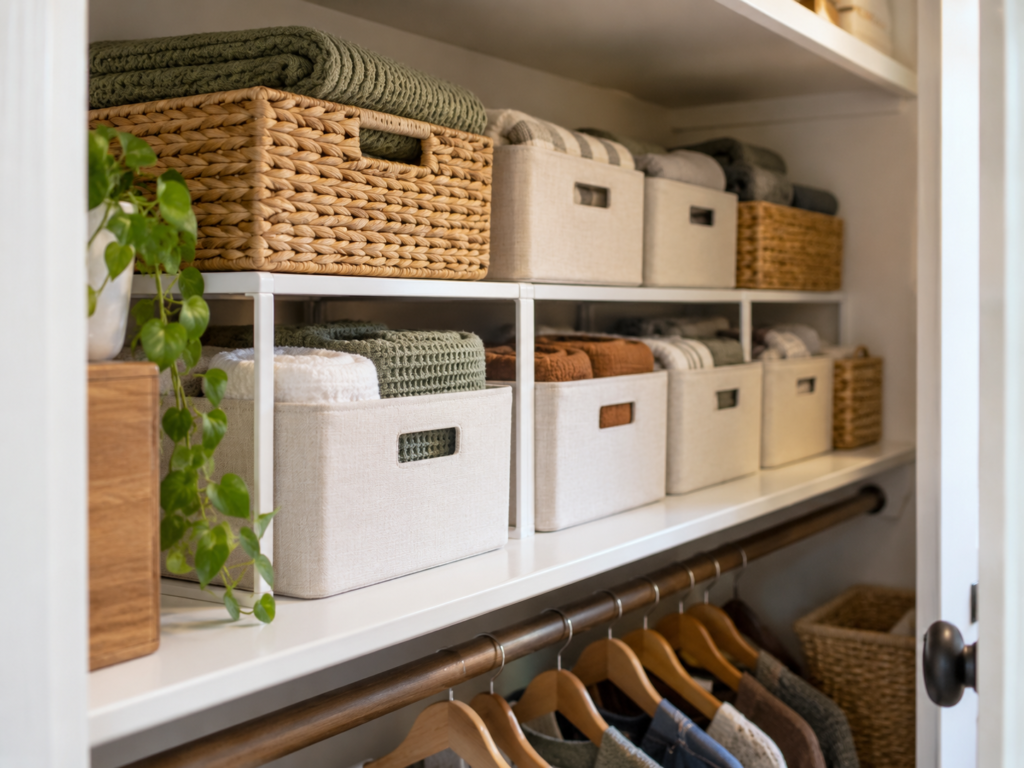
13. Use Shelf Risers in Deep or Tall Shelf Spaces
A tall shelf opening can waste vertical space.
Shelf risers create a second level without installing a permanent shelf.
They’re useful for:
- Handbags
- Shoes
- Folded clothing
- Small bins
- Accessories
Closet shelf risers → Buy on Amazon
This works especially well in awkward closets where adding a full shelf would interfere with the wall shape or access.
14. Keep Frequently Used Items in the Easiest Zone
Not every part of an awkward closet should be equally convenient.
That’s fine.
Use the easiest areas for:
- Everyday clothes
- Daily shoes
- Frequently used bags
- Work clothes
Use difficult areas for:
- Seasonal storage
- Spare bedding
- Formalwear
- Luggage
- Rarely used accessories
The farther you have to reach, bend, or climb, the less often you should need the item.
This simple rule makes a strange closet much easier to live with.
15. Use the Back of the Door Carefully
The back of the closet door can provide useful storage, but only if the door has enough clearance.
Good uses include:
- Shoes
- Accessories
- Small bags
- Scarves
- Hats
- Cleaning supplies
Before installing anything, close the door and check how much space exists between the door and the closet contents.
A bulky over-door organizer can prevent the door from closing or press into hanging clothes.
16. Avoid Oversized Closet Organizers
One of the biggest mistakes in an awkward closet is buying a large organizer because it promises maximum capacity.
A large organizer may:
- Block access
- Crowd the door
- Eliminate hanging space
- Hide corners
- Cover utilities
- Make the closet harder to use
Smaller modular pieces are often better.
A narrow shelf tower plus a few hooks and bins may outperform one large all-in-one system.
If your closet is also small overall, our how to organize a small closet guide can help you decide how much hanging, shelving, and floor storage you actually need.
17. Leave an Access Path
If the closet is deep enough to step into, don’t fill the floor.
You need a clear path to:
- Reach rear storage
- Pull out bins
- Move hangers
- Access utilities
- Retrieve seasonal items
Even a narrow 18- to 24-inch walkway can make a major difference in usability.
The goal is not to maximize every square inch.
It’s to make the storage you do use accessible.
What Is the Best Way to Organize an Awkward Closet?
Start by dividing the closet into storage zones based on:
- Height
- Depth
- Accessibility
- Obstructions
Then match each zone to the right storage type.
Use:
- Tall zones for hanging
- Low zones for shoes and bins
- Deep zones for seasonal storage
- Shallow walls for hooks
- Difficult corners for pull-out bins
- Irregular areas for adjustable or movable storage
The best system usually uses several smaller solutions instead of one large organizer.
How Do You Use a Closet With a Sloped Ceiling?
Put tall storage in the highest section and low storage beneath the slope.
Good low-area options include:
- Shoes
- Bins
- Short drawers
- Folded clothing
- Handbags
Avoid placing full-height hanging rods where the ceiling drops too low.
How Do You Organize a Deep Closet Corner?
Use storage that can move.
Handled bins, rolling drawers, and lightweight containers are better than loose stacks.
This allows you to pull the entire category forward instead of reaching behind other items.
What Should You Store in Hard-to-Reach Closet Space?
Reserve difficult areas for low-frequency items such as:
- Seasonal clothes
- Luggage
- Spare bedding
- Formal accessories
- Keepsakes
- Off-season shoes
Everyday items should stay in the easiest-to-reach zones.
Can You Use Standard Closet Organizers in an Awkward Closet?
Sometimes, but measure carefully.
A standard organizer may fit the overall width while still interfering with:
- Door openings
- Sloped ceilings
- Baseboards
- Pipes
- Hanging clothes
- Access panels
Modular, adjustable, and freestanding pieces are usually easier to adapt.
Awkward Closets Work Better When You Stop Trying to Make Them Normal
An awkward closet may never look like a perfectly symmetrical built-in system.
It doesn’t need to.
The better goal is to make each strange part of the closet useful.
Use low areas for low storage.
Use deep corners for pull-out bins.
Use shallow walls for hooks.
Use tall areas for hanging.
Use movable storage around anything that needs access.
When every part of the closet has a job based on its actual geometry, even a strange layout can become far more functional.