
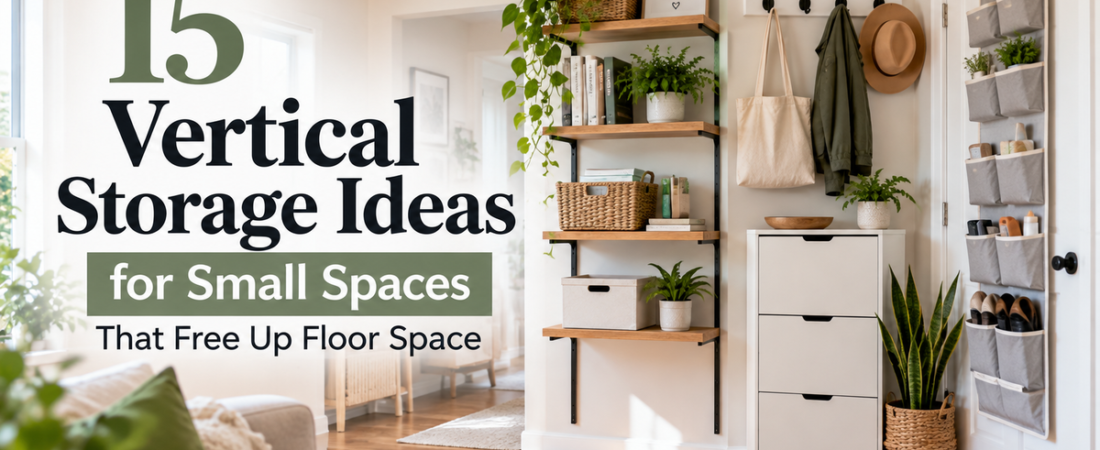
When a room is short on floor space, the answer isn’t always a smaller storage bin or another cabinet. It’s often looking up, which is why I wrote vertical storage ideas for small spaces.
Sometimes you need to look up.
Using vertical storage for small spaces lets you take advantage of walls, doors, tall narrow areas and unused space above furniture without filling valuable walking space with more storage furniture.
But vertical storage works best when it’s planned carefully. Shelves that are too deep can make a narrow room feel tighter, heavy items shouldn’t be stored where they’re difficult to reach safely, and not every empty wall needs to be filled.
Here are 15 practical vertical storage ideas that can help small rooms hold more while keeping the floor as open as possible.
1. Add Floating Shelves Above Existing Furniture
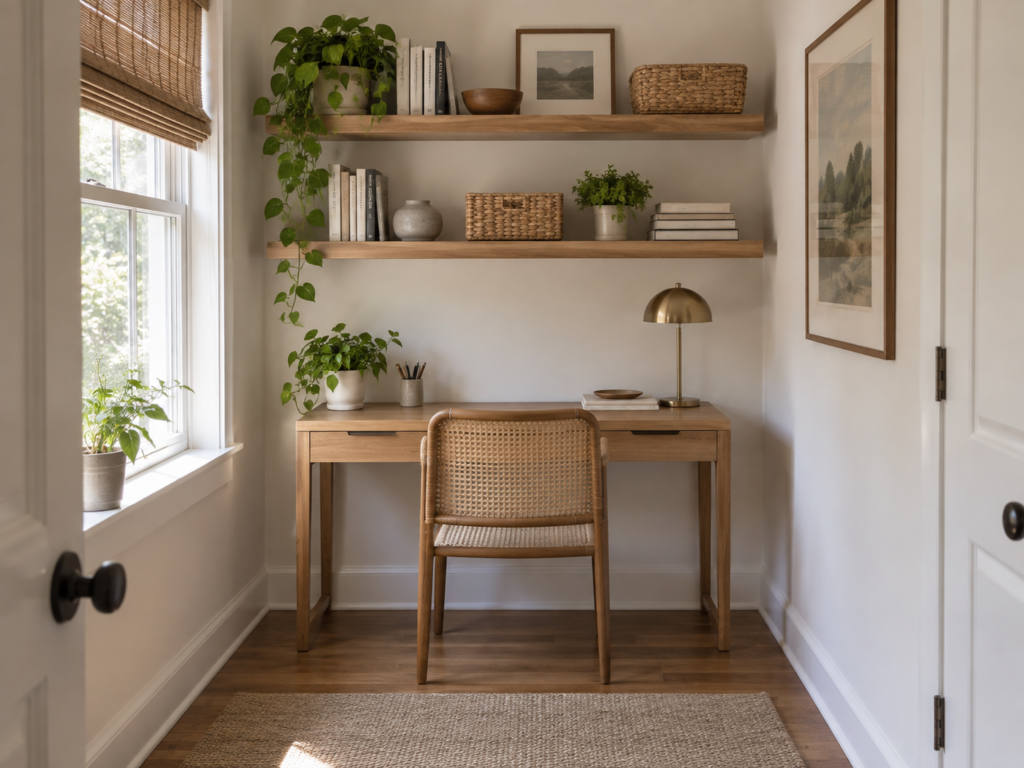
Floating shelves are one of the simplest ways to add storage without using any floor space.
Instead of installing them on a completely empty wall, look above furniture that’s already occupying the room.
Good locations include above:
- a desk
- a dresser
- a toilet
- a console table
- a kitchen counter
- a nightstand
This lets two storage functions share the same footprint.
Shelf depth matters in small rooms. A deep shelf over a narrow walkway can make the room feel cramped and may become a head-bumping hazard.
Before installing one, consider both what you want to store and how far the shelf will project into the room.
Floating wall shelves → Buy on Amazon
2. Use a Tall, Narrow Bookcase
When you need freestanding storage, choose height before width.
A tall narrow bookcase can provide several shelves while using a relatively small patch of floor.
This works well for:
- books
- baskets
- folded linens
- pantry items
- office supplies
- toys
- bathroom supplies
Put heavier items on lower shelves and lighter items higher up.
Tall furniture may also need to be anchored according to the manufacturer’s instructions, especially when there’s a tipping risk.
Before buying, measure the footprint and the vertical clearance. Check for vents, outlets, switches, trim and anything else that could interfere with placement.
Tall narrow shelving unit → Buy on Amazon
3. Use the Back of a Door
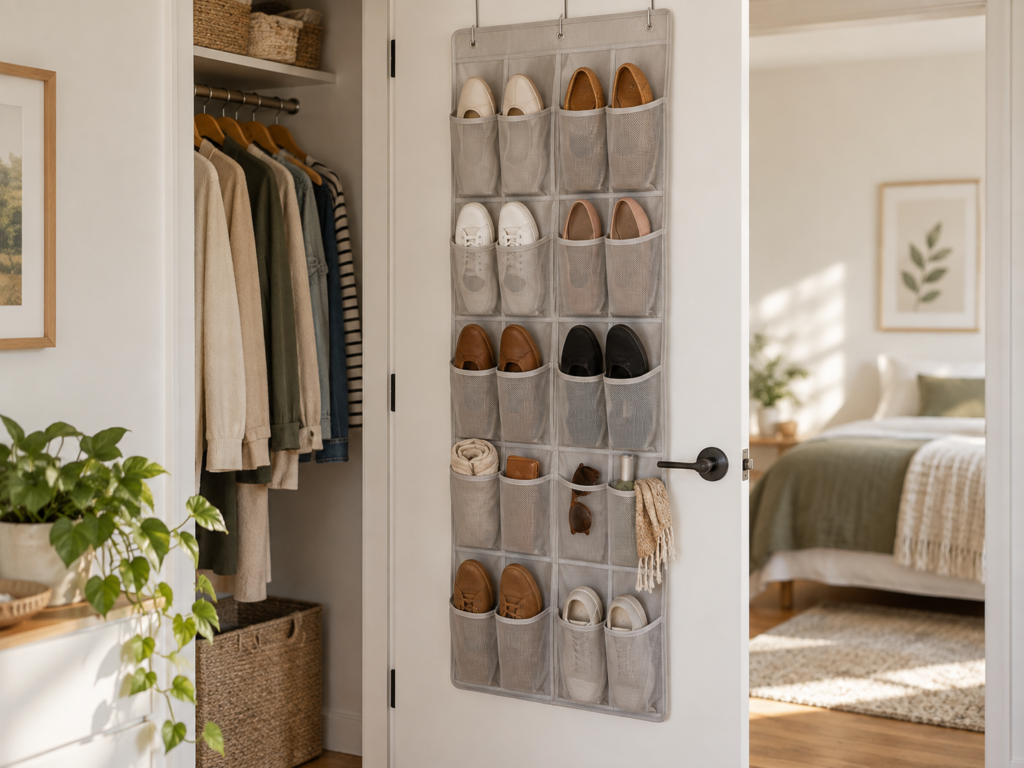
A door gives you a large vertical surface without requiring additional floor space.
Over-the-door organizers can work in bedrooms, bathrooms, closets, kitchens and entryways.
Depending on the organizer, you can store:
- shoes
- toiletries
- cleaning supplies
- accessories
- pantry items
- hats and gloves
- small household supplies
The catch is clearance.
Measure the gap above the door before buying an organizer. Thick over-door hooks can prevent tightly fitted doors from closing properly.
Also open the door completely and check what the organizer will hit.
Over-the-door organizer → Buy on Amazon
4. Install a Pegboard for Adjustable Wall Storage
Pegboards are useful when the things you’re storing vary in size.
Hooks, baskets and small shelves can be rearranged as your needs change.
A pegboard can work well for:
- craft supplies
- kitchen tools
- office supplies
- small garage tools
- accessories
- cleaning tools
The biggest advantage is flexibility.
Instead of committing to fixed shelves, you can change the layout later.
Make sure the mounting system and accessories are rated for what you intend to store. A lightweight craft pegboard and a system designed to hold tools aren’t necessarily interchangeable.
5. Use Wall Rails With Hooks and Baskets
A wall rail creates a narrow strip of customizable storage.
This can work especially well in areas where a traditional shelving unit would project too far into the room.
Use rails for:
- kitchen utensils
- entryway accessories
- cleaning tools
- bathroom supplies
- office supplies
Some systems accept small baskets, hooks or shelves, allowing you to build storage around the items you actually own.
Keep frequently used items between comfortable shoulder and waist height whenever possible.
Storage doesn’t help much if reaching it is annoying every day.
6. Add a Shelf Above a Doorway
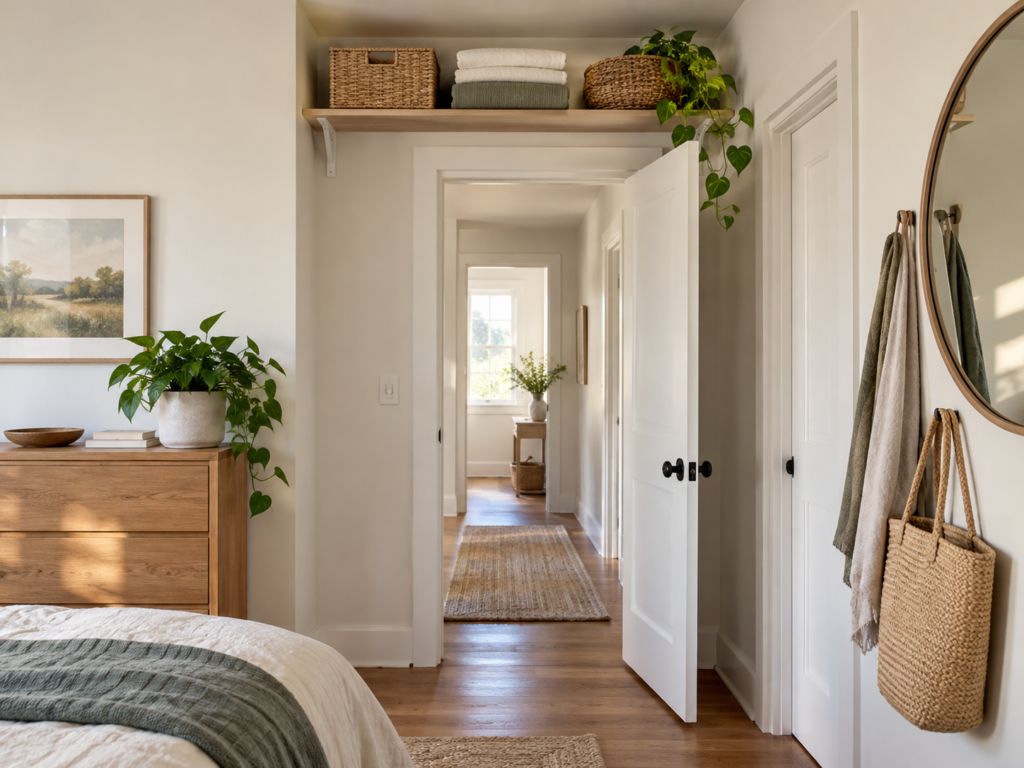
The wall above a doorway is often completely unused.
A shelf there can hold lightweight items you don’t need frequently, such as:
- extra linens
- seasonal accessories
- decorative boxes
- spare supplies
This is not ideal everyday storage because of the height.
Think of it as secondary storage for things that would otherwise consume prime closet or cabinet space.
Avoid placing heavy objects overhead, and make sure the shelf is properly mounted for its intended load.
7. Use the Inside of Cabinet Doors
Vertical storage doesn’t have to mean an exposed wall.
The inside of a cabinet door can hold small items that would otherwise consume shelf or drawer space.
Depending on the cabinet, you might store:
- measuring tools
- cleaning supplies
- hair tools
- wraps and bags
- small toiletries
- kitchen accessories
Before mounting an organizer, close the cabinet and check where shelves, hinges and stored objects sit.
The organizer needs enough interior clearance for the door to close normally.
This works particularly well under sinks, where small supplies tend to get lost around plumbing.
For more ways to use that awkward space, see our 15 Under-Sink Organization Ideas That Maximize Every Inch.
8. Build Storage Above the Toilet
In a small bathroom, the toilet occupies floor space but leaves a large vertical area above it.
Floating shelves, wall cabinets or freestanding over-toilet units can turn that space into useful storage.
Use it for:
- towels
- toilet paper
- toiletries
- baskets
- backup bathroom supplies
Don’t mount storage so low that it interferes with using or servicing the toilet.
If you’re using a freestanding unit, measure around the tank, flush handle, baseboards and any nearby fixtures.
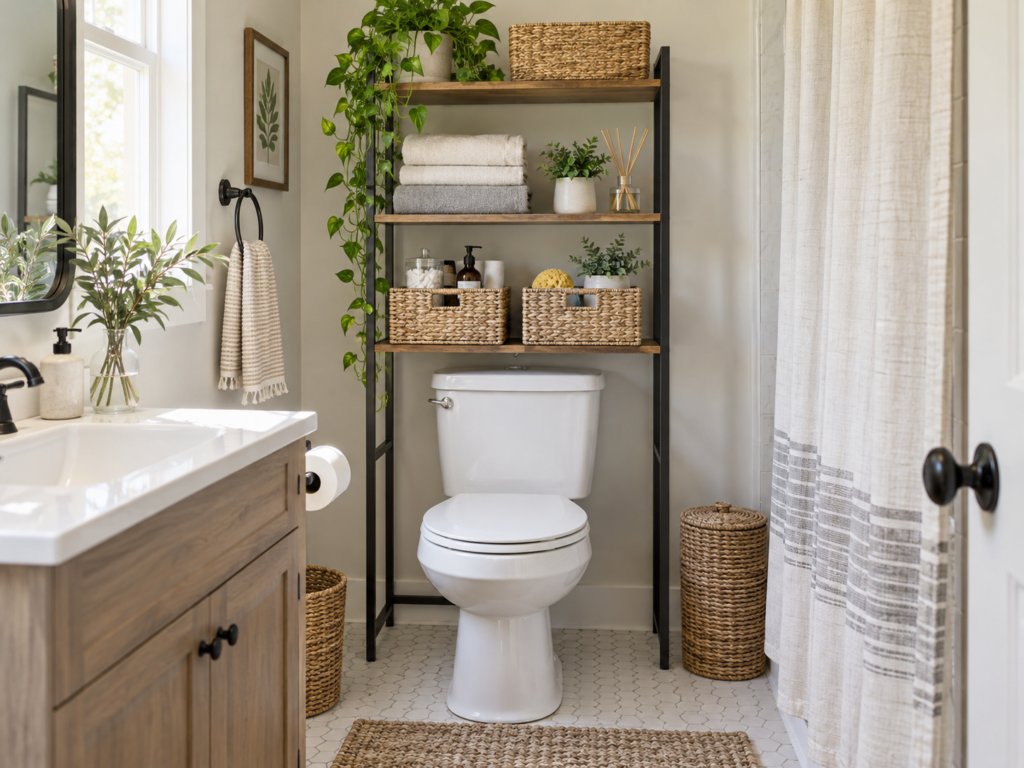
Our 15 Small Bathroom Storage Ideas for Bathrooms With No Storage has more ways to add storage when a bathroom lacks cabinets or closets.
Over-the-toilet storage unit → Buy on Amazon
9. Use Vertical Dividers Inside Cabinets
Some items waste space when they’re stacked horizontally.
Vertical dividers let you store flat objects upright instead.
They work particularly well for:
- baking sheets
- cutting boards
- serving trays
- pot lids
- reusable baking mats
Instead of lifting an entire stack to reach the item on the bottom, you can pull out one item at a time.
Measure the height and depth of the cabinet before adding dividers, especially if you’re storing large baking sheets.
Cabinet vertical divider organizer → Buy on Amazon
10. Take Closet Storage Higher
Many closets have usable wall height above the existing shelf or hanging rod.
Depending on the closet, you may be able to add:
- another upper shelf
- stackable bins
- shelf dividers
- hanging organizers
- tall shoe storage
Reserve the hardest-to-reach areas for lightweight items you use infrequently.
Everyday clothing should stay accessible.
The goal isn’t to fill the closet all the way to the ceiling just because you can. It’s to move low-frequency items out of prime storage.
For more closet-specific ideas, see our 17 Small Closet Organization Ideas That Make the Most of Limited Space.
11. Use Tall, Narrow Entryway Storage
Entryways are often narrow, which makes wide furniture a poor fit.
Instead of a deep console or large cabinet, consider storage that grows vertically.
A tall narrow unit can hold:
- shoes
- bags
- hats
- gloves
- umbrellas
- everyday accessories
Hooks above a narrow shoe cabinet can create two levels of function without requiring another piece of furniture.
Keep the depth under control.
A tall cabinet may have a small width but still obstruct the walkway if it’s too deep.
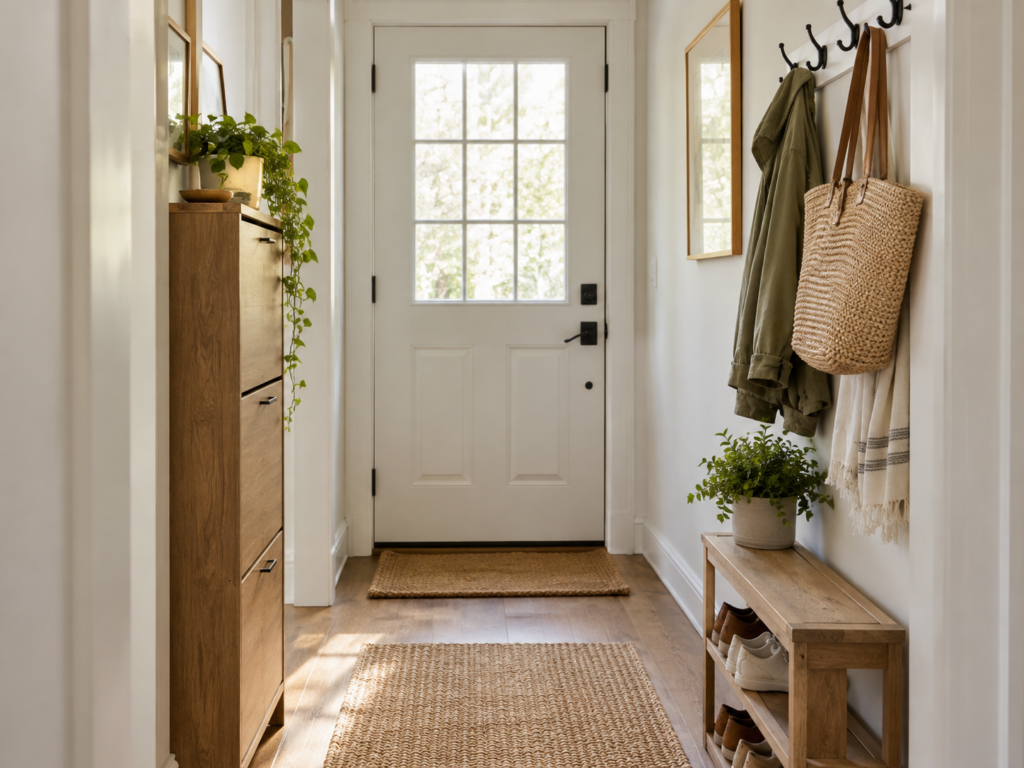
Our 17 Entryway Organization Ideas for Small Spaces That Stop Clutter at the Door has more ways to organize narrow entrances.
12. Mount Baskets on the Wall
Wall-mounted baskets can provide shallow storage for smaller categories without requiring full shelving.
They can work for:
- produce
- bathroom supplies
- kids’ items
- accessories
- cleaning cloths
Choose baskets based on what you’re actually storing rather than simply filling an empty wall.
Open baskets are especially useful for items you need to grab quickly.
But they can look cluttered when they’re overloaded with unrelated objects.
13. Use Vertical Space in Awkward Corners
Corners often have enough room for storage but not enough width for standard furniture.
A tall corner shelf or narrow vertical unit can make that space useful.
Good candidates include corners beside:
- sofas
- vanities
- desks
- doors
- kitchen cabinets
Pay attention to depth and access.
A shelf that fits neatly into a corner can still interfere with a nearby door, drawer or walkway.
Our 12 Storage Ideas for Awkward Spaces You’re Probably Wasting covers more ways to evaluate unusual gaps and corners.
14. Store Long Items Upright
Not all vertical storage requires shelves.
Long household items often take up less usable space when stored upright.
Examples include:
- brooms
- mops
- ironing boards
- folding chairs
- yoga mats
- wrapping paper
Wall-mounted holders and hooks can keep these items from falling into a pile.
This works particularly well in utility closets, laundry rooms and garages.
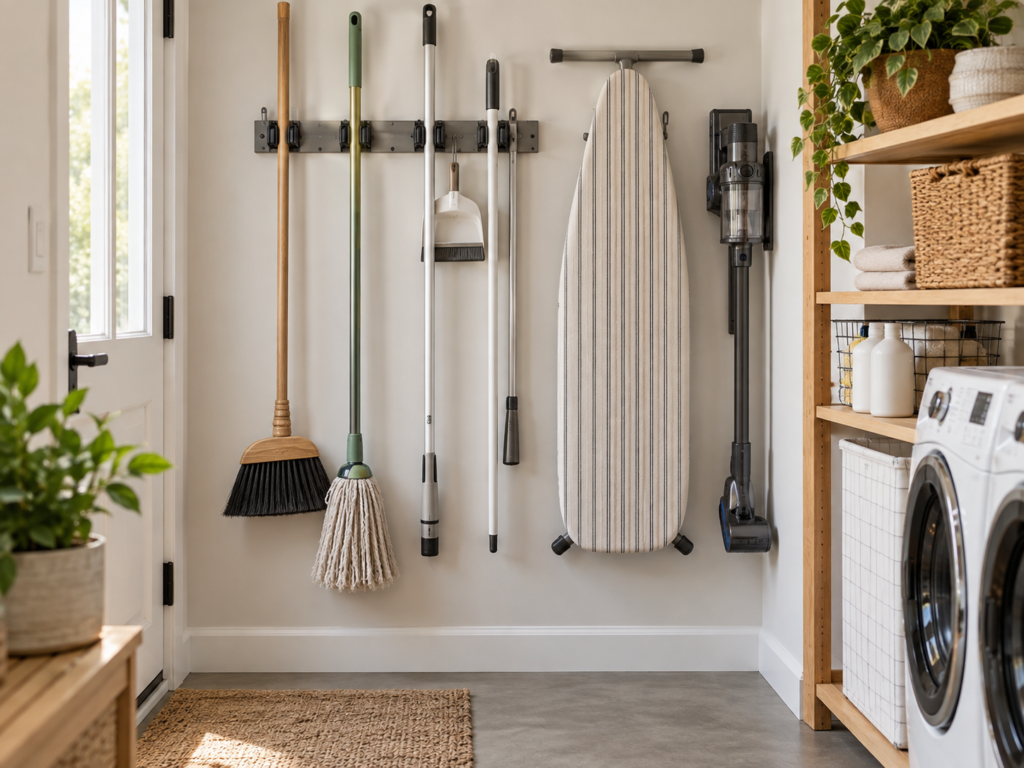
If you’re working with a cramped garage, our 17 Garage Storage Ideas for Small Garages That Free Up Floor Space has additional wall-storage strategies.
15. Use Tall Storage Without Filling Every Wall
Vertical storage is useful, but too much of it can make a small room feel crowded.
You don’t need shelving on every empty wall.
Prioritize vertical storage where it solves the biggest problems, then leave some wall space open.
A room with:
- one tall shelving unit
- a few purposeful wall shelves
- organized door storage
may feel much calmer than a room surrounded by storage from floor to ceiling.
The goal is more usable storage, not maximum possible storage.
How High Should Vertical Storage Go?
There’s no single ideal height.
Instead, organize by accessibility.
Waist to shoulder height:
Frequently used items.
Below waist height:
Heavier items.
Above shoulder height:
Lightweight items used less often.
Near the ceiling:
Lightweight seasonal or occasional items.
Avoid storing heavy objects where you need to lift them overhead.
And if you routinely need a step stool to access something, it probably shouldn’t be an everyday item.
Measure More Than Just Wall Width
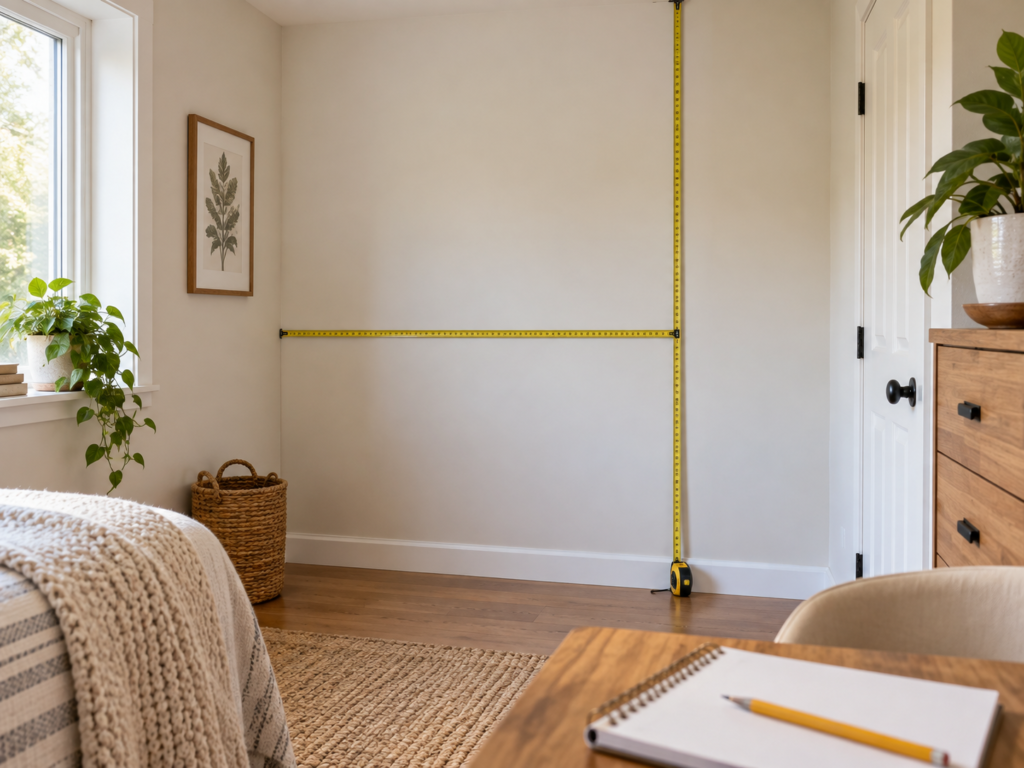
Before buying vertical storage, measure:
- available width
- total height
- storage depth
- baseboard projection
- door swing
- drawer clearance
- outlet and switch locations
- nearby vents
- ceiling obstructions
For wall-mounted storage, also consider the weight of what you plan to store and use mounting hardware appropriate for the wall and load.
Our How to Measure for Storage Organizers Before You Buy covers the measurements that are easiest to overlook.
Frequently Asked Questions
How do you use vertical space for storage?
Look for unused areas above furniture, on doors, inside cabinet doors and higher on walls. Floating shelves, tall narrow furniture, hooks, rails and over-door organizers can add storage without consuming much additional floor space.
What can I use for vertical storage in a small room?
Tall narrow bookcases, floating shelves, pegboards, wall rails, door organizers and wall-mounted baskets are all useful options. Choose the solution based on what you’re storing and how often you need it.
Does vertical storage make a small room look bigger?
It can help preserve open floor space, which often makes a small room feel less crowded. However, covering every wall with tall storage can have the opposite effect and make the room feel visually enclosed.
What should be stored on high shelves?
High shelves are best for lightweight items you use occasionally, such as seasonal accessories, extra linens or backup supplies. Heavy and frequently used items should stay easier to reach.
How do renters add vertical storage?
Freestanding tall shelving, over-door organizers, tension-mounted systems and some removable hooks can provide vertical storage without major permanent changes. Check your lease and follow the manufacturer’s installation and weight guidelines.
Is tall storage safe in a small space?
It can be, provided the furniture or shelving is installed and secured appropriately. Follow the manufacturer’s anchoring instructions for tall furniture and don’t overload shelves beyond their rated capacity.
Use Height Before Giving Up More Floor Space
When a small room needs more storage, don’t automatically add another wide cabinet, bin or piece of furniture.
Look at the space that’s already available vertically.
The wall above a desk may hold shelves. The back of a door may hold an organizer. A narrow corner may fit tall shelving. The area above a toilet, cabinet or closet rod may have useful capacity that’s currently doing nothing.
Just keep accessibility, weight, depth and clearance in mind.
The best vertical storage makes a small space hold more without making it feel like there’s more stuff in it.
For more ideas throughout the house, see our 25 Storage Ideas for Small Homes That Make Every Inch Count.